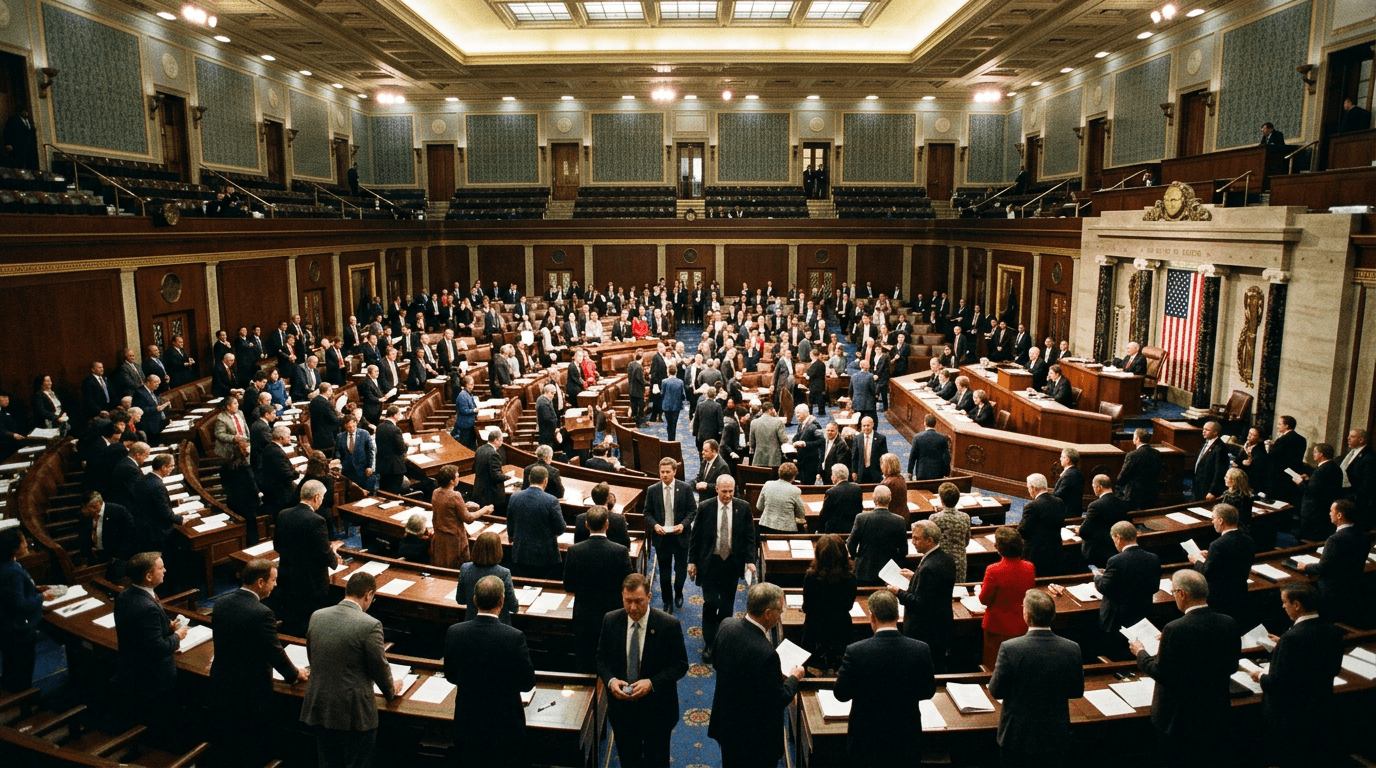
Whether members of a president’s party would support impeachment is a test of Congress’s willingness to check executive power. But a recent House episode involving Defense Secretary Pete Hegseth does not tell us how Republicans would vote on articles to impeach Donald Trump. The two cases concern different officials, and the Hegseth vote was procedural rather than a vote on whether to impeach Trump. The distinction is important: a referral vote and a vote on articles pose different questions for House members.
The House referred the Hegseth resolution to the Judiciary Committee, effectively killing it, by 211 to 204, according to CBS News. The resolution concerned Hegseth’s handling of the Iran war and other military hostilities, NBC News reported. Even Republican critics who had spoken out against Hegseth said they did not think his actions met the threshold for impeachment, the network reported. That episode shows the limits of treating criticism of an administration official as evidence of support for impeachment. It offers no direct answer about how Republicans might judge a case against the president.
On Kalshi, traders put the chance of at least one Republican voting yes on a first House vote to impeach Trump during his second term at 56% as of 11:48 a.m. ET on Nov. 14. The market’s higher thresholds show less confidence in a broader Republican break: traders put the chance of at least two Republicans voting yes at 26%, and at least five at 15%. These are separate threshold contracts, not a complete accounting of every possible vote total. The prices reflect traders’ current views, not a forecast of what House members will do. They indicate how the market frames the uncertainty, not how members have committed to vote.
Trading behind the contracts varies. The at-least-one threshold had 0 contracts traded over the last day; the at-least-two threshold had 3 contracts traded over the last day. The five-vote threshold had no trading over the last day, while its open interest stood at 518 contracts open. That difference matters: a quoted price is less informative when little or no recent trading supports it. The market also shows distinct movements across the thresholds: the at-least-one price was up 6 points over the week, while the at-least-five price was up 2 points over the week. Those changes do not explain why traders’ views shifted. Open interest and recent trading measure different things, so the former does not erase the lack of recent activity in the latter.
The central uncertainty is not resolved by the Hegseth episode or by these market prices. It remains unknown whether the House will vote on articles to impeach Trump during his second term; if it does, the allegations and evidence before members will matter. A vote to refer a resolution about another official to committee cannot establish whether any Republican would support impeaching the president, much less how many. The market makes that uncertainty visible, but it cannot answer it. Until such a vote is before the House, the possible level of Republican support remains unsettled.