A possible meeting among Donald Trump, Xi Jinping and Vladimir Putin could bring diplomacy over Ukraine and other major issues into focus. But the prospect remains just that: China says it is discussing a meeting, not that the leaders have agreed to hold one. The uncertainty matters as much as the possibility, particularly because European officials fear Ukraine could be discussed without Kyiv or European capitals at the table. A reported discussion is evidence that a meeting is being considered, not proof that it will happen.
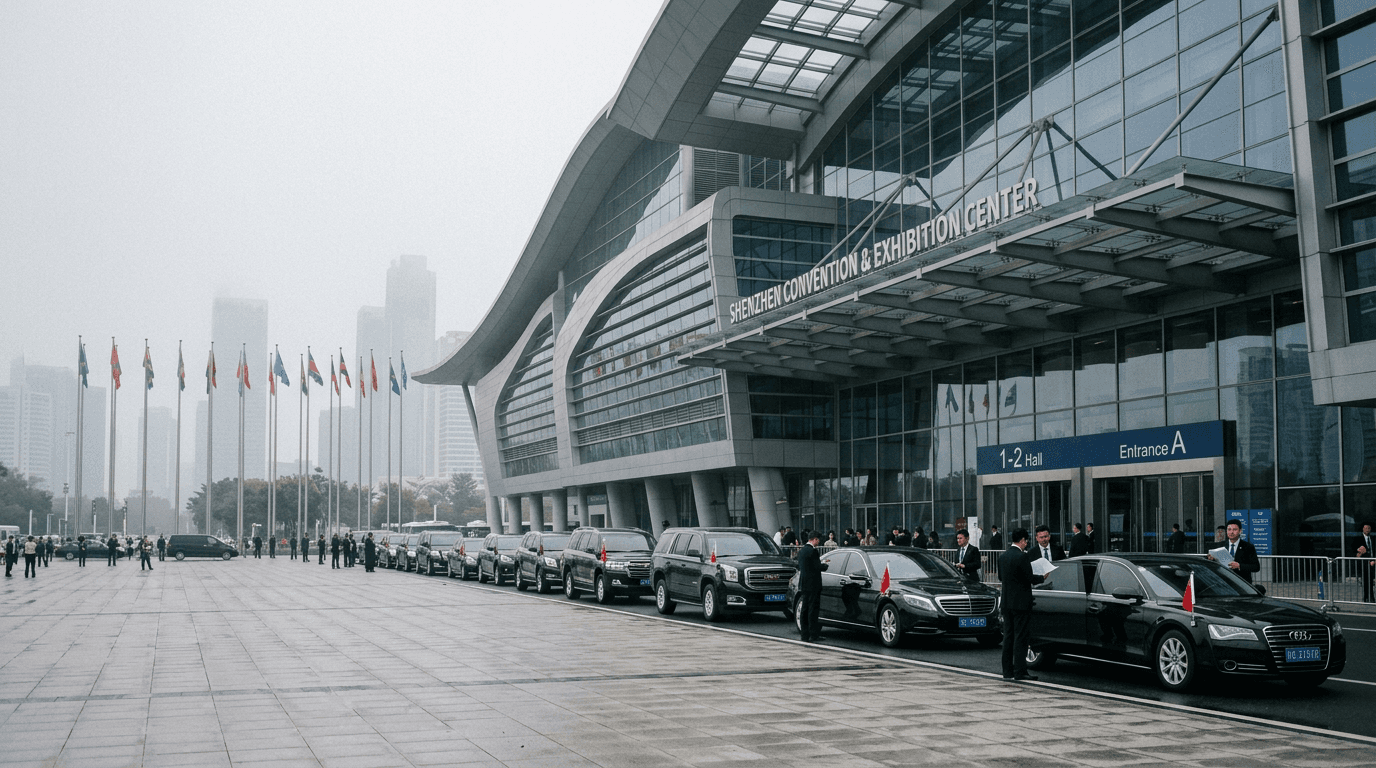
China said Wednesday that it was discussing a possible meeting between Xi and his U.S. and Russian counterparts. The reported setting is the APEC summit in Shenzhen, scheduled for Nov. 18-19. The report does not identify a confirmed time for a separate meeting, or establish that the discussions will produce one. A summit on the calendar is not itself proof of a three-leader gathering. Nor does the possibility establish whether the leaders would meet in person or speak by phone.
Kalshi’s market on whether Trump will meet Xi in November puts the probability at 99% as of 1:57 p.m. ET on Nov. 6. That is a measure of what traders currently believe, not a forecast or confirmation. The market’s other listed possibilities are also priced high: it puts a Trump meeting with Putin at 88%, and with Mark Carney at 94%. The contracts include meetings by phone, so their wording does not establish that any contact would be an in-person summit. The market page shows 0 contracts traded over the last day for the Xi contract and 0 contracts traded over the last day for the Putin contract; those figures counsel against treating either quoted probability as a settled public consensus. The market is not a schedule of confirmed engagements, and a price alone cannot establish that preliminary diplomatic contact has become an agreement.
The stakes turn on what leaders might discuss and who would be included. China has not specified an agenda, while European officials fear Ukraine could be discussed without Kyiv or European capitals. Trump has previously indicated interest in discussing denuclearization, but not much about Ukraine, in a trilateral meeting. Ukraine’s president warned that such a gathering could become a forum for redistributing influence. Those statements point to competing concerns, not an agreed agenda or an outcome. Whether Ukraine would be addressed, and whether its representatives would have a voice, remain unresolved. The supplied reporting therefore leaves open both the substance of any talks and the question of who might be present.
The market also lists possible Trump meetings with Japan’s Sanae Takaichi at 85%, India’s Narendra Modi at 83%, South Korea’s Lee Jae-myung at 78%, Saudi Arabia’s Mohammed bin Salman at 75%, and Senate Democratic leader Chuck Schumer at 67%. These are separate contract prices, not evidence that any meeting has been arranged. The reported China discussions offer a concrete diplomatic possibility; they do not answer who else Trump will talk to this month. For now, the most consequential question is not which name tops a market list, but whether a proposed three-leader encounter becomes real—and what, if anything, its participants would decide to discuss. Until that is clearer, the market’s list describes separate uncertainties rather than a confirmed itinerary.