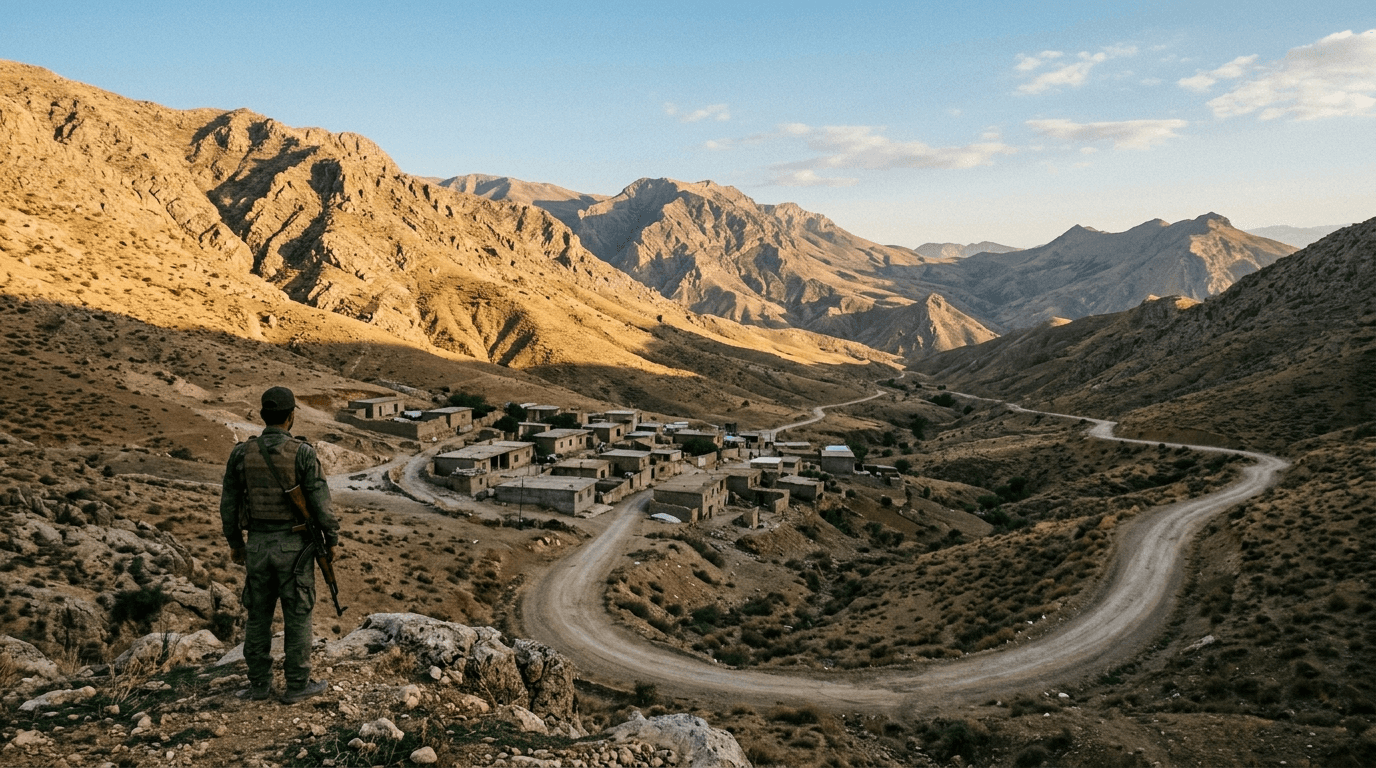
A reported Iranian drone strike near Soran has put Iraq’s security under scrutiny, but it does not show that Iran will attack again. The reported target was a site belonging to a Kurdish opposition group, not Iraq’s government. The question for Iraq is whether another strike follows—and whether Baghdad can protect its territory as US forces withdraw and the government seeks to bring armed groups under state control. The reporting establishes a strike inside Iraq, not a wider attack on the country. (Sources: Al Jazeera; Yahoo News.)
The report said Iran’s Islamic Revolutionary Guard Corps fired three drones at a village near Soran in Erbil province, wounding one Peshmerga. The Kurdistan Democratic Party of Iran confirmed that one of its sites near Soran had been targeted. That is evidence of a reported strike inside Iraq, not evidence that Iran has launched a general attack on Iraq or its government. (Source: Yahoo News.)
On Polymarket, traders currently put the chance of a target by the September deadline at 18% as of 7:59 a.m. ET on Sept. 30. For the later October deadline, they put it at 44% as of 7:59 a.m. ET on Sept. 30. The gap between those readings points to a question about timing, not a settled account of what Iran will do. Trading over the last day was $468 in trading over the last day on the nearer contract and $90 in trading over the last day on the later one, so both readings come with little trading behind them. Neither displayed price is a forecast or an objective measure of risk; it records what traders currently believe. (Source: market contracts.)
Iraq’s vulnerability is part of the uncertainty. A former US ambassador said the country lacks substantial air-defense capability and warned that pro-Iran militias have attacked targets inside Iraq. The government’s effort to bring weapons under state control has been pushed back to June 2027. Iraq’s prime minister said the US and Iran-aligned militias had assured him they would refrain from attacks for 90 days after the US withdrawal. Those assurances offer a counterweight to the reported strike, but they do not establish whether further attacks will occur or whether armed groups will comply with Baghdad’s effort. (Source: Al Jazeera.)
The reporting establishes a precedent for a strike in Iraq, but not a pattern of further attacks. It also leaves unanswered what will replace US security support and how much control the government can exercise over armed groups. The market’s different readings for the near and later deadlines cannot resolve those questions, particularly on thin trading. For readers, the distinction matters: a strike against a Kurdish opposition site is serious, but it is not the same as evidence that Iraq’s government is under attack or that another strike is imminent. (Sources: Al Jazeera; Yahoo News; market contracts.)