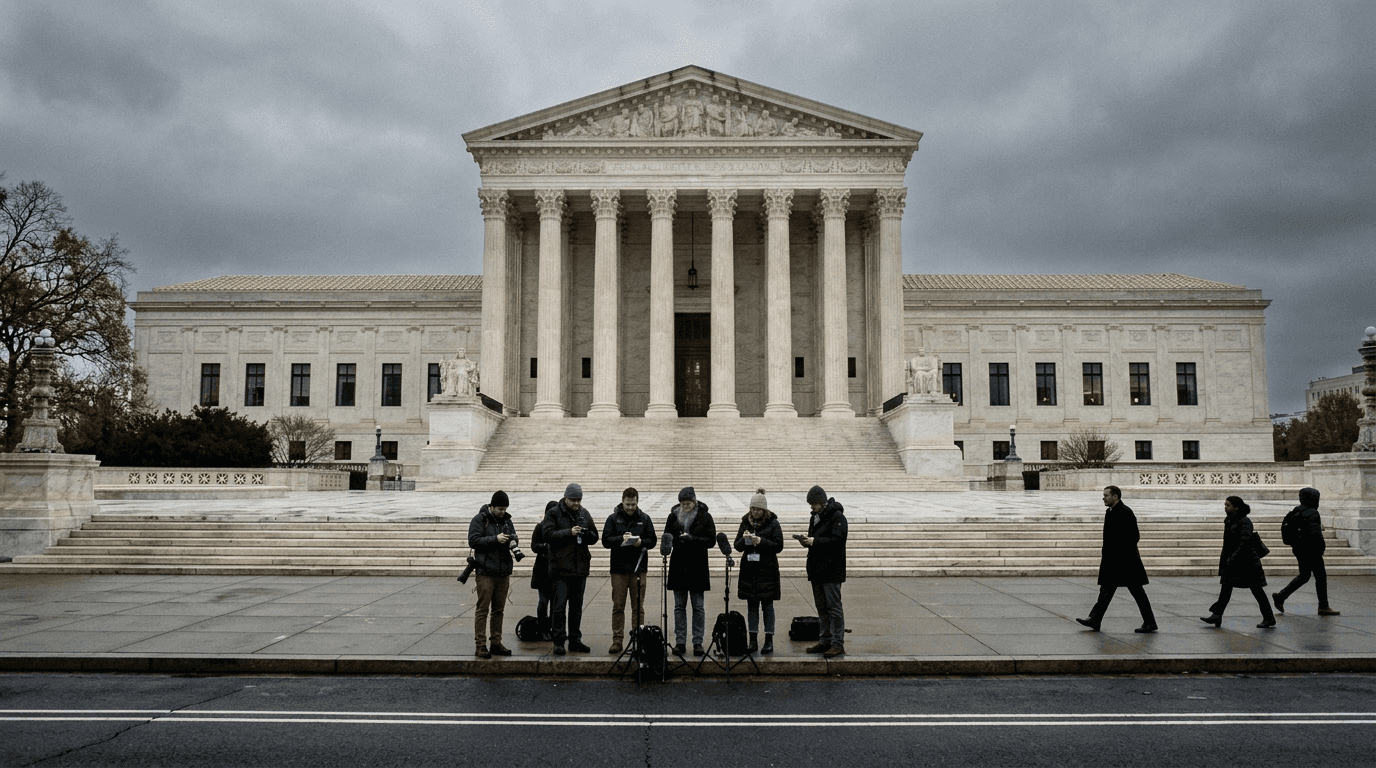
A Supreme Court vacancy could shape constitutional rights and public policy for years, but the current reporting does not point to an election-driven departure by Samuel Alito or Clarence Thomas. Alito told Fox News he has no plans to retire and is committed through at least the current term. That is a statement about his present intention, not a guarantee for the rest of President Trump’s term.
Kalshi traders put Alito’s resignation at 29% and Thomas’s at 31%, as of 12:53 p.m. ET on Nov. 7. Those figures represent what traders currently believe, not objective probabilities or evidence of either justice’s plans. The market’s highest readings are still below even odds, and the spread between the two justices is modest. Trading was sparse in the last day: 94 contracts traded over the last day for Alito and 0 contracts traded over the last day for Thomas. The prices are a signal of uncertainty, not a substitute for reporting.
The reporting offers a reason not to read the market as evidence of imminent departures. Sources close to Alito and Thomas did not expect either to leave in response to the election result. CNN also reported that both had indicated before the current term that they did not intend to retire. Alito previously told Bloomberg he would stay even if Democrats captured the Senate, while acknowledging that retirement is something a justice his age may consider each term. His latest statement addresses the current term; it does not settle what he might decide afterward.
A departure would not by itself determine who joins the court. A confirmation attempt before the new Senate is sworn in could face resistance from some Republican senators, and CNN reported no indication the White House or Senate Republicans were considering a lame-duck confirmation fight. Fox News reported Democrats would control the Senate when the new congressional term begins. The timing of any vacancy and the support available for a nominee would therefore matter as much as the decision to leave. The market question is about resignations; it does not answer whether a replacement could be confirmed.
Retirement remains possible, and the current statements do not rule out a later change of mind. Nor does a market price establish that a justice intends to leave. Kalshi also assigns readings to Chief Justice John Roberts and the other justices, but these prices are not a reliable guide to private intentions. For readers, the consequential uncertainty is whether a vacancy arises while Trump is president and whether a successor could be confirmed. For now, the strongest evidence is narrower: Alito says he will stay through the current term, and reporting does not indicate that he or Thomas plans to leave because of the election.