Anduril Industries is approaching a new financial tier as investor demand for privately held defense companies accelerates. The military technology developer has been discussing another financing that could value it at roughly one hundred billion dollars, according to Reuters reporting published by Defense News. That would put a company founded less than a decade ago in the same broad valuation neighborhood as established defense contractors with generations of aircraft, missile and electronics programs. The scale of the talks reflects how quickly autonomous weapons, battlefield software and uncrewed systems have moved from venture-capital bets into central parts of military planning.
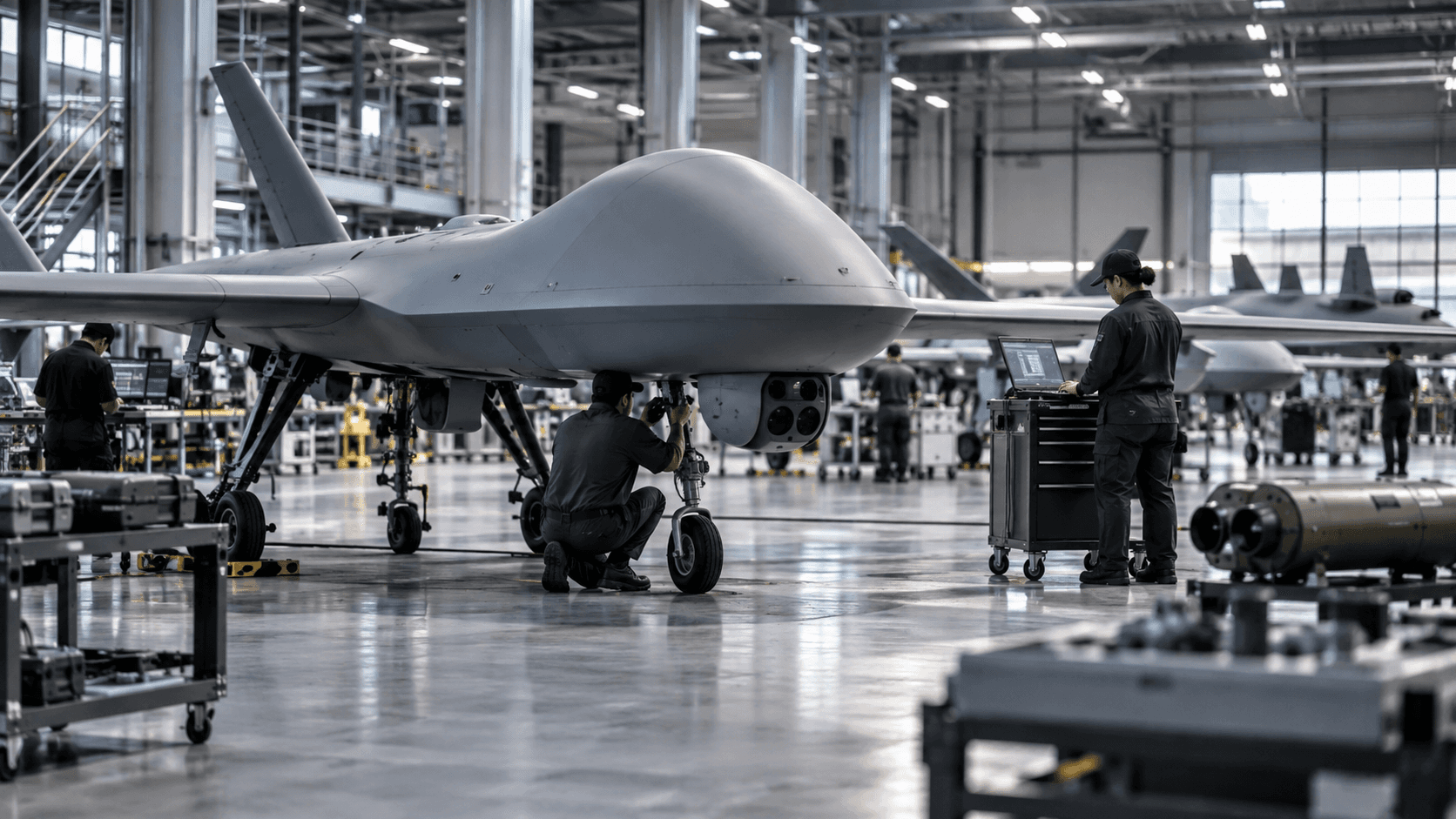
The possible financing would follow an unusually rapid climb. Anduril raised five billion dollars at a sixty-one-billion-dollar valuation in May, double its previous level, with Thrive Capital and Andreessen Horowitz leading the round. Reuters reported in July that discussions about the next transaction were still fluid and that Anduril had made no decision about future financing. The company said it regularly evaluates ways to fund growth. Its expansion has been backed by rising sales: Anduril said earlier this year that revenue reached about two point two billion dollars in the prior year while its workforce doubled. It has also continued to unveil new systems, including the Thunder vertical-takeoff drone shown at the Farnborough Air Show.
Secondary-share data underline both the enthusiasm and the uncertainty around the company’s worth. Nasdaq Private Market estimated Anduril shares at one hundred thirty-two dollars and forty-nine cents as of September tenth, based on trading activity, public valuation information and proprietary inputs. The platform also displayed higher recent bids and trades, showing how sparse private-company transactions can produce a wide range of implied values. Those indications are useful signals, but they are not the same as a completed financing with a negotiated price for newly issued shares. Until Anduril closes another round or files for a public offering, any headline valuation remains an estimate shaped by relatively few trades and investor appetite.
Prediction-market activity shifted sharply as those private-share signals circulated. On Polymarket, the contract tied to Anduril falling below seventy-five billion dollars by year-end rose to about thirty-one percent, up roughly twenty-seven percentage points over the latest day. The selected outcome drew about twenty-seven hundred dollars in daily activity, while the broader event showed approximately three thousand dollars. Those prices reflect participants’ expectations rather than a company disclosure, and the unusual structure includes separate upper and lower valuation thresholds. The move nevertheless captures growing uncertainty about whether secondary pricing near one hundred billion dollars can hold through the end of the year.
The next decisive evidence will come from Anduril itself or from investors willing to set terms for another round. A completed financing near the reported target would confirm that capital is still chasing defense technology despite the premium already embedded in private shares. A smaller deal, a delay or a lower valuation would show that secondary enthusiasm outran what major institutions were prepared to underwrite. Anduril’s growing military portfolio gives it a powerful case for more capital, but the step from rapid growth to a durable valuation requires financial disclosure and negotiated commitments. For now, the company sits at the center of a broader test of how highly investors will price the defense technology boom.