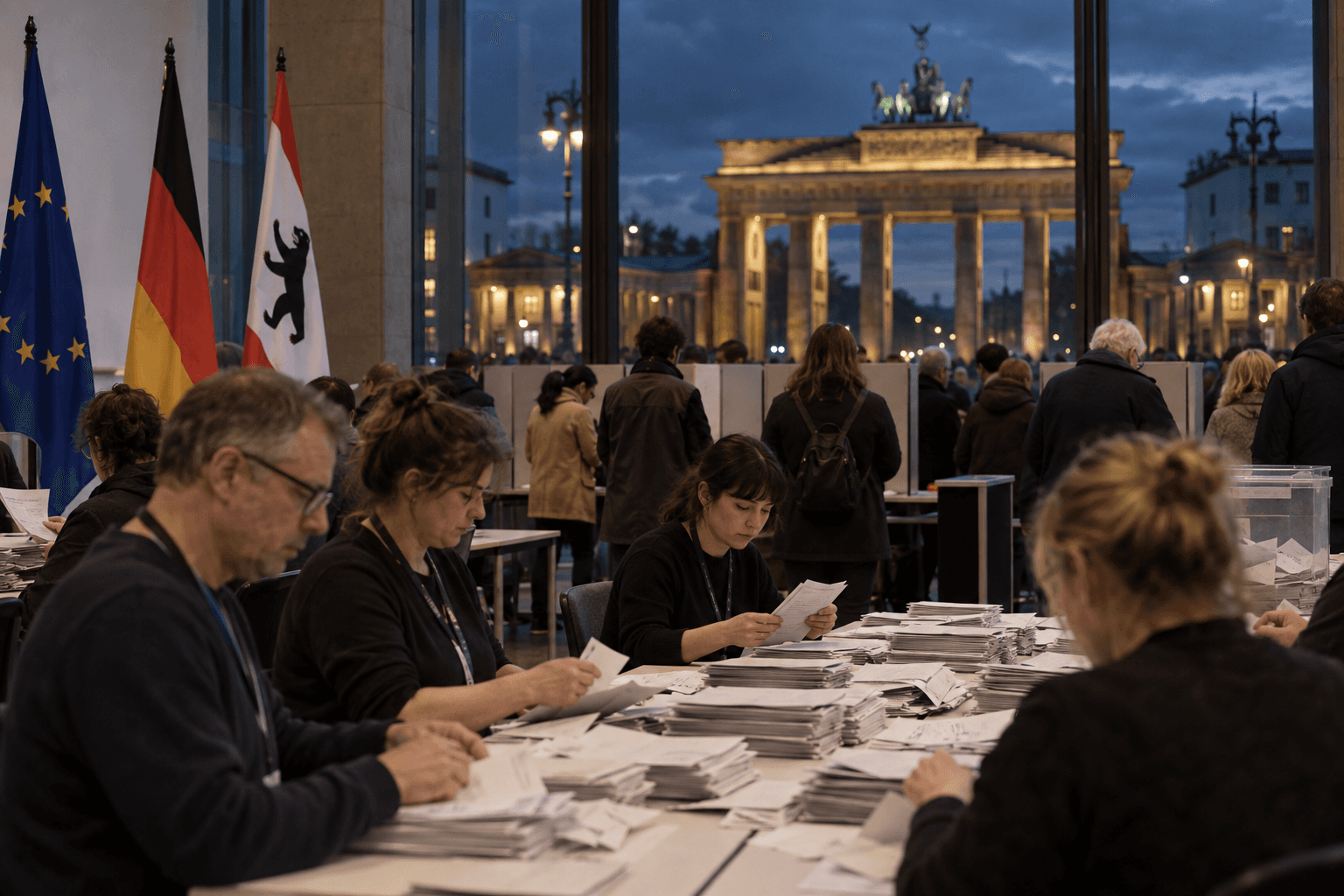
Die Linke emerged ahead in Berlin's state election on Sunday, according to exit polls that put Chancellor Friedrich Merz's Christian Democrats in second place. An ARD survey reported by Reuters projected the left-wing party at 24.5 percent, the CDU at 20 percent and the far-right AfD at 16 percent. A separate ZDF exit poll reported by ANSA gave Die Linke 26 percent, the CDU 20 percent and the AfD 13.5 percent. The estimates differ, and neither is a final count. Their shared finding is that the party seeking to lead the capital has pulled clear of a race that had appeared close in the final campaign days.
The result would mark a sharp turn in Berlin politics. The CDU took first place in the city's repeat election in 2023 and has governed with the Social Democrats. Die Linke's candidate Elif Eralp campaigned against high rents and housing costs, issues that Deutsche Welle identified as central to the race. Security also entered the campaign after an attack on Pride celebrations. Voters were choosing a new Abgeordnetenhaus, the state parliament whose composition determines who can assemble a city government. Winning the largest share of votes gives a party leverage, but it does not by itself make its candidate mayor.
Coalition arithmetic is therefore the central question after the exit polls. Reuters noted that Die Linke would need partners to take the mayor's office for the first time since German reunification. The CDU's second-place showing would leave it a possible participant in talks even after losing its lead. The AfD's projected support is consequential for the distribution of seats, but mainstream parties have ruled out governing with it, according to Deutsche Welle. Smaller parties and the electoral threshold will affect whether a left-led alliance or a different combination can command a majority. No coalition agreement has been announced, and final seat totals may shift as counting continues.
On Polymarket, the contract asking whether the CDU will win the second-most seats traded near 99 percent on Sunday, up roughly 52 percentage points over a day. The election-night move tracks the direction of the early projections. It is still a price on a defined second-place outcome, not an official declaration of the seat ranking and not a forecast of who will become mayor. The contract's rules rely on the final number of seats, using second votes to break any tie, so a late shift in seat allocation would matter even if the headline vote shares change little.
Berlin's election authority will publish the count and ultimately establish the official result. Parties can then test which combinations can pass a mayoral vote and support a governing program. Housing policy is likely to be one of the hardest negotiating points, because the campaign exposed different approaches to rent pressure and construction. The near-term story is a projected Die Linke lead and a CDU setback in the capital; the lasting outcome will depend on certified seats and the coalition that can bring them together. That distinction will remain important as politicians make claims of a mandate before the counting and talks are complete.