Brazil's presidential campaign remains too close for either leading candidate to claim control, according to a new BTG Pactual-Nexus poll released Monday. President Luiz Inacio Lula da Silva led Senator Flavio Bolsonaro 40 percent to 37 percent in the first-round test, while writer Augusto Cury followed at 6 percent, Ronaldo Caiado at 5 percent and Renan Santos at 3 percent. In a hypothetical runoff, Lula held a 46-to-45 advantage over Bolsonaro. That one-point gap is well inside the survey's two-point margin of error, making the result a statistical tie less than two weeks before voting begins.
Nexus interviewed 2,006 voters by telephone from September 18 through September 20, covering all 27 Brazilian states and the Federal District. The poll is registered with Brazil's electoral court under protocol BR-00485/2026 and used demographic and geographic quotas tied to official population and voter data. Its trend was mixed for the incumbent. Lula slipped from 42 percent to 40 percent in the first-round comparison, while Bolsonaro held at 37 percent. In the runoff test, both candidates lost one point from the prior round, preserving the same narrow Lula advantage.
The survey also suggests that the remaining campaign may be more about turnout and persuasion at the margins than wholesale movement between the two camps. Among the 93 percent of respondents who named a first-round candidate, 84 percent said their choice was final, up one point from the prior round. Commitment was even higher among supporters of the front-runners: 90 percent of Lula voters and 92 percent of Bolsonaro voters said they did not expect to change their minds. Those figures still leave a meaningful undecided and movable bloc in a contest where a shift of only a few points could determine who enters a runoff with momentum.
Prediction-market traders reacted in Bolsonaro's favor. His Polymarket contract traded near 61 percent Monday afternoon, up about three percentage points over the previous day, while Lula's contract fell about three points to roughly 39 percent. The broader election family recorded about $900,000 in activity over twenty-four hours. Those prices reflect traders' interpretation of polling and campaign news, not a certified vote forecast. They also run ahead of the survey itself, which shows the two candidates statistically tied in the direct matchup and gives Lula the first-round lead.
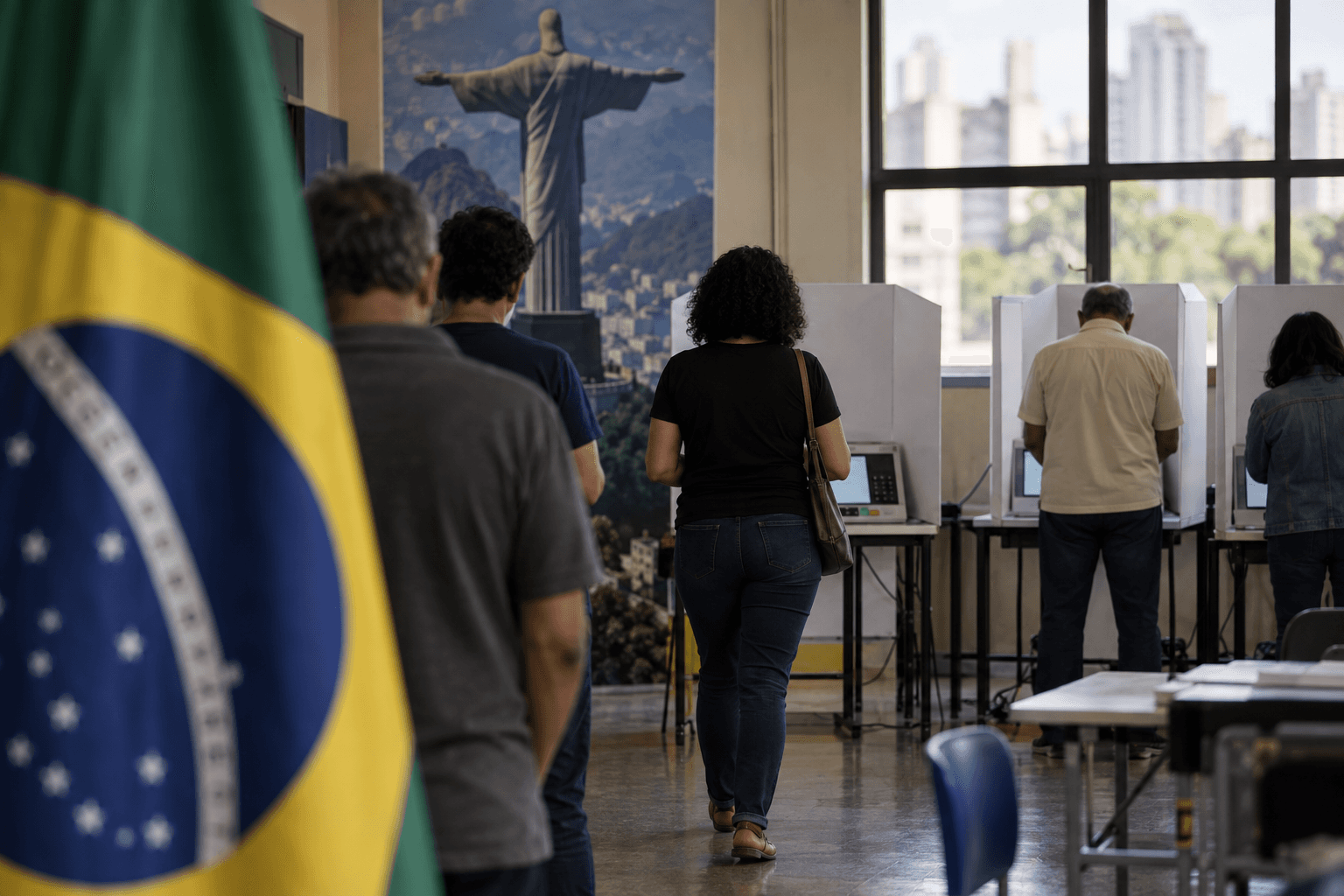
Brazil holds its first round on October 4. A candidate must win more than half of valid votes to avoid an October 25 runoff, a threshold neither front-runner reaches in the latest survey. The next debates, economic reports and independent polls will test whether Lula can rebuild the two points he lost in the first-round measure or whether Bolsonaro can turn a stable base into a clear lead. With most supporters describing their choices as settled, campaign organization and participation may matter as much as late persuasion when ballots are counted.