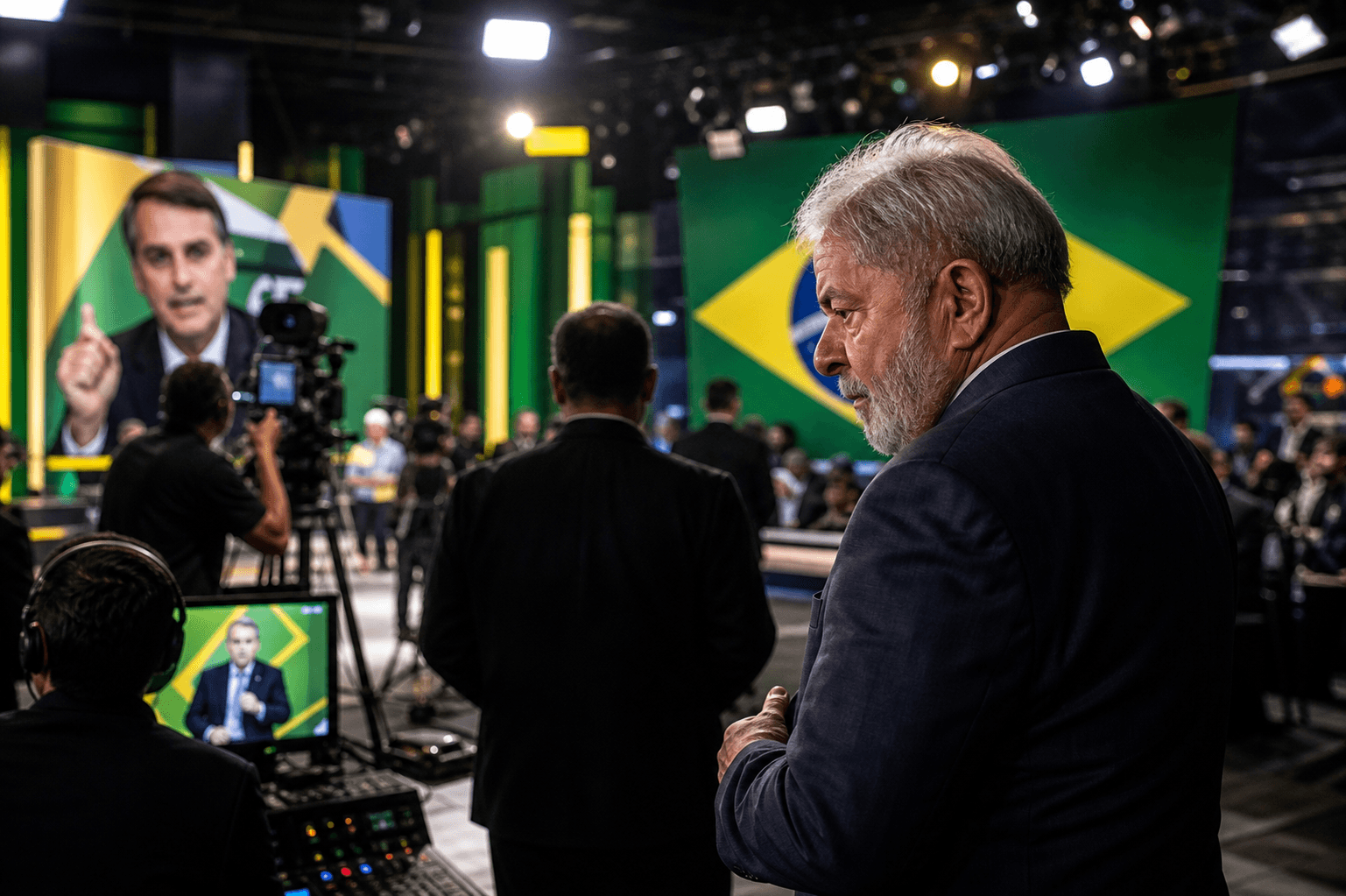
Brazil's presidential campaign has entered a more dangerous phase now that the free television and radio bloc has begun and the country's two main contenders are competing for the same national audience every day. The Associated Press reported on August 28 that Luiz Inacio Lula da Silva and Senator Flavio Bolsonaro opened the broadcast push with sharply negative messages, a sign that both camps believe the race is still pliable despite Lula's lead. The airtime still matters because it reaches older and rural voters who are less captive to social platforms, and because it forces campaigns to summarize what kind of country they say is at stake before the first round on October 4. After months in which the contest often felt like a polling abstraction, the race is moving into a period where tone, repetition and coalition muscle can change how undecided voters see the choice.
The new media stage also underlines the structural imbalance between the front-runners. AP said Lula and his allies control more than five minutes of daily broadcast time, while Flavio gets a little more than four, reflecting the broader coalition built around the incumbent. The Americas Society and Council of the Americas poll tracker, updated on August 25, says Lula is seeking a fourth term while Flavio tries to avenge his father's 2022 loss, and it notes that the campaign formally ends on October 3 ahead of the national vote. That schedule matters because Brazil's official campaign window compresses persuasion into a few crowded weeks, leaving less time for a trailing candidate to reinvent himself. For Lula, the challenge is to turn institutional reach into emotional conviction. For Flavio, the opening is to use daily exposure to argue that anti-Workers' Party fatigue is still powerful enough to force a runoff.
What makes the moment more consequential is that the messages are now becoming less filtered and more personal. AP described the early ads as a nastier fight than the opening phase of the contest, with Lula highlighting social gains and experience while also attacking Bolsonaro-family baggage, and Flavio using crime, debt and distrust of the left as his main frame. Those lines of attack fit a race that has narrowed from a broad field toward a more polarized duel, even though other candidates remain on the ballot. Broadcast time will not decide everything, but it does shape which grievances and promises get repeated often enough to matter. The next wave of polls, interviews and coalition signaling will show whether Lula's advantage is durable or whether Flavio can convert confrontation into real second-round momentum.
Polymarket is reflecting that uncertainty without declaring the race settled. On the provider's Brazil presidential board, Lula was the leading contract at 56 percent on August 31, while Flavio stood at 39 percent and total event volume was about $140 million. That mix still points to Lula as the favorite, but it no longer treats the runoff path as a fringe scenario. The more useful reading is not that traders can predict the vote better than campaigns can, but that the market now sees a meaningful chance that weeks of televised combat, fresh polling and regional shifts could keep Brazil's largest election from ending cleanly in the first round.