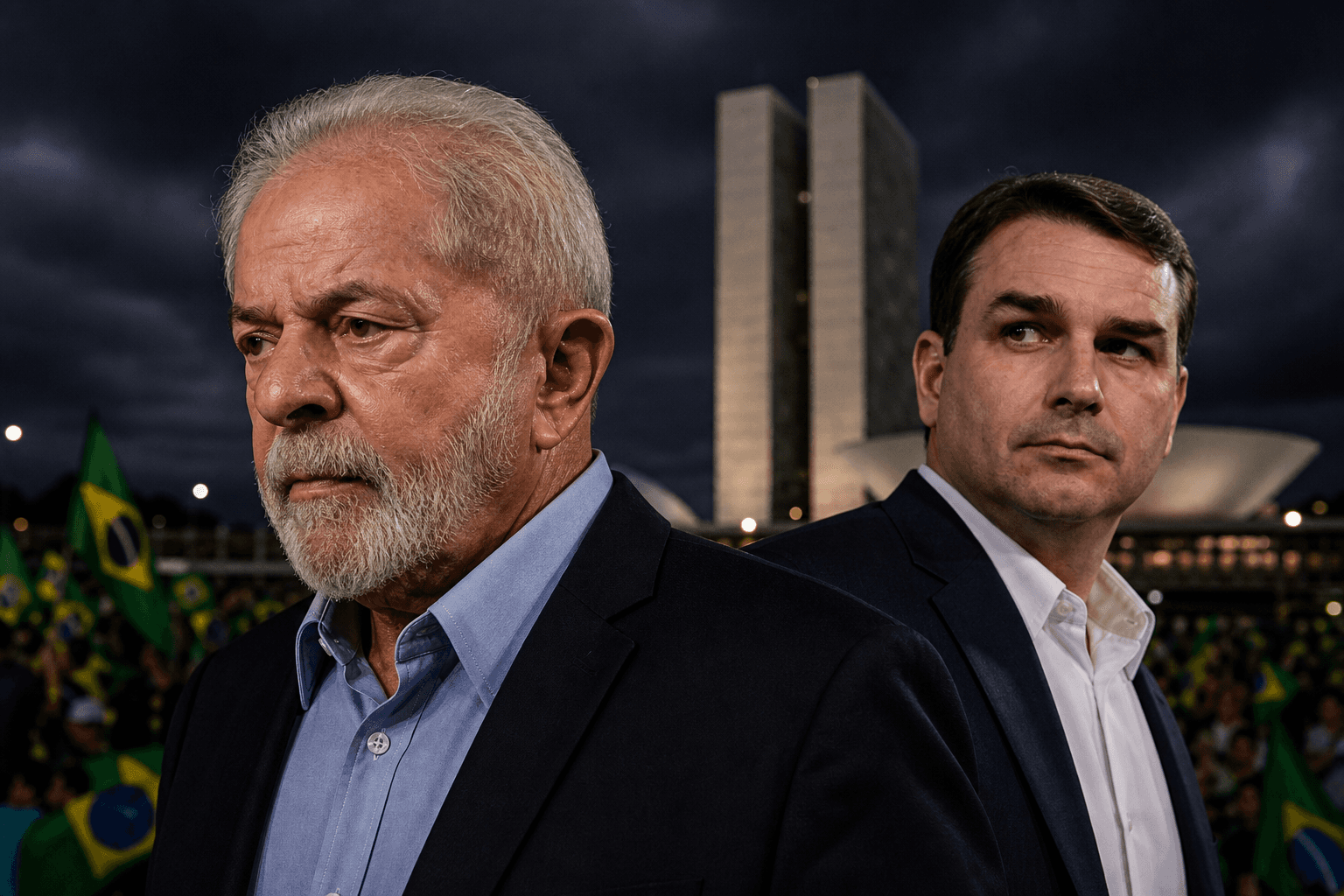
Brazil's presidential race is entering a rougher and more uncertain phase after new polling suggested President Luiz Inacio Lula da Silva still leads the field but no longer looks insulated from a genuinely competitive second round. The broad structure of the contest remains familiar: Lula retains the advantages of incumbency, name recognition and a loyal left-leaning base, while the Bolsonaro camp remains the strongest organizing force on the right. What has changed is the sense of margin. A BTG and Nexus survey published on August 24 kept Lula in front, yet it also showed Flavio Bolsonaro running strongly enough to make the runoff conversation feel immediate rather than hypothetical. For a campaign that had sometimes looked like a familiar Lula advantage waiting to be formalized, that is a meaningful shift in tone.
The same day brought another reminder that this election is still searching for a stable rhythm. Brazil's opening presidential debate went ahead without Lula, Flavio Bolsonaro or Romeu Zema, leaving a thinner stage than a major national contest would normally demand. Their absence did not erase the issues driving the race, but it did underline how much of the campaign is being organized around strategic positioning rather than open confrontation. Lula can still argue that experience, federal power and a record of social spending leave him best placed to dominate once the field narrows. Bolsonaro's allies, however, are increasingly betting that anti-Lula sentiment can be consolidated into a sharper runoff fight if the right avoids splintering and if voters who are tired of the current government begin treating Flavio as more than a family stand-in.
That is why the latest poll matters beyond the usual daily churn. Brazil's system rewards coalition building and strategic voting once the prospect of a second round hardens, and the fresh numbers feed exactly that instinct. If Lula cannot rebuild a visibly safer cushion before October, the campaign may become less about whether he finishes first and more about whether he can prevent the runoff from turning into a referendum on voter fatigue, inflation pressure and the durability of the governing coalition. Bolsonaro, meanwhile, does not need to win the argument all at once. He needs to keep proving that conservative voters, business skeptics and anti-incumbent swing blocs have somewhere viable to converge. The debate absences also mean that later televised clashes could carry even more weight, because many voters have not yet seen the leading camps fully test each other in the same arena.
Prediction markets are reflecting that tension without declaring the race overturned. On Polymarket, Lula still commands the leading contract, but the market is also giving Flavio Bolsonaro enough room to keep the runoff narrative alive instead of treating the president as a prohibitive favorite. That signal should be read as a gauge of uncertainty, not a substitute for ballots. The next stretch of polls, debates and coalition maneuvers will matter because they will show whether Lula can turn a clear lead into a durable one or whether Brazil is moving toward a much more combustible second round than his camp would prefer.