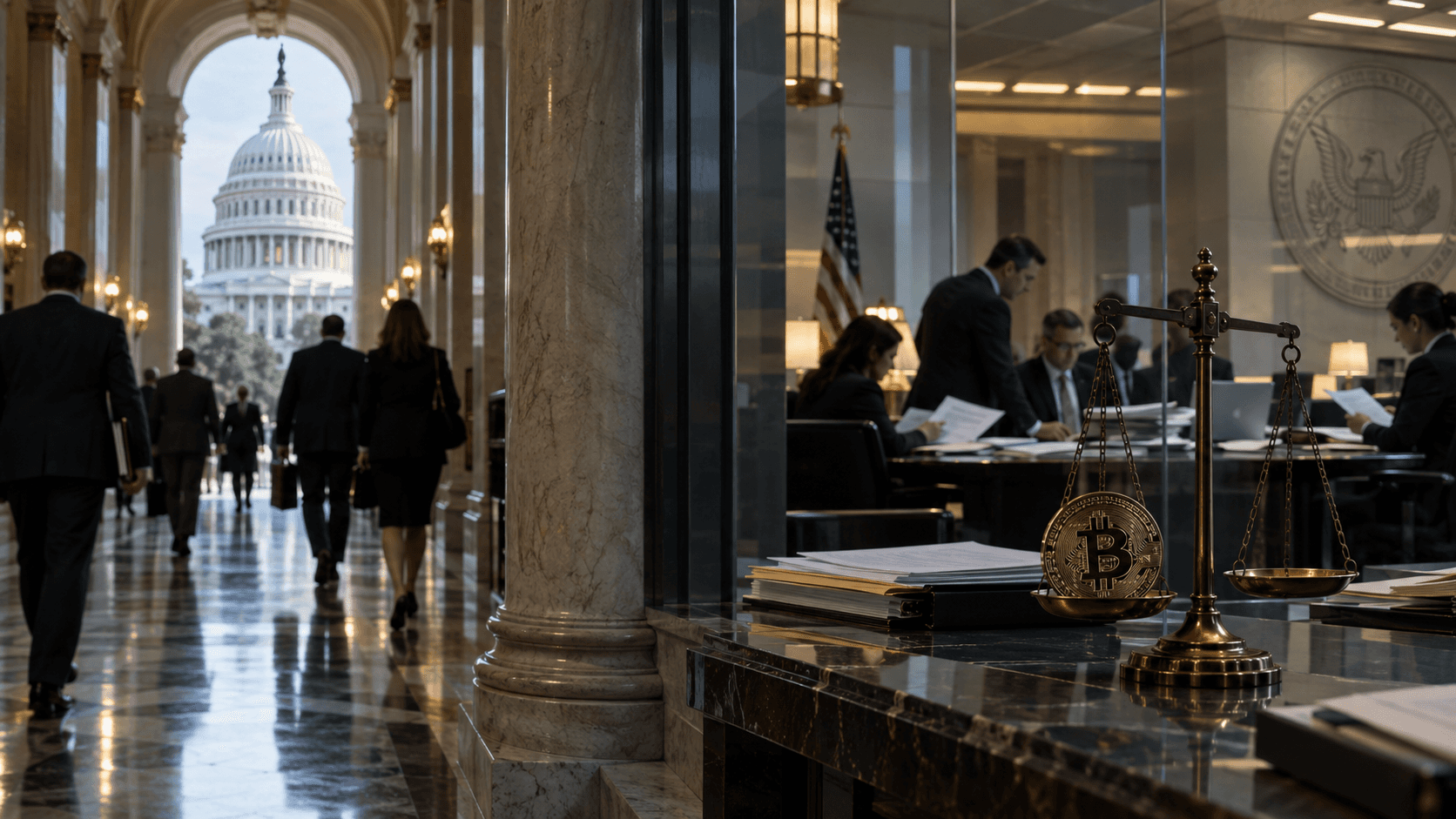
The campaign to create a comprehensive federal rulebook for digital assets has entered a more uncertain phase after the Senate failed to advance the Clarity Act. The procedural vote left the legislation ten votes short of the threshold needed to proceed, freezing the most ambitious crypto bill of the current Congress as lawmakers prepare to leave Washington ahead of the midterm elections. Supporters had argued that the measure would end years of jurisdictional ambiguity for exchanges, token issuers and investors. Its defeat leaves those disputes unresolved and shifts attention from a single legislative breakthrough to a slower combination of agency action, court decisions and future negotiations.
The vote exposed a coalition problem that industry spending and White House support could not solve. Four Republican senators joined Democrats in opposing the motion, while Democratic negotiators demanded stronger ethics restrictions involving President Donald Trump’s digital-asset interests and tighter consumer safeguards. The final tally demonstrated that broad agreement on the need for clearer rules did not translate into agreement on conflicts of interest, stablecoin rewards or the balance of authority between the Securities and Exchange Commission and the Commodity Futures Trading Commission. With the congressional calendar compressed, even a revised compromise would face little room for committee work and another floor attempt this year.
A regulatory alternative is already taking shape. Reporting in Spain’s Cinco Días said White House digital-assets adviser Patrick Witt indicated that agencies would now carry more of the burden after the bill stalled. That approach could produce guidance or enforcement priorities more quickly than Congress, but it would not offer the same permanence as a statute. Agency rules can be narrowed by courts, reversed by a later administration or challenged for exceeding existing authority. The political stakes also remain high because the crypto industry has invested heavily in elections and framed the legislation as a test of whether Washington can establish durable conditions for a major financial sector.
Prediction trading reflects that longer timetable. On Kalshi, the chance of a qualifying crypto structure bill becoming law before January 2027 was about 8%, while the outcome before January 2028 stood near 24%. A July 2027 deadline rose from roughly 10% to 18%, showing that participants have not abandoned legislation but have pushed the plausible window beyond the immediate session. Those are market-implied odds, not legislative forecasts, and they can change sharply if congressional leaders announce a new compromise.
The next phase will be measured by concrete agency proposals and any attempt to rebuild a bipartisan Senate group after the election. Regulators can address pieces of custody, disclosure and trading oversight under existing statutes, while lawmakers revisit ethics provisions and the division of responsibilities between watchdogs. The Clarity Act’s defeat is therefore not the end of federal crypto policy, but it does end the assumption that one sweeping bill was about to settle the field. The burden now falls on a fragmented process that may move in smaller steps and leave businesses navigating uncertainty for longer.