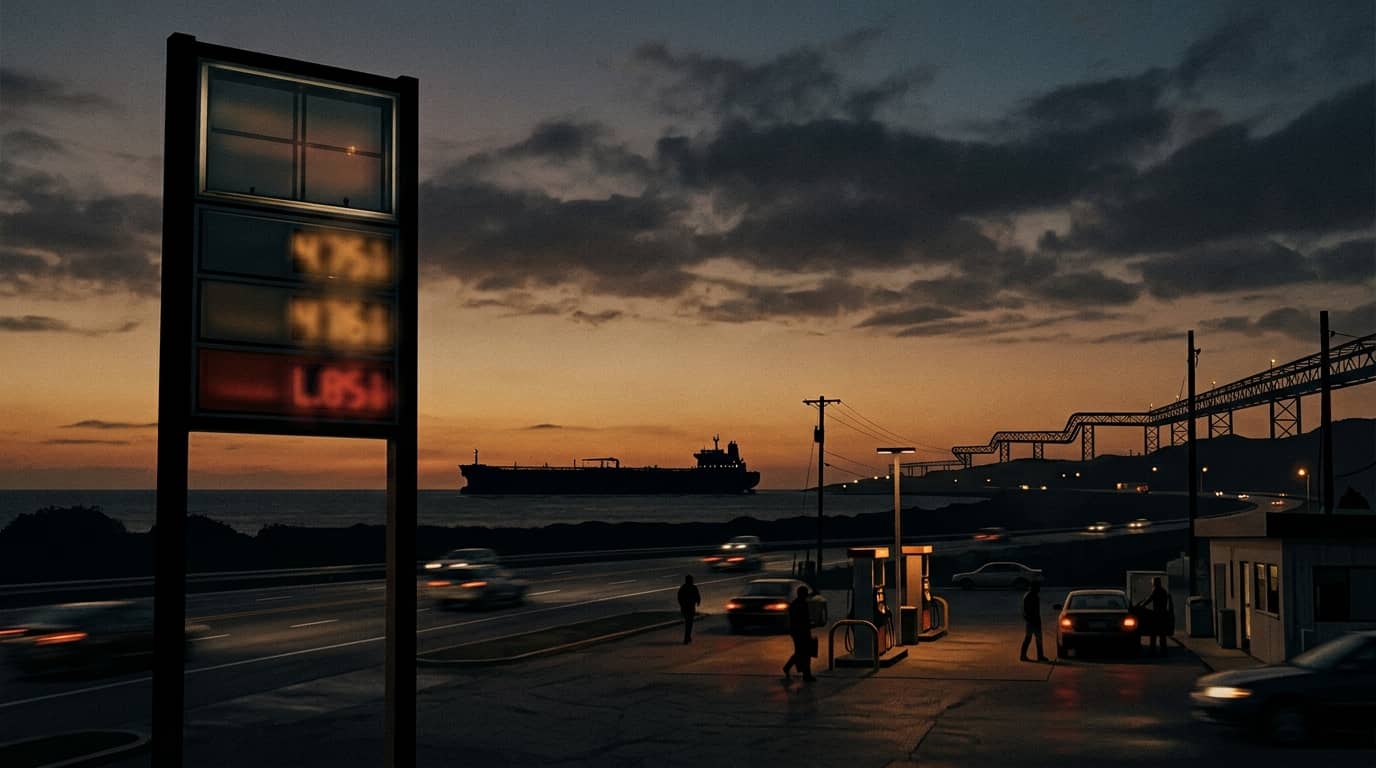
American drivers are paying $4.313 a gallon for regular gasoline as of Sunday, according to AAA, up from $4.147 a week ago and $3.179 a year ago. Diesel reached $6.204, an all-time national record. The increase is landing at the wrong time of year: mid-September is normally when pump prices ease as summer driving winds down and refiners switch to cheaper winter blends. AAA said Thursday that the national average had jumped 13 cents in a week and was back at levels last seen in early June, and it has kept climbing since.
The driver is the same one that has shaped energy markets all year. The Strait of Hormuz, which normally carries about a fifth of the world's oil, has been effectively closed to shipping since the U.S.-Israeli war on Iran began in late February. Brent crude, which traded near $72 a barrel before the war and peaked at $119 in its early weeks, had eased over the summer before a wave of U.S.-Iranian strikes in the strait pushed it back above $100 this week for the first time since July. Then, late Thursday into Friday, drones launched from Iraq's Maysan province struck Saudi Arabia's East-West crude pipeline in the Riyadh and Medina areas. Riyadh shut the 1,200-kilometer line, which had been carrying roughly four to five million barrels a day to the Red Sea port of Yanbu as the kingdom's main route around the blocked strait. No group has claimed the attack, Saudi Arabia has said it will not retaliate for now at Iraq's request, and no restart date has been given. Brent finished the week above $104.
That crude surge has not fully reached the pump yet. David Doherty, head of natural resources research at BloombergNEF, said it takes about three weeks for a rise in crude to be fully felt in gasoline prices, and as long again for it to fade. Patrick De Haan of GasBuddy said prices rose in nearly three of every five states last week while diesel climbed in all of them, some by nearly 50 cents a gallon in seven days. Labor Day had already set a nominal record at about $4.03, beating the $3.83 mark from 2012. Analysts still expect relief this fall from lower demand and the winter-blend switch that begins in much of the country after September 15, but they say the timing now depends on what happens in the Gulf.
Kalshi runs a weekly contract on where AAA's national average will stand on Monday, September 14. Traders currently put about 59% odds on the figure settling above $4.316 and roughly 45% on above $4.318, with only a small chance it clears $4.33. In other words, the market expects another fractional rise from Sunday's $4.313, not a spike, which is consistent with the lag between crude and retail prices.
The next signal comes Monday, when Iran, Iraq and the Gulf Cooperation Council coastal states meet in Salalah, Oman, to discuss a shared arrangement for managing traffic through the strait, building on the temporary two-lane route Iran and Oman agreed to last month. The U.S. naval blockade of Iranian ports remains in place, and Saudi Arabia has yet to say when the East-West line will pump again. Until one of those changes, the lag Doherty describes means the pressure on American pump prices has more room to run.