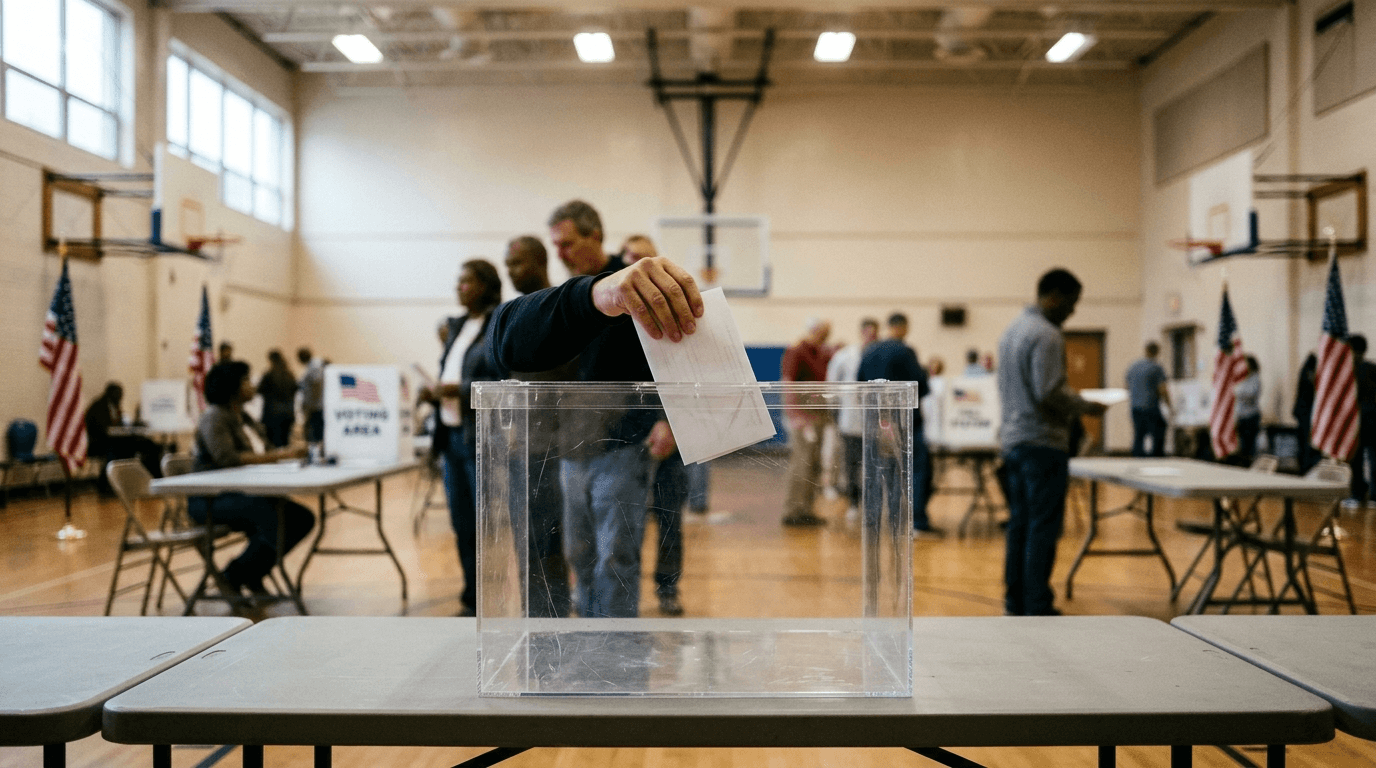
Georgia’s next governor will shape state policy on taxes, health care and other issues that affect residents’ lives. The race remains uncertain: an AJC poll found a statistical dead heat, with Rick Jackson slightly ahead and some likely voters undecided. On Kalshi, traders currently favor Keisha Lance Bottoms. The poll and the market offer different snapshots, not a settled answer about who will win. That contrast matters to readers because the office has authority over state agencies, the budget process and legislation, while the candidates have offered different policy proposals.
Kalshi put Bottoms at 62% and Jackson at 39%, as of 11:57 a.m. ET on Oct. 29. Those figures represent traders’ current beliefs, not a forecast. The market’s movement was limited over the preceding week: Bottoms was down 1 point over the week, while Jackson was up 1 point over the week. Trading was heavier on Jackson’s contract, with 98,128 contracts traded over the last day compared with 19,310 contracts traded over the last day on Bottoms’s. That difference describes activity in the contracts; it does not establish why traders favor one candidate or how the election will turn out. The market’s preference for Bottoms therefore sits alongside a poll that gave Jackson a slight edge, rather than resolving the contest.
The governor has substantial influence over state government: the office oversees state agencies, proposes the state budget and can sign or veto legislation. Bottoms proposes expanding Medicaid, lowering prescription costs and repealing Georgia’s abortion ban. Jackson proposes freezing property taxes and cutting the state income tax in half over four years. Those proposals point to sharply different choices on health care, taxes and the reach of state policy. The available evidence describes the proposals, but does not establish how either candidate would carry them out or what their effects would be. The race’s stakes are therefore not only about who holds office, but also about which set of proposals voters choose to advance.
The AJC poll also suggests both candidates have consolidated support within their parties, with 94% supporting their respective candidates. That does not answer how voters who remain undecided will choose, or how closely the poll reflects who will turn out. A poll is one measurement, and the market’s price is a record of what traders currently believe; neither guarantees the result. The contrast is useful precisely because it leaves room for uncertainty: the poll leans slightly toward Jackson, while traders’ current position favors Bottoms. The evidence here does not show how undecided voters will break, so neither snapshot should be read as a final verdict.
Georgia voters will choose their next governor in the November midterm election, according to the candidate profiles published by WCTV. Until then, the central question is whether the gap between the market’s view and the poll’s result persists as the election approaches. The governor’s office has consequential powers over the state budget and legislation, and the candidates have offered different approaches to taxes and health care. For voters, the outcome matters; for now, the available evidence does not settle it. The clearest reading is that traders currently favor Bottoms while one poll shows a close contest, leaving the result uncertain.