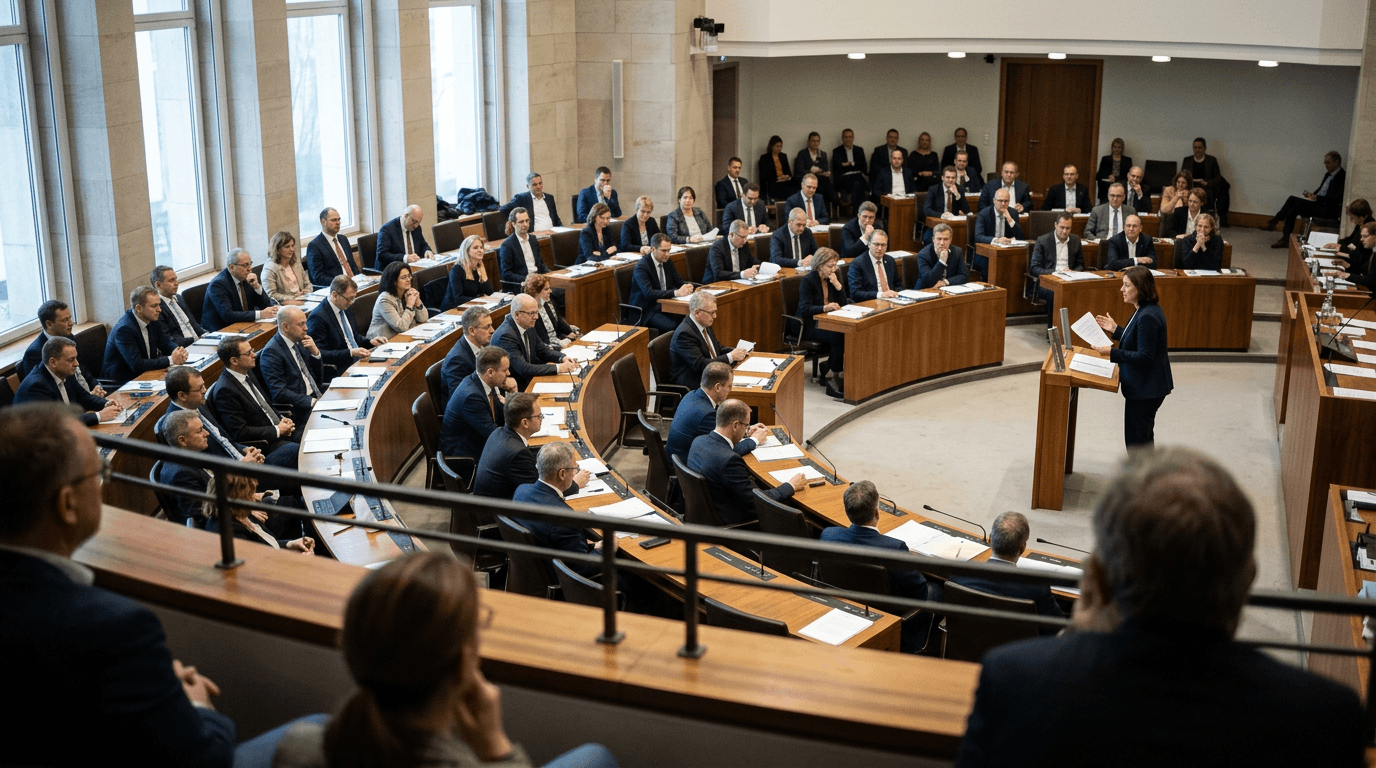
Germany's other major parties have held to one rule: they will not govern with the Alternative for Germany. In Saxony-Anhalt that rule is about to be tested in a vote to elect a state premier, set for December 8. If the AfD's candidate wins, it would be the first time the party has held the premiership of a German state. The state branch is under surveillance by the Federal Office for the Protection of the Constitution, which has classified it as a right-wing extremist movement.
The arithmetic is the whole story. The AfD took a plurality, 43.8% of the vote, doubling its support, but it won 39 of the 83 seats in the state parliament, short of a majority. Its candidate, Siegmund, needs a majority of 42 in the first two rounds of voting. That means votes from other parliamentary groups. The firewall exists because all the other major parties refuse to cooperate with the AfD, so any such votes would have to come from parties that refuse to work with it.
The signals from the other groups so far do not point to an easy path. The CDU parliamentary group has decided to leave the chamber during the vote, and the BSW intends to abstain. Neither is a vote for Siegmund. Whether those choices change the numbers he needs, and what happens if he falls short in the early rounds, is not settled.
What traders believe
Kalshi traders put the chance that the AfD is reported to have entered a German state government before the end of the year at 67% as of 9:05 a.m. ET on Nov. 20, up 31 points in the last day. The weekly move is identical, so the whole rise came within that single day. The book behind the price is modest for a question of this weight, with 757 contracts traded over the last day and 3,656 contracts open. Trading on this contract closes Dec. 31.
The longer-dated contracts show higher numbers, but they say little. The one running to the middle of next year shows 77%, yet it had 0 contracts traded over the last day. The furthest-dated contract is quoted at 96% and has 0 contracts open, so it is not a price anyone can trade at. The nearest contract is the only one with real activity behind it, and that activity is thin.
What is still open
The contract asks whether it will be reported that the AfD has entered a state government. It is not clear whether the election of a premier alone would meet that wording, or whether it would take cabinet seats as well. A premier vote and a seated government are different events, and traders could be pricing either. It is also unclear whether any party will give Siegmund the votes he needs, and what follows if he fails: a minority arrangement, another vote, or a fresh election.
The honest reading is that traders have grown much more confident in a short span, while the public positions of the CDU and the BSW leave the path to a majority unresolved. If the firewall holds on December 8, the question moves from whether Germany's mainstream parties will cooperate with the AfD to how long they can keep refusing while the party holds the largest bloc in a state parliament.