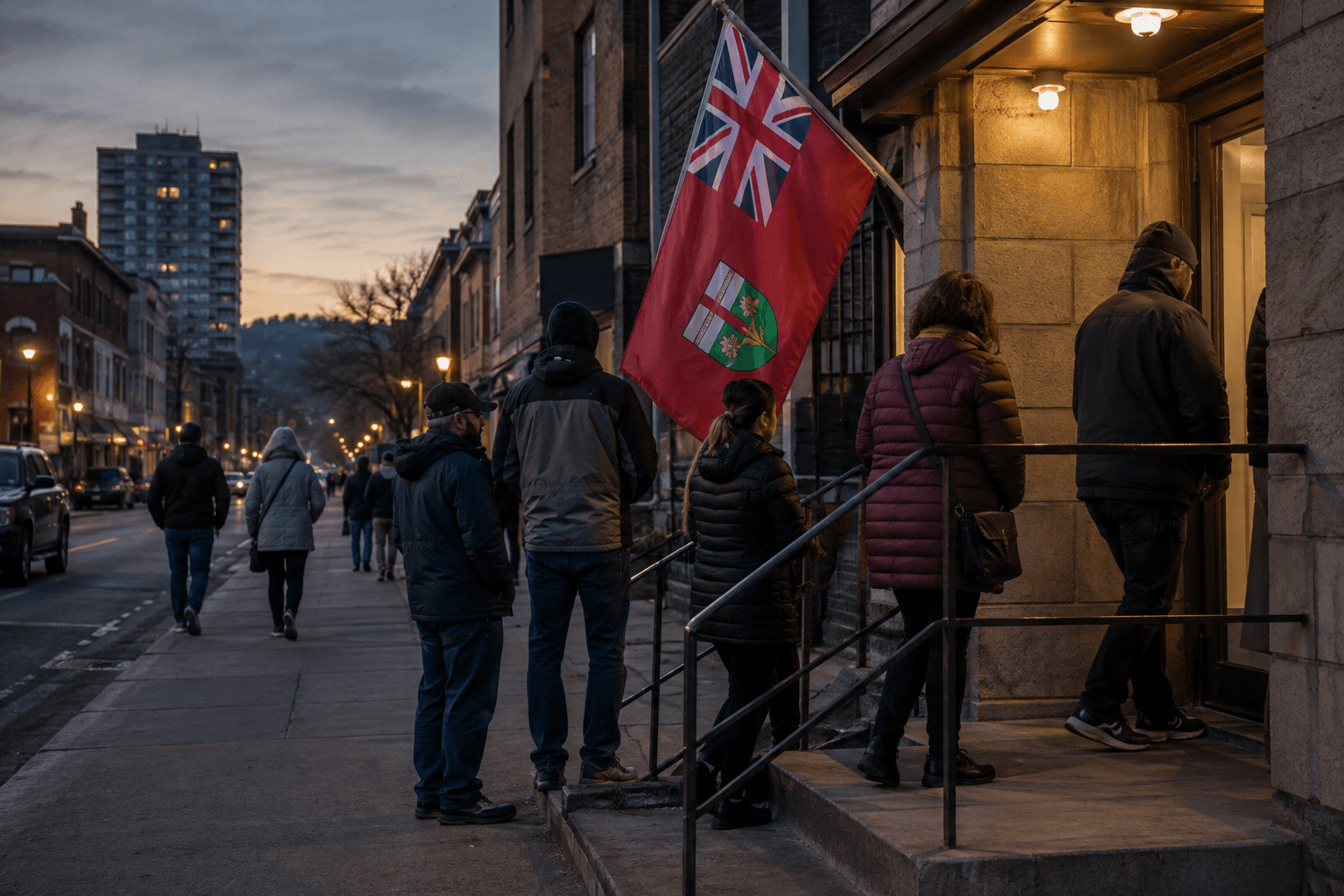
Hamilton East-Stoney Creek reached polling day with the kind of uncertainty that turns a local by election into a broader political test. Elections Ontario lists September third as election day for the riding, one of three provincial by elections called this cycle, and the contest has steadily grown more consequential than a routine seat fill. The vacancy opened after Neil Lumsden resigned, and the field quickly lined up around former New Democratic Party legislator Monique Taylor, Progressive Conservative candidate Jeff Beattie, Liberal Heino Doessing, and several smaller-party contenders. Taylor entered with stronger local political recognition and a ready made anti Ford message. Beattie entered with the advantage of representing the governing party in a riding where turnout, not ideology alone, could decide everything. By the morning voters headed to the polls, neither side could plausibly claim the race had settled.
Late August reporting made that ambiguity even sharper. CHCH reported on August twenty sixth that an EKOS poll commissioned by CUPE Ontario showed Taylor leading at thirty eight percent, with Beattie at thirty four and Doessing at twenty. The same survey found notable dissatisfaction with Premier Doug Ford's job performance and with hospital funding in Hamilton, giving the New Democrats a clear argument that local frustration could be turned into a protest vote. Taylor's campaign launch earlier in August had already framed the race around cost pressures, health care, and experience in provincial office. The Conservatives, though, were not fighting in obviously hostile terrain. A close spread in the poll left plenty of room for a stronger election day organization, a late break among soft Liberal voters, or simple turnout differences between neighborhoods that feel politically similar on paper but rarely vote with the same intensity.
Polymarket has treated the final stretch as a genuine swing rather than a static toss-up. By early September third, Jeff Beattie's contract sat around fifty and a half percent after gaining fifteen points in a day, while Monique Taylor had slipped to roughly thirty nine percent after falling more than twenty two points. Heino Doessing remained far back near four percent. Event turnover over the previous day ran above twenty six thousand dollars, and total volume had moved beyond sixty three thousand dollars. That does not mean traders have discovered hidden vote totals. It does show that sentiment moved quickly away from the late August poll picture and toward the possibility that Beattie, not Taylor, is carrying the stronger final day position.
The result will matter well beyond one seat. If Taylor wins, New Democrats will argue that frustration with Ford's government can still break through in places where health care and affordability dominate local conversation. If Beattie holds on, the Progressive Conservatives will have proof that the governing party can survive a difficult local mood and still edge out a recognizable opponent in a compressed contest. Either way, Hamilton East-Stoney Creek has become a referendum on more than the vacancy that created it. It is now a small but useful test of which Ontario party can translate grievance into actual turnout when the window to do it is measured in days rather than months.