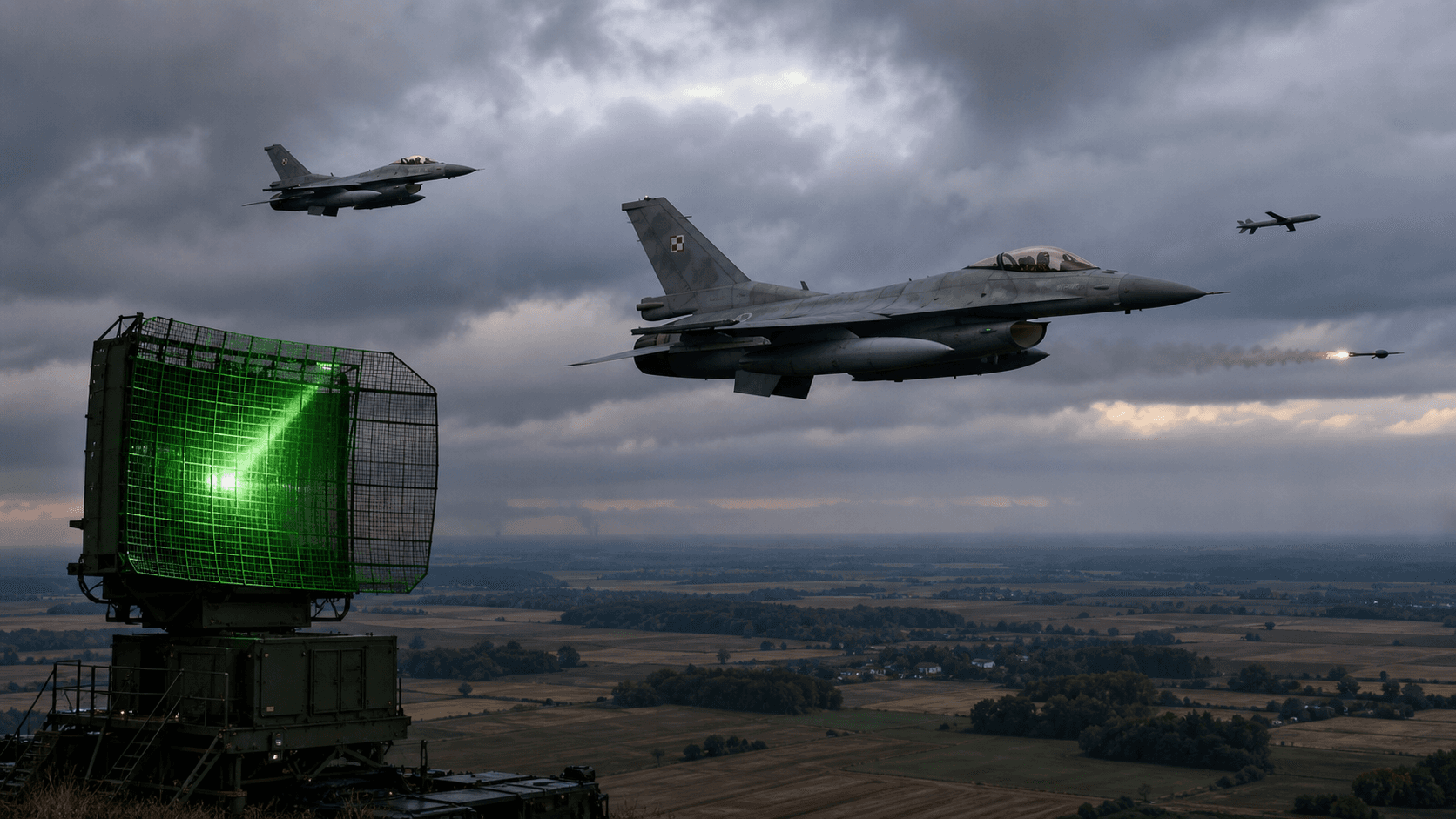
American forces spent Tuesday working through a target list inside Iran, and by evening the open question in the region was not whether Tehran would answer but where. US Central Command announced a new wave of strikes on Islamic Revolutionary Guard Corps positions at 12:55 p.m. Eastern and reported the operation finished by 6:39 p.m., naming air defence sites, radar systems, maritime assets and facilities, mine-laying capabilities and communications nodes among what it hit. Over the past three days Iran has fired on American installations in Jordan, the United Arab Emirates and Bahrain. The host country it has conspicuously left alone is Iraq — and within two hours of the CENTCOM announcement, traders had decided that would not hold.
The cycle restarted over the weekend, when the United States bombed Larak Island in the Strait of Hormuz, destroying two rocket launchers that CENTCOM said were preparing to fire missiles carrying naval mines into the waterway. Iran's answer came at dawn on Monday: a combined missile and drone operation against the King Hussein and Al Azraq bases in Jordan, where the Jordanian army said it intercepted eight missiles that had breached the kingdom's airspace, and dozens of drones sent at the Al Menhad airbase in the Emirates, which the UAE defence ministry said was not successfully struck. President Masoud Pezeshkian said Iran was not looking for war but would never sit still in the face of aggression. The Revolutionary Guard called the American strike a strategic and fatal mistake.
Tuesday's exchange was larger. Alongside the CENTCOM wave, the Guard said it launched missiles and drones at American infrastructure in Juffair, Bahrain, and Jordan's military reported intercepting ten of thirteen ballistic missiles, with three falling in remote areas and no casualties. President Donald Trump said Iran would be hit much harder if it retaliated again, describing an even larger operation still held in reserve. An Iranian official said two people were killed and several wounded when a residential wedding was struck in Hormozgan province, the kind of civilian toll that has historically narrowed Tehran's room to absorb a strike quietly.
Iraq is the gap in that map, and not because Iran has been gentle with it. Since the war began in February, Iranian drones and missiles have hit the Kurdistan Region roughly two hundred times, and on August 17 Hadid-110 drones struck the office of Kurdistan Regional Government Prime Minister Masrour Barzani and the residence of the Parastin intelligence director in Pirmam, outside Erbil — the second time Iran had aimed at the region's leadership. What has changed is the tempo: through the second half of August, as the retaliation cycle ran toward the Gulf instead, Iraq went quiet.
That is what repriced. The Polymarket contract asking whether Iran will target Iraq by September 15 traded near 31 percent on Tuesday afternoon and sat above 96 percent by evening, an unusually literal reading of where the next salvo goes. Its terms are narrow, which is part of what makes the move notable: only an air strike or a surface-to-surface missile strike that Iran itself claims, or that is confirmed to have come from Iranian territory, counts. Proxy attacks, artillery and ground incursions do not, and the version of the contract that ran only to August 31 expired near 2 percent. The next thing to watch is not a negotiation but an air defence alert over Erbil or Ain al-Asad.