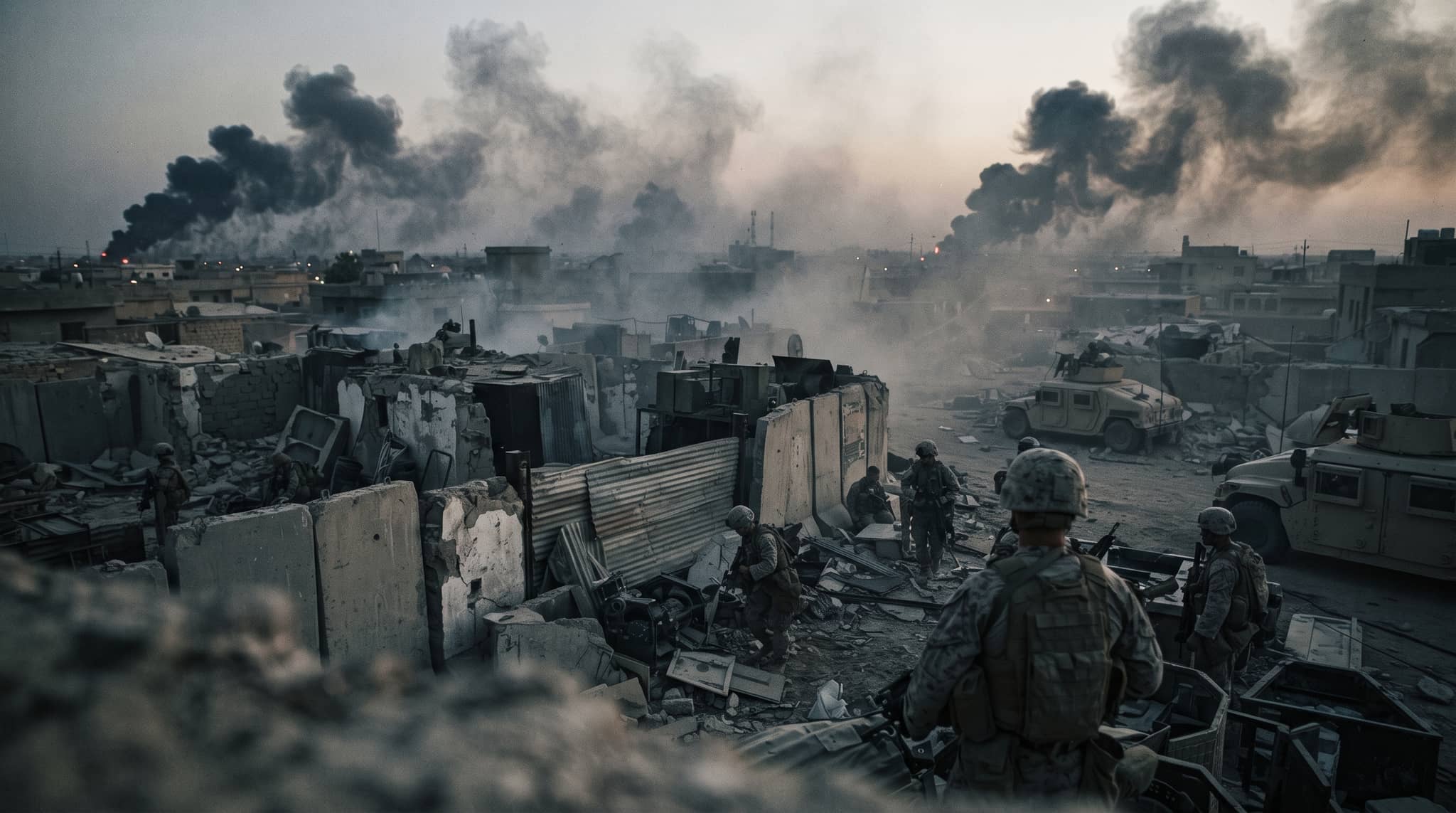
The United States and Iran entered their thirteenth consecutive night of military strikes on July 24, after President Donald Trump declared the June ceasefire agreement over on July 8. The June 17 Islamabad Memorandum — a 14-point agreement that halted military operations and reopened the Strait of Hormuz — collapsed after Iranian forces resumed attacks on commercial vessels in the strait, prompting US retaliatory strikes. US Central Command said the latest round of strikes targeted Iranian command centers, drone storage facilities, communication networks, coastal surveillance sites, and maritime capabilities.
Iran rejected a 15-point US ceasefire proposal delivered by Iraqi Prime Minister Ali al-Zaidi on July 23, according to officials cited by TIME and The Jerusalem Post. Iranian officials stated they were not interested in a temporary deal that left the issue of control over the Strait of Hormuz unresolved. Iran also threatened to strike Tel Aviv and request Houthi rebels close the Bab el-Mandeb Strait if President Trump follows through on his threat to launch a "massive attack" on Iranian infrastructure and Tehran, according to two Iranian officials cited by The New York Times.
Israel has remained on high alert but has not directly engaged Iranian territory in the latest exchanges. Prime Minister Benjamin Netanyahu is set to convene the restricted security cabinet on Friday, according to Ynetnews, as the Israeli military prepares for various scenarios including possible Iranian retaliation that could involve missile or drone strikes against Israeli territory.
Brent crude oil topped $100 per barrel on July 24 for the first time since May 2026, driven by the near-standstill of shipping through the Strait of Hormuz and new Houthi attacks on Saudi tankers in the Red Sea. The economic impact of the conflict has been severe, with energy prices surging as global markets react to the ongoing instability in the region.
The next potential catalyst for a breakdown of the Israel-Iran ceasefire would be a direct military exchange between the two countries — either an Israeli strike on Iranian territory or an Iranian missile or drone strike on Israel. Iran's conditional threat to strike Tel Aviv, if executed, would clearly break the ceasefire. As of July 24, no such exchange has been confirmed, but the risk remains elevated as the US-Iran conflict intensifies.