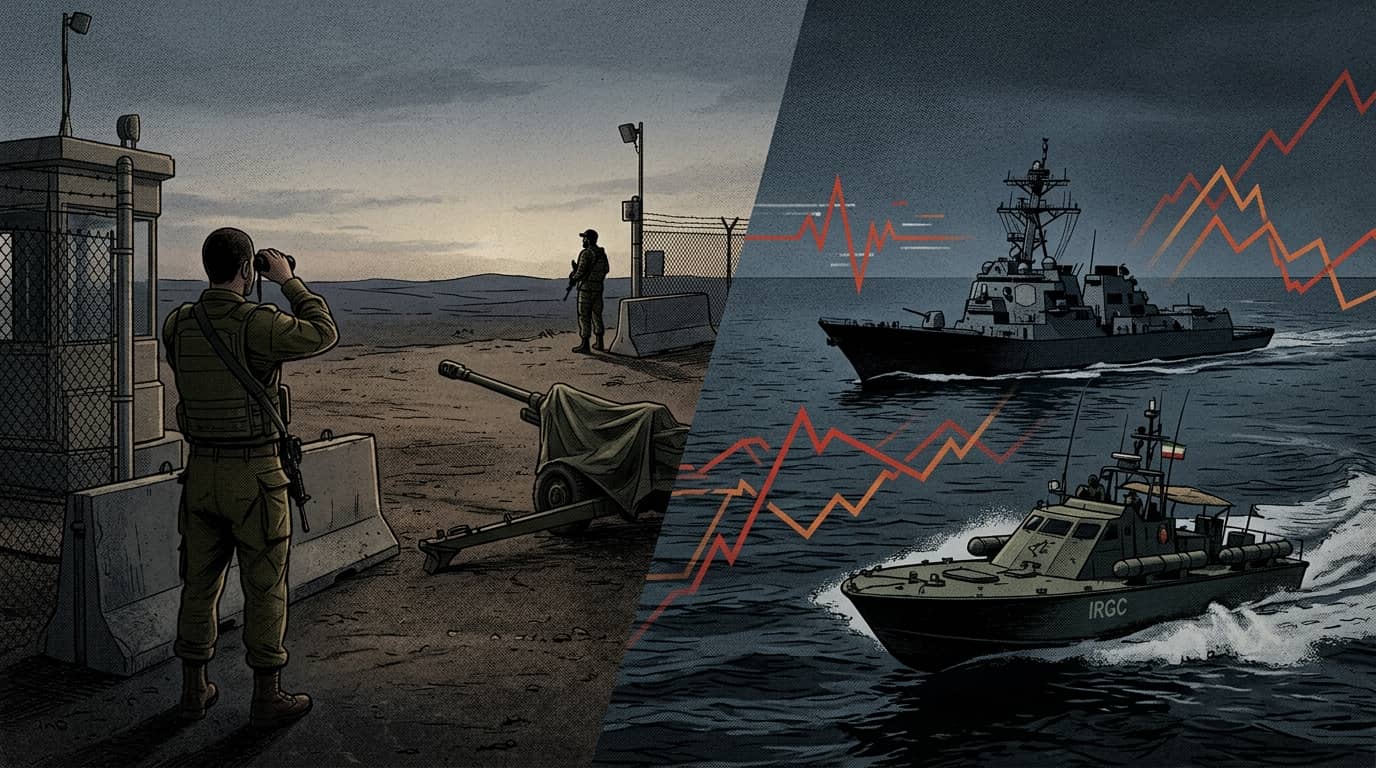
A ceasefire between Israel and Iran remains in effect as of July 25, 2026, with no confirmed reports of direct air or missile strikes between the two countries since the United States declared the June Islamabad Memorandum truce void on July 8. The broader regional conflict, including U.S. military operations against Iran and disruptions in the Strait of Hormuz, has continued to escalate.
U.S. Central Command disabled the Iranian commercial vessel M/T Lavine in the Gulf of Oman on or around July 24 after it attempted to run a blockade four times, according to the Associated Press. The Navy said it was the second such disabling since the blockade was reimposed. The Strait of Hormuz, through which about 12% of global trade passes, has been largely shut down by Iranian attacks.
Oil prices briefly surged above $100 per barrel on July 23-24 before settling around $97, with NBC News reporting that Iran-backed Houthi attacks on Saudi oil tankers in the Red Sea and the ongoing U.S.-Iran blockade contributed to the spike. President Trump has threatened a "massive attack" as U.S. strikes on Iran have continued for 13 consecutive nights.
The absence of direct Israel-Iran military exchanges during this period is notable given the wider conflict. Neither the Associated Press nor NBC News, in their detailed coverage of the U.S.-Iran confrontations through July 24, reported any Israeli strike on Iran or Iranian strike on Israel.
The market will track whether the ceasefire holds through the remainder of July 25, with no confirmed violations reported as of the morning. An air strike or surface-to-surface missile strike between the two countries would break the current state of non-hostilities.