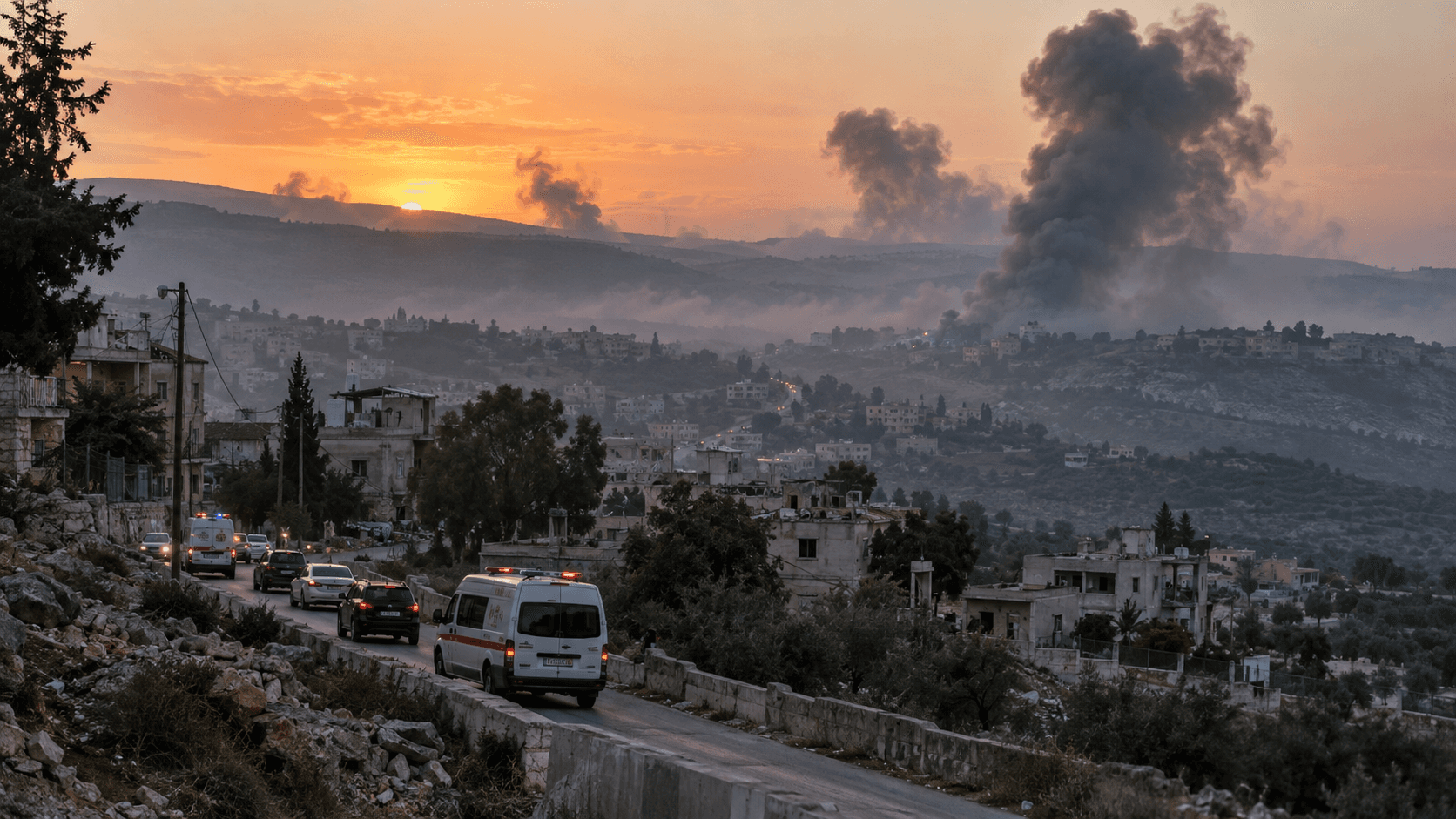
Fighting between Israel and Hezbollah has intensified across southern Lebanon, exposing how little restraint remains in a ceasefire reached in June. The Norwegian Refugee Council said Wednesday that 27 people were killed and 69 wounded in Lebanon between September 5 and 7, including children, women and emergency workers. The toll followed strikes on Kfar Rumman and other locations around Nabatieh, while Israeli forces reported repeated drone attacks against their troops. What began as a concentrated fight around the strategic Ali Taher hill is now spreading into a cycle of attacks and retaliation that residents increasingly experience as a return to open war. The renewed violence has also made ordinary movement, medical care and reconstruction harder in communities that had only begun recovering from previous rounds of conflict.
Israel's military said Hezbollah launched explosive drones toward troops operating in what it calls a security zone in southern Lebanon. In a September 8 account, the military said it answered by striking command centers, weapons storage sites and other infrastructure used by the group. Lebanese officials and humanitarian organizations describe the same campaign as a series of attacks that has killed civilians, damaged medical facilities and impeded recovery from earlier fighting. Those competing descriptions do not settle questions of responsibility, but they establish a dangerous common fact: armed exchanges continued after the June agreement and became markedly more lethal during the first week of September.
Polymarket's contract on qualifying Israeli military action in Lebanon on September 9 rose about 24.5 percentage points over one day to roughly 94.5 percent. The broader date-based event had drawn about $455,000 in total activity, though only around $4,300 arrived during the latest twenty-four hours. The price move reflects traders reacting to reported strikes; it does not verify individual targets, casualty figures or compliance with international law. Those claims require independent reporting and official investigation, especially in a conflict where both sides frame their actions as responses to the other's violations.
The latest escalation is material because the ceasefire was supposed to create space for armed groups to pull back and for Lebanese state authority to return to the border. Instead, the Norwegian Refugee Council says more than 160,000 people remained displaced in July and warned that fresh attacks are compounding the humanitarian strain. Israel argues that Hezbollah is rebuilding capabilities and threatening its forces, while Lebanese officials say continued strikes violate the agreement and sovereignty of the country. The immediate test is whether outside mediators can stop daily retaliation from hardening into a wider campaign. Their task includes restoring reliable channels for reporting alleged violations before each incident becomes the justification for the next. Updated casualty reporting, access for relief agencies and any verified halt in drone launches or airstrikes will be the clearest indicators of whether the June truce still has practical force.