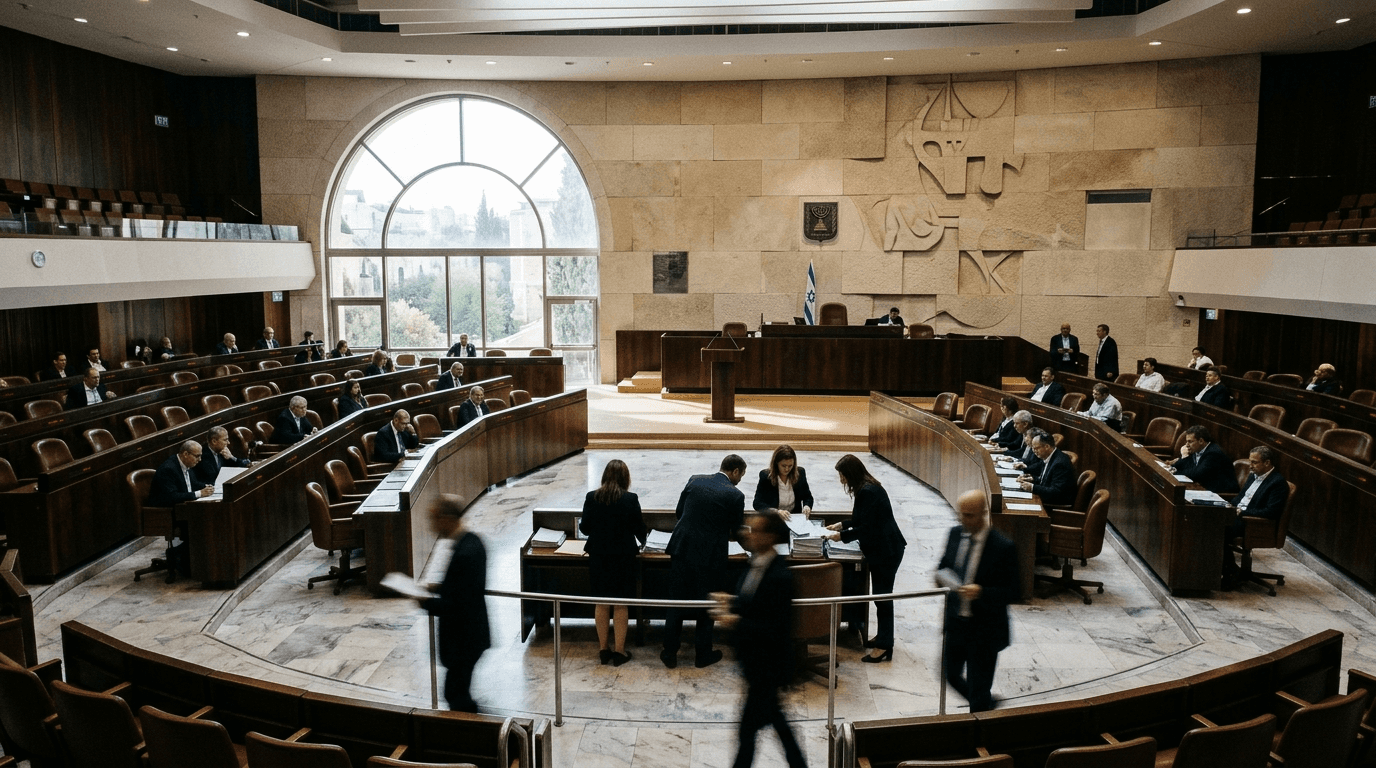
Israel’s election has left the country without a clear governing majority, even after opposition leaders agreed to recommend Gadi Eisenkot to form the next government. The decision over who governs matters beyond the contest between political blocs: it will determine who holds the premiership while parties try to assemble a government. But an endorsement is not the same as the support needed to govern, and the election result has not settled which candidate can secure it. The question is no longer only who has been named; it is whether that choice can command enough backing to form a government.
The election produced no majority in the 120-seat Knesset, according to Al Jazeera. The opposition’s proposed route to power may depend on Arab-led parties, but its leaders are divided over working with them. That leaves two linked uncertainties: whom President Isaac Herzog will ask to form a government, and whether the candidate can gather enough support to govern. The opposition’s recommendation identifies a possible candidate, but it does not itself resolve those questions or settle what kind of coalition could result.
Kalshi’s market puts Eisenkot at 56% and Benjamin Netanyahu at 7%, as of 2:08 p.m. ET on Nov. 5. Those prices describe what traders currently believe, not a forecast of who will lead Israel. The market also assigns 39% to “No one,” underscoring that the outcome is not framed only as a choice between the two named candidates. Netanyahu’s price down 5 points over the week, while Eisenkot’s up 0 points over the week. These movements record changes in trader belief; they do not establish what caused them. The market is a snapshot of uncertainty, not evidence that either candidate can put together a governing majority.
Eisenkot’s support from opposition leaders is a significant step, but it is not the same as a governing arrangement. The report says the opposition’s route may hinge on Arab-led parties and that opposition leaders are divided over working with them. Netanyahu, meanwhile, has called for a broad national government under his leadership, though the report says no opposition leader had expressed openness to joining him. These competing positions leave the route to power unresolved: a recommendation for Eisenkot does not show that the parties have agreed on a coalition, while Netanyahu’s call for a broad government does not show that rivals will join it.
The process leaves open the possibility of a prolonged impasse. Al Jazeera reports that a candidate commissioned by Herzog has 28 days to try to form a government, with a possible extension; if efforts fail, another election could follow. Netanyahu remains caretaker prime minister until a new government is formed. The next test is whether Herzog’s consultations produce a candidate able to assemble enough support, and whether the parties can accept the compromises that support would require. The market’s prices cannot answer those institutional questions: they register current trader beliefs while negotiations and coalition choices remain unresolved. Until a government is formed, the distinction between being favored in a market and being able to govern is central.