Health and Human Services Secretary Robert F. Kennedy Jr. acknowledged on Friday that measles killed a six-week-old infant in Pennsylvania, retreating from weeks of public doubt about whether the state's reported deaths had happened at all. Lancaster County coroner Stephen Diamantoni said a review of the child's medical records established measles as the cause of death last month. The infant had been born with Amish lethal microcephaly, a rare genetic disorder that leaves children vulnerable to viral infection. "The Lancaster County Coroner has now publicly stated that measles caused only the second infant's death," Kennedy wrote on social media, separating that case from a second infant whose death the coroner attributed to a lacerated spleen.
The confrontation began when Pennsylvania's health department announced two "measles-associated" deaths among unvaccinated Lancaster County residents, the first such deaths reported nationally this year. Kennedy questioned whether they had occurred at all. Officials "cannot find any measles deaths in Lancaster County," he told an audience in Tampa, and in a later post he accused Governor Josh Shapiro of announcing the deaths with "giddy delight" in what he called a replay of the Democrats' COVID playbook, suggesting the cases may have been "fabricated by one of the Governor's hopeful staffers."
Reuters reported this week that Kennedy also asked the CDC's new director, Erica Schwartz, to strip the two deaths from the agency's online measles tally after staff had already accepted the state's characterization, and that she did so without objection. Shapiro answered the coroner's finding by writing that Kennedy "chose to sow doubt, play politics, direct the CDC not to acknowledge these deaths, and even accuse me of fabricating these tragedies." Kennedy countered that the outcome vindicated federal caution, saying the facts "demonstrate why CDC waited for the evidence rather than allowing political grandstanding to dictate its reporting."
Much of the underlying dispute was definitional. States use "measles-associated" to track outbreaks in real time, while a coroner establishes a specific chain of causation, and the two categories can differ without contradicting each other. But the gap left room for something worse. It "looked to a reasonable observer like either incompetence or concealment," Dr. Amesh Adalja of the University of Pittsburgh Medical Center told PolitiFact. Traders reading the same week concluded the secretary had come through it intact: a Polymarket contract on whether Kennedy leaves the administration before 2027 fell from roughly 25 percent on Friday morning to about 12 percent by Sunday, its lowest range in at least a month.
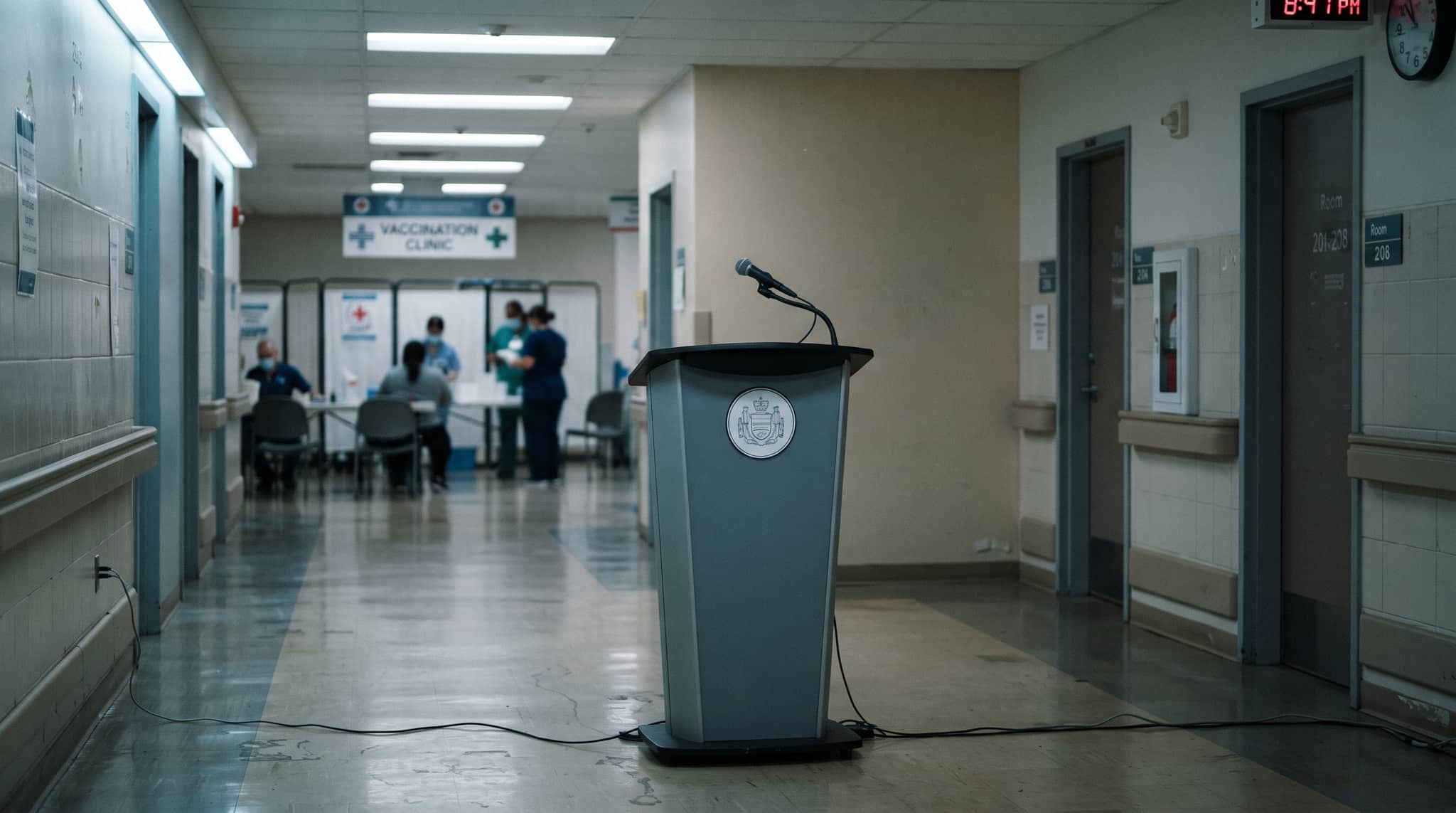
The accounting fight is not settled. Kennedy noted that the National Center for Health Statistics holds no 2026 death records listing measles as an underlying cause, and said the CDC would update its figures as records arrive, leaving open whether the Lancaster County deaths return to the federal tally now that one carries a coroner's ruling. The backdrop is the worst measles year in more than three decades, with over 2,900 cases nationally, already more than all of last year, and Pennsylvania reporting 577 cases statewide. Shapiro declined Kennedy's offer of federal staff and is opening pop-up vaccination clinics as schools return and colder months approach.