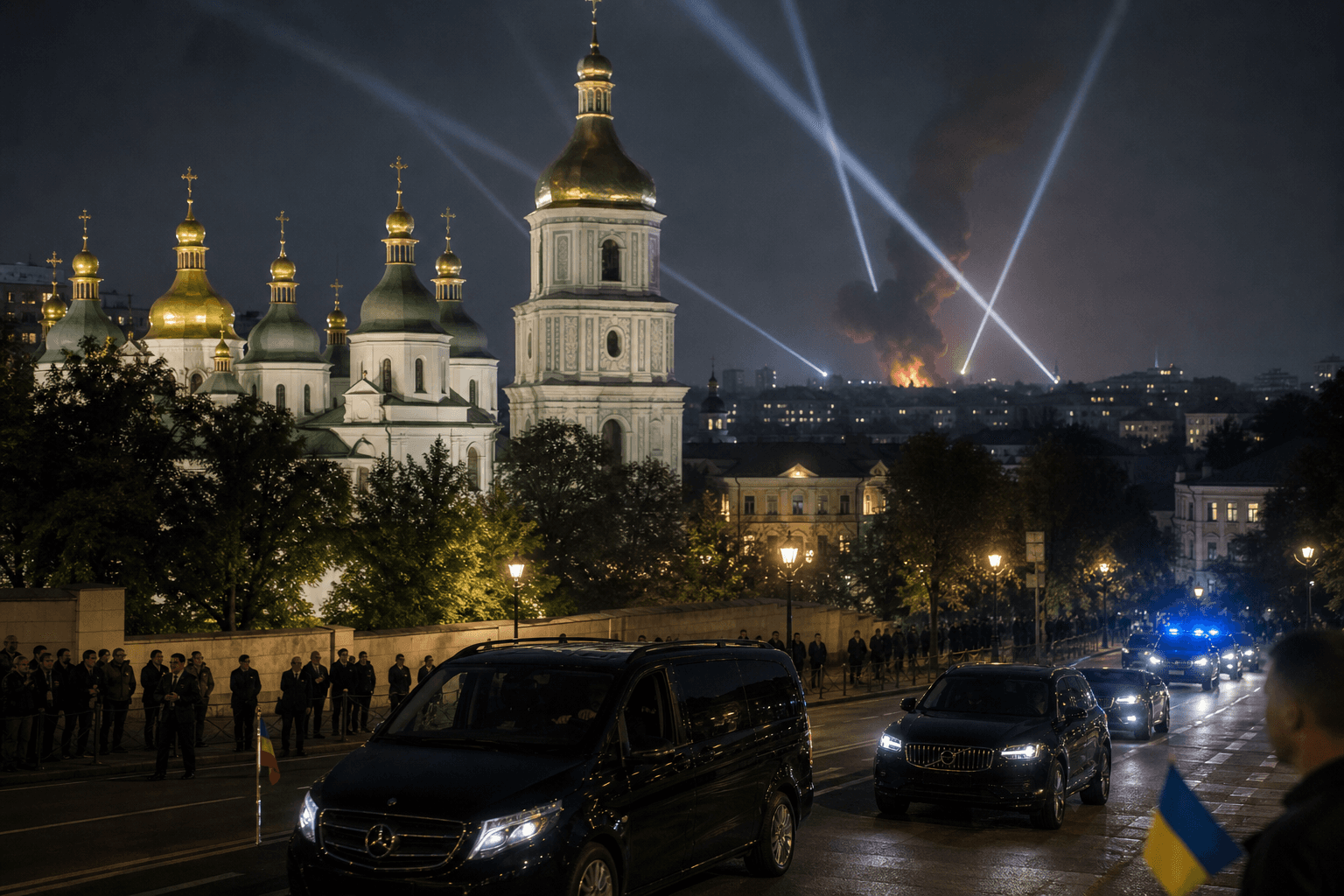
Kyiv reached another Independence Day under the kind of pressure that turns celebration into an act of defiance. Ukraine marked the anniversary on August 24 with President Volodymyr Zelensky and a cluster of European leaders gathered in the capital, projecting solidarity at a moment when Russia's war is again being fought as much through long-range strikes and psychological strain as through major front-line breakthroughs. That setting matters because the city is more than a seat of government. It is the political symbol that Moscow still tries to rattle whenever it wants to remind Ukrainians that no amount of ceremony, diplomacy or wartime adaptation fully removes the danger hanging over the capital.
The atmosphere was sharpened by events beyond Kyiv as well as inside it. Associated Press reported that fresh Russian attacks struck Odesa even as leaders met in the capital, another reminder that the Kremlin can pair symbolic dates with real pressure on civilian centers and infrastructure. British Prime Minister Andy Burnham used the visit to announce new cooperation that would help Ukraine produce long-range missiles with British technical support, while Downing Street framed the trip as a public reaffirmation that London's backing would not weaken. For Ukraine, those gestures were not merely diplomatic theater. They answered a practical need: the country is trying to keep civilian morale intact while building enough defensive and strike capacity to survive another stretch of heavy aerial warfare.
That is why the mood around Kyiv remains so brittle even when world leaders are physically present. Independence Day gatherings can project resilience, but they also highlight how exposed the capital remains to the rhythms of Russia's missile and drone campaign. Ukraine has become more capable at interception, dispersal and recovery, yet officials and residents have learned that protection is never absolute. Each fresh barrage elsewhere in the country reinforces the same lesson. The war can feel geographically diffuse one hour and suddenly intimate the next, especially when anniversaries, summits or highly visible visits offer Russia an obvious opportunity to inject fear into the public conversation. The strategic question is not whether Kyiv can stage normal civic rituals under wartime conditions; it is whether those rituals can continue without being repeatedly pulled back into the logic of emergency.
Prediction markets are capturing that anxiety in unusually direct form. On Polymarket, the contract tied to whether Russia targets Kyiv on August 25 is trading close to even, which shows how unresolved traders think the near-term risk still is despite the pageantry and allied support on display. That should not be mistaken for proof that a strike will happen. It is better understood as a snapshot of how much danger still surrounds the capital after another day of war, diplomacy and public resolve. The next test is brutally simple: whether Kyiv can move from this symbolic holiday into the next night without the kind of attack that would turn a day of solidarity into another chapter of survival.