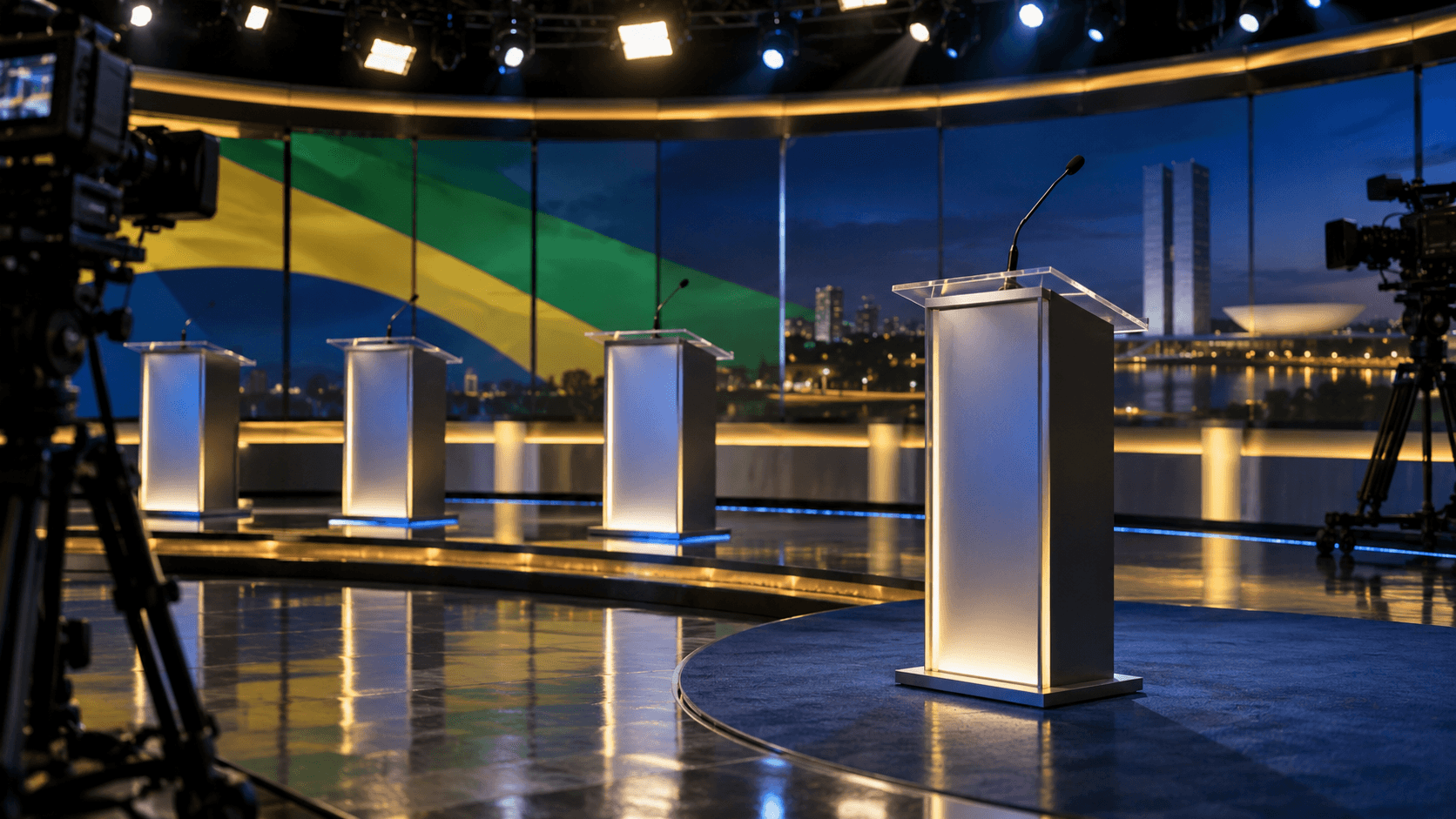
Brazilian President Luiz Inácio Lula da Silva has decided not to take part in the final televised debate before Sunday’s first-round election, according to reporting from his campaign, removing the last scheduled chance for a direct pre-election confrontation with leading challenger Flávio Bolsonaro. The Globo debate is set for Thursday, October 1, three days before voting. Lula’s allies say the incumbent expects to become the principal target of the other candidates and sees little benefit in accepting that exposure in a race where a small mistake could matter.
The decision caps weeks of uncertainty over the debate calendar. Lula and Bolsonaro both skipped the campaign’s first televised encounter, and other planned debates were canceled when the leading candidates did not confirm attendance. Globo invited Lula, Bolsonaro, Augusto Cury and Ronaldo Caiado to its closing event. Bolsonaro initially suggested he would participate only if Lula appeared, but his campaign reversed course and said he would attend regardless. That gives the challenger a national platform from which to criticize the president’s absence while leaving Lula free to continue interviews, travel and campaign events on his own terms.
The strategic calculation reflects an unusually compressed contest. Lula’s advisers have argued that a multi-candidate format would expose him to attacks from several directions while limiting the time available for a sustained exchange with Bolsonaro. Supporters of participation countered that the broadcast could reach undecided voters and offer the president a chance to challenge his main opponent directly. Recent reporting has described the likely runoff as statistically close, making both campaigns sensitive to late events that could move a relatively small number of voters or affect turnout.
Polymarket traders put Flávio Bolsonaro at about 59.7% to win the presidency in the latest snapshot, with Lula near 40.5%. The broader election event had recorded roughly $696,000 in activity over the previous day. Those odds reflect expectations about the entire election, including the possibility of an October 25 runoff; they do not show whether Lula will appear at the Globo debate and do not replace polling or the official vote count. The debate decision matters because it changes the final campaign setting, not because it settles the race.
The immediate next step is confirmation from the campaigns and Globo as the event approaches. Lula could theoretically reverse course before airtime, but multiple reports now describe his absence as the settled plan rather than an open question. If he stays away, Bolsonaro and the other invited candidates will have to decide whether to focus on one another or use the empty podium as a campaign message. Voters will then deliver the only judgment that matters on October 4. If no candidate receives a majority of valid votes, Lula and the leading challenger will enter a runoff with a new debate schedule and a much more direct two-person contest.