President Luiz Inacio Lula da Silva has regained a numerical lead over Senator Flavio Bolsonaro in Brazil's presidential contest, according to the latest BTG Pactual-Nexus survey. The poll released Monday put Lula at 42% in the principal prompted first-round scenario and Bolsonaro at 37%, with writer Augusto Cury at 6%, Ronaldo Caiado at 5% and Renan Santos at 2%. That gives Lula a five-point first-round advantage as the October 4 vote approaches, but the likely runoff remains far less settled. In a direct matchup, Lula led Bolsonaro by 47% to 46%, a one-point difference inside the poll's two-point margin of error.
The movement reverses the numerical order recorded one week earlier. On September 8, the same polling series had Lula at 39% and Bolsonaro at 35% in the first round, while Bolsonaro held a 46%-45% edge in a simulated runoff. The new survey therefore shows support rising for both leading candidates but moving slightly faster toward Lula. Nexus conducted 2,003 telephone interviews from September 11 through September 13 and registered the poll with Brazil's electoral court under protocol BR-04076/2026. The result is not a decisive break in the race; it is evidence that a contest already within statistical margins can change direction from one weekly round to the next.
Kalshi's Brazil winner event showed Flavio Bolsonaro near 55% Thursday morning, up from a previous 54%, while Lula stood near 46%. The full candidate family had generated about $29,400 in activity over the latest day and roughly $4.4 million overall. That pricing and the survey ask different questions: the poll records current support in specified first-round and runoff matchups, while the contracts concern who ultimately wins the presidency. The prices should be read as trader expectations, not as polling results or evidence that either candidate has secured the election.
The latest survey also found that 83% of respondents who named a candidate considered their choice final, a record for the series that leaves less room for ordinary persuasion. Rejection remains high on both sides, at 48% for Lula and 50% for Bolsonaro, reinforcing the polarized shape of the election. Those numbers make turnout, debate performance and the choices of voters backing smaller candidates especially important. Lula's first-round advantage may help him set the campaign agenda, but the runoff tie shows that consolidating anti-Bolsonaro voters is not automatic. Bolsonaro, meanwhile, must turn strong opposition to the government into votes without increasing his own rejection ceiling.
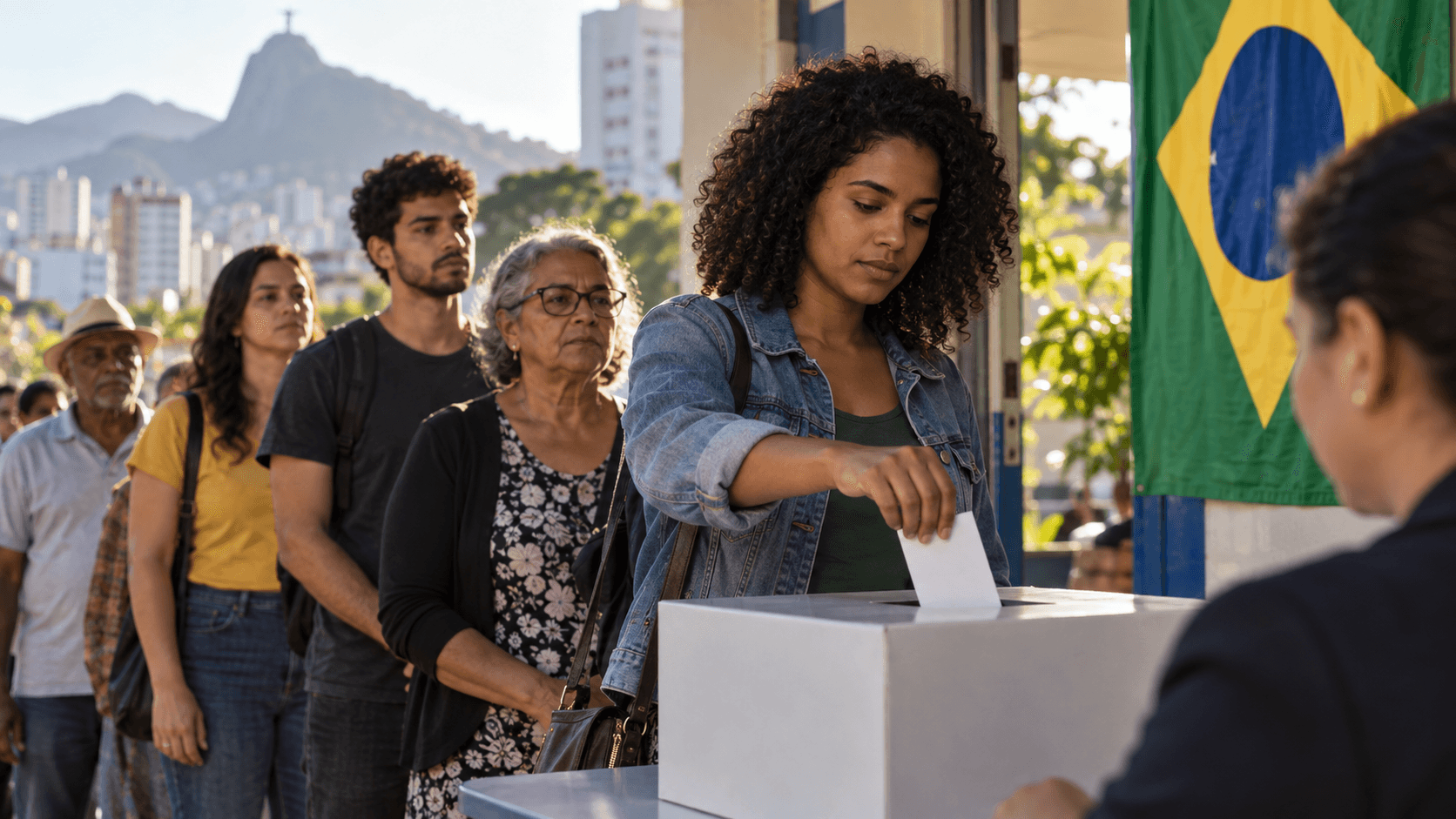
Brazil votes in the first round on October 4, with a runoff scheduled for October 25 if no candidate wins more than half of valid ballots. Further Nexus, Datafolha and Quaest surveys will test whether Lula's rebound persists and whether Bolsonaro remains on track to capture close to two-fifths of the first-round vote. Campaign events and economic news could still reshape a contest in which both leading camps have highly committed supporters. For now, the newest evidence restores Lula's narrow numerical advantage while confirming the broader conclusion: the presidency is likely to be decided by a runoff that remains too close to call.