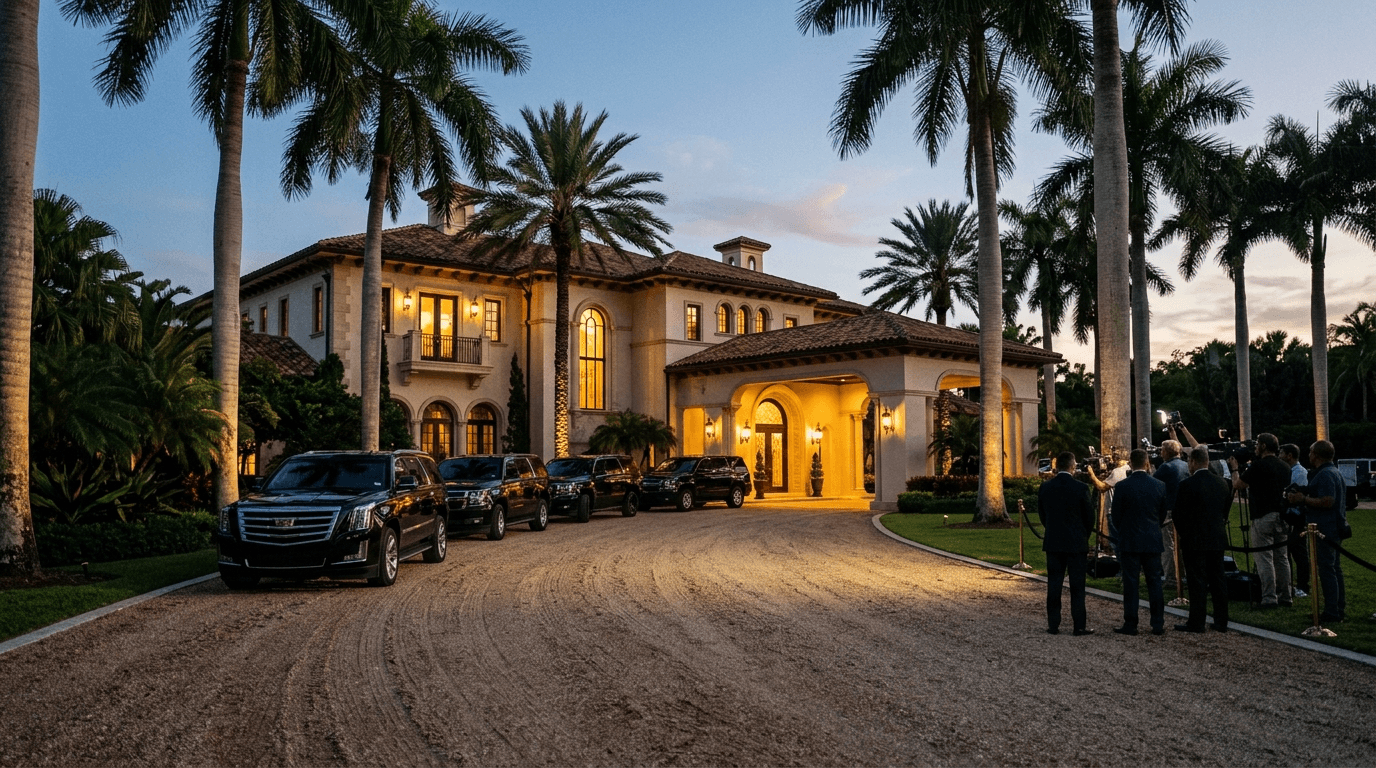
The question behind a market on who might visit Mar-a-Lago is not simply who will walk through the club’s doors. It is whether U.S.-China diplomacy can make progress on trade, artificial intelligence and security—and where the countries’ leaders might meet next. A contract about one venue answers only part of that question. A meeting could happen without taking place at Mar-a-Lago, and a visit alone would not show whether diplomacy had produced an outcome.
Kalshi lists a reported visit by Xi Jinping before the end of the year at 26% as of 3:18 p.m. ET on Sept. 25. That figure represents what traders currently believe, not a forecast or an objective chance. The market has changed up 1 point over the week, with 1,877 contracts traded over the last day. The limited recent trading makes the quoted figure a narrow signal rather than a comprehensive measure of expectations. It speaks to a specific reported visit, not whether Xi and Trump will meet elsewhere, what they might discuss, or whether any conversation would change policy.
There is a historical reason the venue has a diplomatic association. Xi and Trump’s previous Mar-a-Lago summit took place in April 2017, and tariffs were a key subject. That precedent shows the club has hosted a meeting where trade was on the agenda; it does not establish plans for another summit there. The distinction matters because a familiar venue can make a possible return seem more concrete than the available reporting warrants.
Reporting on the recent summit offers a different way to think about the uncertainty. NPR reported possible further Trump-Xi meetings at APEC in China and the Group of Twenty summit in Miami. These are possible settings, not confirmation of a scheduled meeting or a plan for Xi to visit Mar-a-Lago. The market’s venue-specific question therefore should not be mistaken for a measure of whether diplomacy will continue. The reporting leaves open both where any further meeting might take place and whether one will occur.
The recent summit did produce a trade announcement: the U.S. announced a two-month extension with China. The possible AI-security proposal discussed at the summit, by contrast, had no clear outlook. Together, those details show why the substance of the discussions matters more than the address. A trade agreement extension is a reported step; the uncertain outlook for the proposal leaves its prospects unresolved. The sourced information does not establish whether further talks will lead to durable progress on trade or AI security.
The market also lists possible visits by other prominent people, but the list is not evidence that any of them has a visit planned. Nor can prices on individual visitor contracts settle the broader questions: whether Trump and Xi will meet again, where they might meet, or what their discussions would accomplish. Mar-a-Lago has hosted consequential diplomacy before. For now, however, the reporting identifies other possible venues for further meetings and does not establish a plan for Xi to return to the club. The market remains a limited lens on a more consequential uncertainty: what comes next in U.S.-China relations.