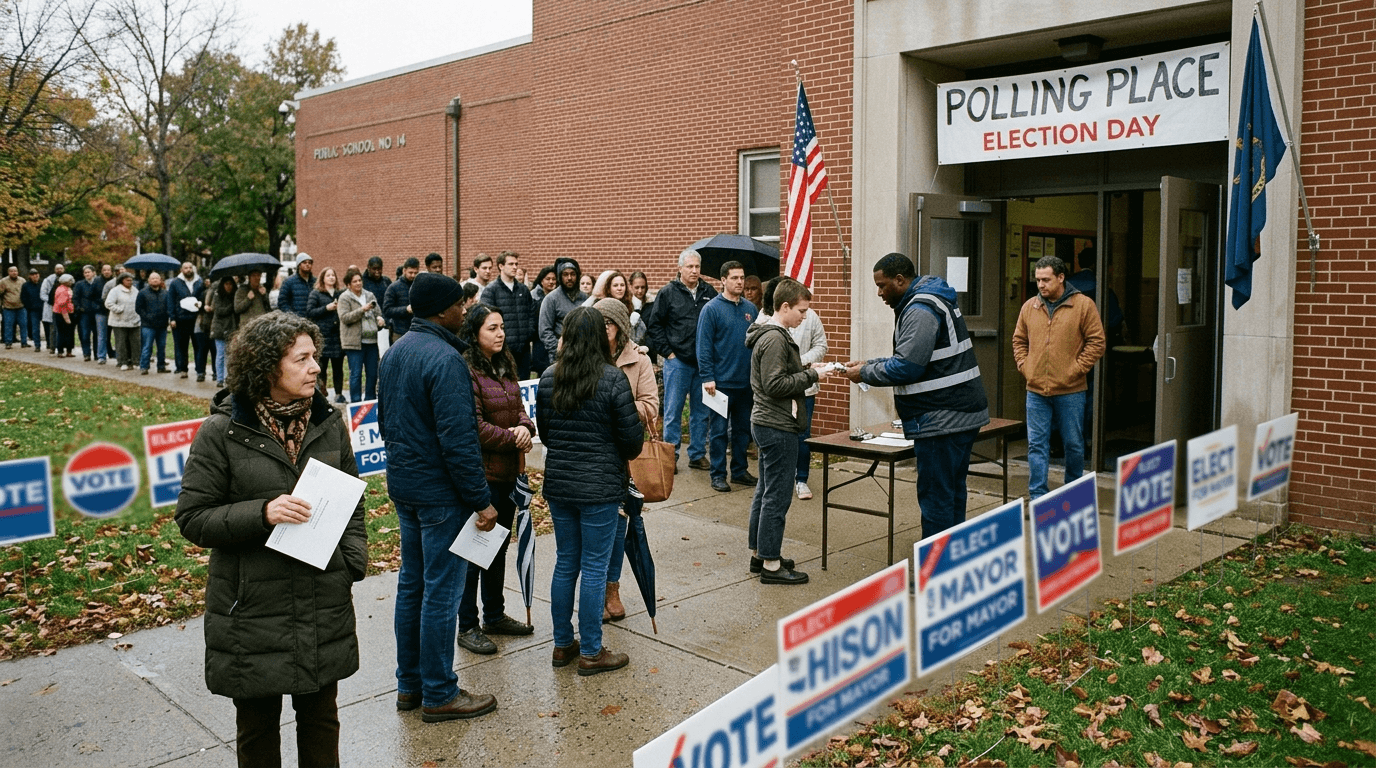
The question of whether a president could use emergency powers to disrupt elections matters because it touches both the administration of voting and public confidence in the result. The reporting in this packet describes concern about possible disruption, but it does not establish that Donald Trump has decided to impose martial law. In a recent interview, Trump did not rule out certain emergency measures, according to Democracy Docket; that is not evidence he has made such a decision. The distinction is important: not ruling out an option does not show that a decision has been made, or that a particular action would be lawful or workable.
Kalshi’s market on whether Trump will impose martial law before his term ends puts the chance at 40% as of 10:49 a.m. ET on Oct. 18. The market has not changed over the past day or week, and its latest daily activity was 595 contracts traded over the last day. That price is a snapshot of what traders currently believe, not a forecast or an objective measure of what will happen. The packet offers no evidence that the price reflects a decision by Trump, and the market does not explain what an eventual declaration would mean in practice or whether federal and state officials would act on it.
The legal question is narrower than the rhetoric can suggest. Election administration is assigned to states and Congress, not the president, according to the Brennan Center. Federal law also restricts armed federal officers at polling places, with an exception for repelling an armed attack by foreign enemies. These claims describe limits relevant to election administration and the presence of armed officers; they do not, by themselves, establish what an administration might attempt or how officials and courts would respond. Nor do they answer whether a hypothetical emergency measure would amount to martial law.
That distinction matters because a legal barrier would not necessarily prevent disruption. Democracy Docket reports that a declaration could cause confusion even if it did not give the administration power to take over election administration. The reporting therefore leaves two different uncertainties: whether Trump would try to use emergency powers or martial law, and what would follow if he did. The market price cannot settle either question, and it should not be read as evidence of a decision. A possibility being discussed and a decision being made are different claims; the packet supports the former as a subject of reporting, not the latter as an established fact.
The available evidence supports neither treating martial law as a confirmed plan nor assuming that legal objections would make an attempted action inconsequential. What remains unclear is how federal agencies, state election officials and courts would respond, and whether an attempt could create confusion before being stopped. The useful distinction for readers is between political talk, legal authority and practical consequences: the reporting describes legal arguments and a risk of disruption, but offers no confirmation that Trump intends to impose martial law. The market likewise records a current belief among traders; it cannot establish intent, settle the legal questions, or tell readers what officials would do if an action were attempted.