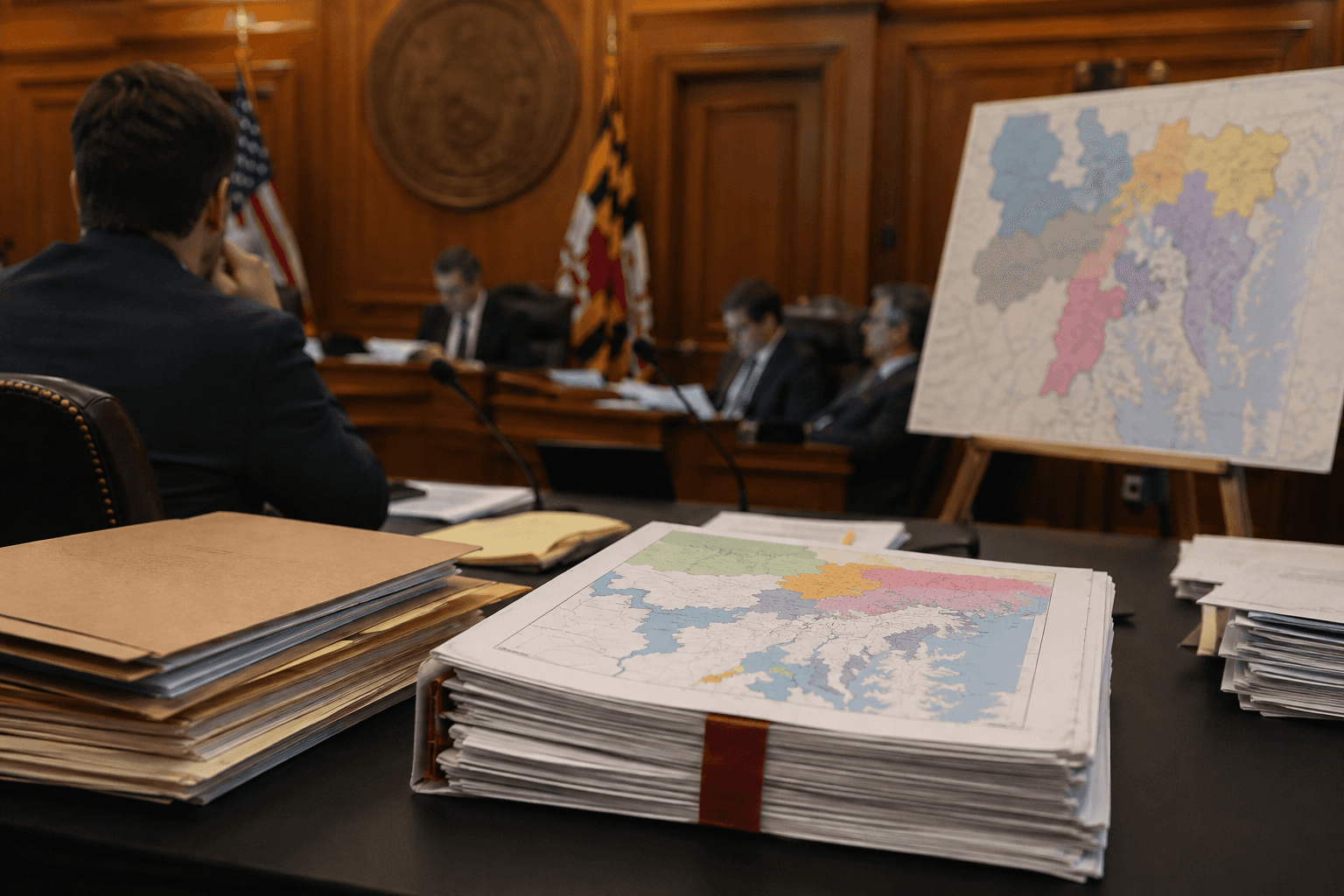
Maryland's long running fight over congressional mapmaking moved back to center stage on Friday after the state's highest court cleared Question Three for the November ballot. Associated Press reported that the Maryland Supreme Court overturned lower court rulings that had blocked the Democrat backed amendment, while also ordering new ballot summary language that more clearly describes what voters are being asked to approve. That combination is important. The amendment survived the central legal challenge to its place on the ballot, but the court also signaled that how the measure is presented to voters matters enough to require correction before the campaign can move forward on cleaner terms.
The substance of the measure goes well beyond wording. The updated ballot language posted by the Maryland State Board of Elections says the amendment would clarify that certain constitutional districting requirements apply only to the General Assembly, authorize the legislature to give original review power over congressional maps to the Supreme Court of Maryland, and state that nothing in the Maryland Constitution provides applicable criteria for congressional district boundaries. In practical terms, supporters see that as a way to stop future congressional maps from being constrained by state constitutional rules that were written with state legislative districts in mind. Critics see something else: a route for lawmakers to draw a more aggressive federal map after the courts knocked down Maryland's earlier congressional plan for excessive partisan gerrymandering.
Prediction markets treated the ruling as an immediate green light, though the trading depth was still thin because the board was brand new. Kalshi placed the Question Three contract at the front of its New row on Friday morning, and the newly listed yes side opened with a heavy lean after the court decision. The board showed a last price near a near certainty outcome, but volume and open interest were still almost nonexistent, which makes the move more a sign of first reaction than of deeply tested consensus. Even so, the combination of a fresh legal trigger and instant homepage placement tells you why the contract surfaced so quickly: the court transformed a procedural challenge into a live statewide ballot story overnight.
The broader stakes now shift from the courthouse to the campaign trail. Question Three would not redraw the lines for this year's federal races, but it could reshape the rules for the next congressional map fight in a state where Democrats already hold seven of eight House seats and have every incentive to protect or even maximize that advantage. Voters are likely to hear a familiar argument in new packaging. Supporters will frame the amendment as a constitutional cleanup that reduces ambiguity and lets elected lawmakers manage congressional line drawing without importing the wrong standards. Opponents will call it a deliberate attempt to weaken anti gerrymandering guardrails. Friday's ruling did not settle that dispute. It simply ensured Maryland voters will now decide it in plain view.