U.S. stocks fell hard on Wednesday, led by the companies at the center of the artificial intelligence boom, and the Nasdaq 100 dropped into bear market territory, meaning it stood at least 20 percent below its most recent high. In early trading the index was down more than 4 percent, the S&P 500 gave up nearly 3 percent and the Dow lost about 900 points. Nvidia slid as much as 8 percent. Chip and memory makers fell between 7 and 10 percent, and Oracle, CoreWeave and Nebius dropped as well. Bloomberg reported the session was on track to be the worst pre-Thanksgiving Wednesday on record.
The drop undid most of Monday, when markets staged their biggest one-day rally since April 2025. That jump followed Nvidia's surprise decision to reinstate Jensen Huang as chief executive, and it briefly settled investors who had spent weeks selling. The Nasdaq 100 rose 6.8 percent that day and the S&P 500 rose 4.7 percent. By Tuesday the buying had faded. On Wednesday, strategists at Deutsche Bank wrote that the declines had revived questions about whether the sell-off had further to run. The week before had been worse for Nvidia, which fell 14 percent on Friday after Reuters reported that the Securities and Exchange Commission was looking into the company's accounting practices.
Several worries are arriving at once. Investors have grown less sure that the sums being spent on data centers will pay off, and much of that spending is borrowed. Anthropic, which went public last week and closed its first day more than 17 percent higher, has fallen for three straight sessions and traded about 10 percent below its offering price on Wednesday. The Trump administration proposed new tariffs on 14 trading partners, including China and the European Union. And the Federal Reserve's preferred inflation gauge rose to 3.8 percent in October, which raises the odds of higher interest rates. Households are feeling it: NBC News reported on Friday that a typical retirement saver with about $250,000 invested broadly in stocks was down roughly $30,000 since early October.
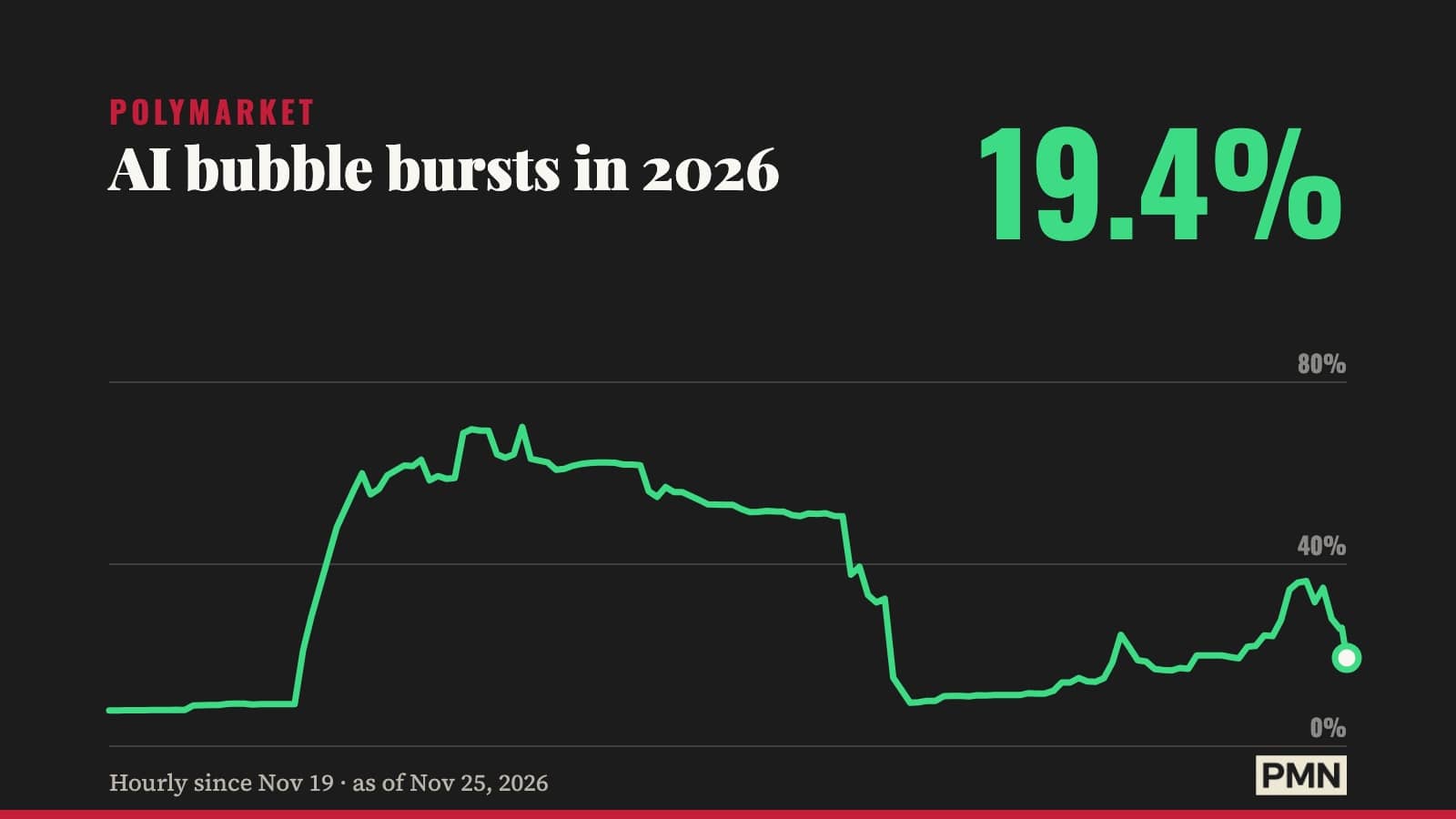
A Polymarket question on whether the AI bubble will burst in 2026 shows how quickly opinion has swung. It stood near 8 percent last Thursday night, reached 70.2 percent on Saturday afternoon, and fell to about 10 percent on Monday afternoon after Huang's return. By Wednesday evening it was at 19.4 percent. The test is specific. At least three of six events must happen within 90 days, among them Nvidia closing 50 percent below its record, a major chip fund closing 40 percent below its own, or the bankruptcy of OpenAI or Anthropic. A bear market in the Nasdaq 100 is not on the list.
The next checks come quickly. U.S. markets are closed on Thursday for Thanksgiving and trade for a half day on Friday, so the first full session after the rout is Monday. The Federal Reserve meets on Dec. 8 and 9 with inflation running hot. And Huang, back in his old job, faces questions from Congress about the scandal that cost him the post. Any one of them could move the stocks that have been moving everything else.