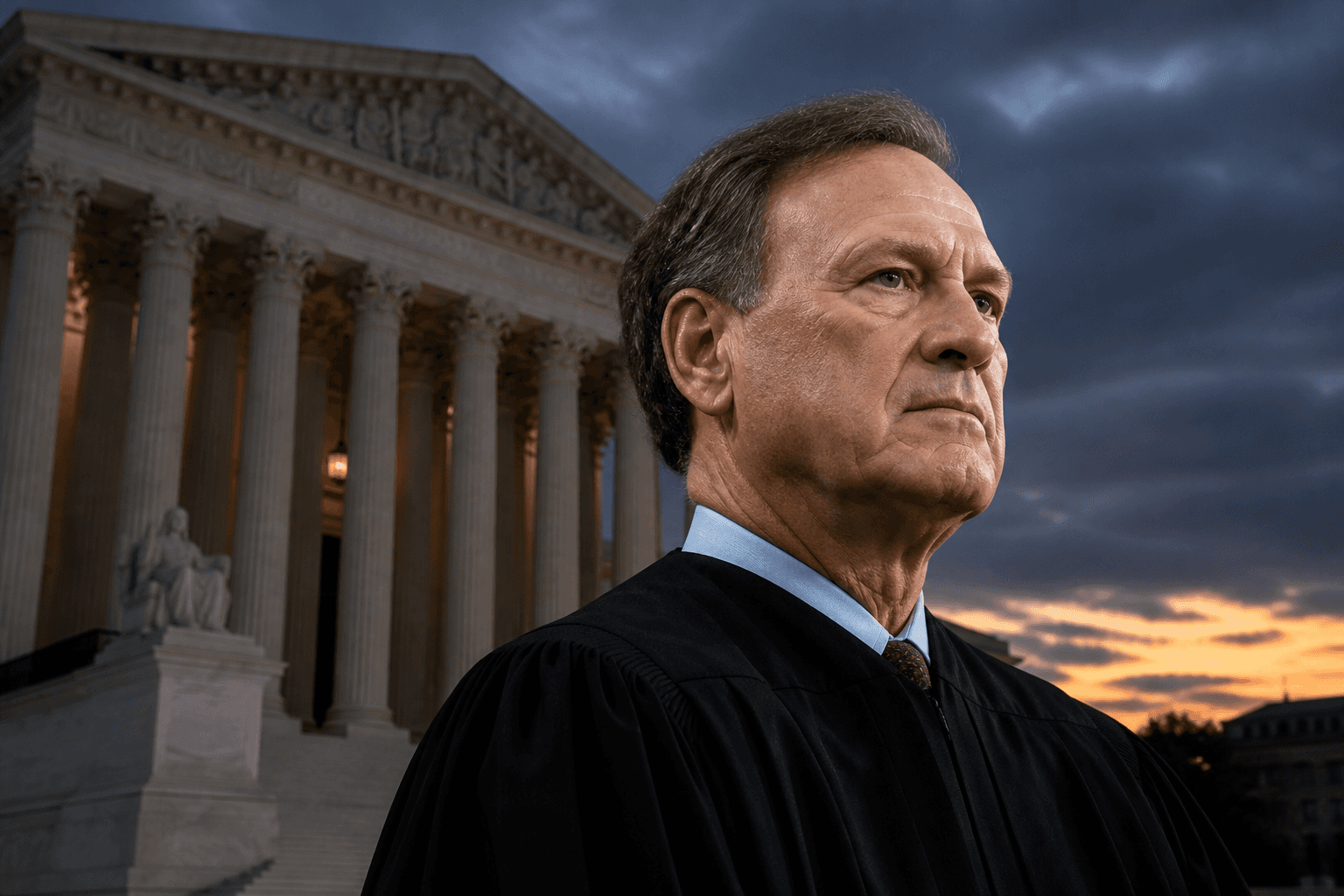
The rush to game out President Donald Trump's next Supreme Court opening has run into a hard public reality: Justice Samuel Alito says he is not going anywhere. In a rare public denial published this month, Alito rejected the retirement chatter that had been building since the spring and made clear that he expects to return for another term. That matters far beyond courthouse gossip. Conservatives had treated a possible Alito departure as the cleanest path for Trump to secure another high court appointment while Republicans still control Washington. Instead, Alito's decision has frozen that scenario for now and restored a more familiar question around the court: whether the current nine member alignment will make it through another political season unchanged.
The speculation had accelerated after an embarrassing false alarm earlier this year, when a mistaken retirement report briefly ricocheted through Washington and set off another round of succession talk. The Supreme Court quickly pushed back, and later reporting from CBS said people close to Alito and Clarence Thomas did not expect either justice to leave the bench this year. The Associated Press then reported on August 7 that Alito had personally said he plans to stay for another term, cutting short weeks of renewed rumor about whether he might step aside while Trump and Senate Republicans could still choose his successor. The clarification also says something about the court's internal mood. Alito is not acting like a justice preparing for an exit. He is acting like a justice who still sees unfinished work in the term ahead.
Prediction markets have adjusted to that slower timeline without coalescing around a single heir. On Kalshi's visible politics card for the next Supreme Court justice, federal appeals judge James Ho sits near the top of the field, with fellow conservative jurist Andrew Oldham close behind and other Trump aligned names still drawing attention. That spread reflects the underlying reality: there is no vacancy, no official transition, and no confirmation calendar to trade around. The market is less a reaction to an imminent nomination than a running sketch of who Republicans think would rise if an opening eventually appears during Trump's second term.
That is why the next meaningful signal is likely to come from the court itself, not from the politicians and operatives hovering around it. The justices return for a new term in October, and attention will shift back to oral arguments, clerk hiring, health rumors and the ordinary rhythms that sometimes precede a retirement but more often lead nowhere. If Alito continues to project the same certainty he showed this month, the vacancy question could cool for quite a while. If anything changes, the succession scramble would revive almost instantly. Until then, the bigger story is not who gets the next robe, but that one of the most closely watched possible openings in American politics has been pushed back into uncertainty.