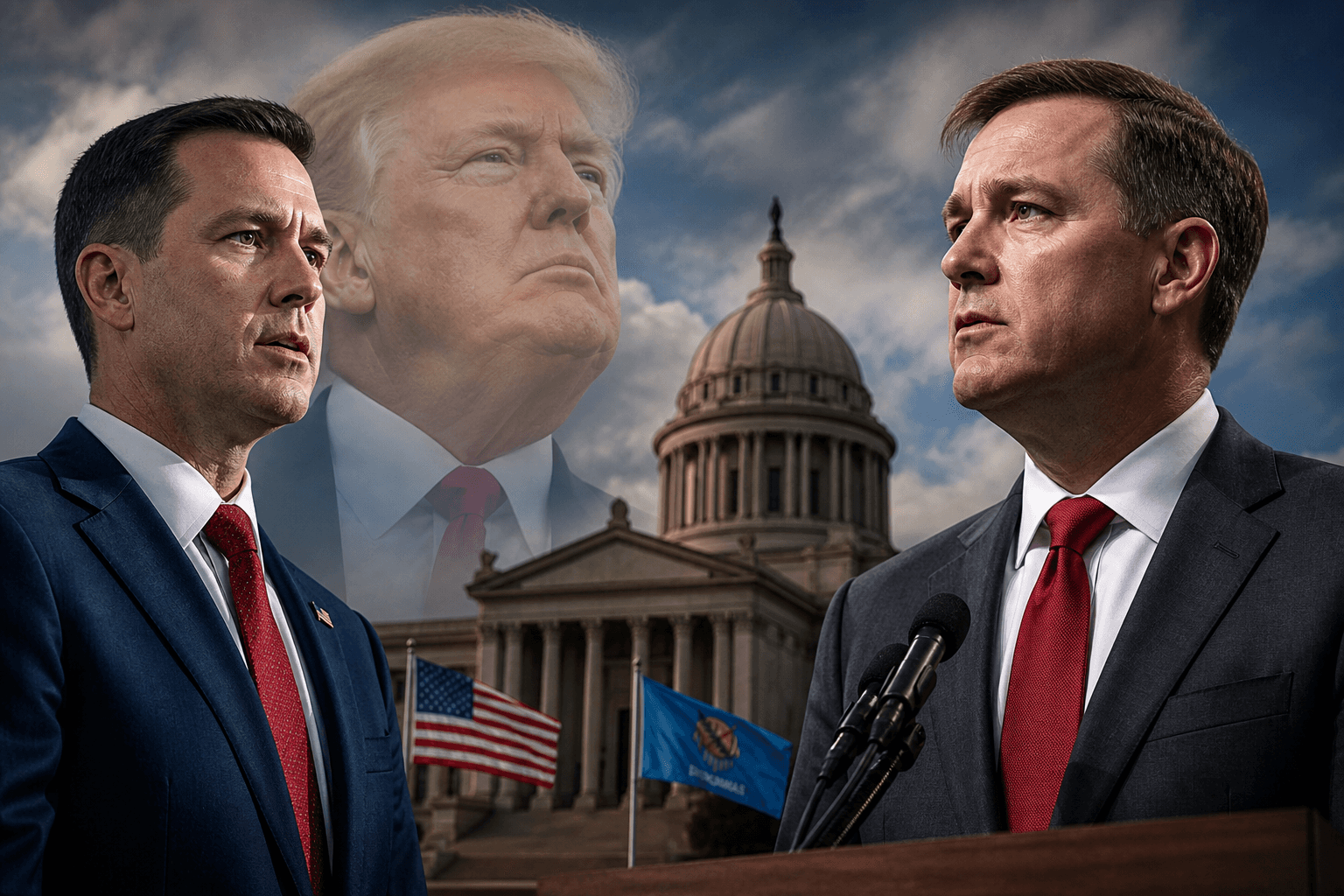
Oklahoma Republicans are closing in on a governor's runoff that has become far more revealing than the crowded primary that produced it, with Mike Mazzei and Gentner Drummond now asking voters to choose between two different versions of conservative credibility. The winner will be strongly favored in November because Oklahoma has been a reliably Republican state for statewide races, which means the runoff is less a preliminary skirmish than the contest that is likely to decide who succeeds term-limited Governor Kevin Stitt. Mazzei, a former state senator and financial planner, has cast himself as the aggressive change agent who can use tax cuts and school choice to accelerate growth. Drummond, the sitting attorney general, is running as a steadier executive who can claim military service, legal experience and enough independence to challenge both Democrats and the more theatrical edges of his own party.
Trump's endorsement gave Mazzei a jolt before the primary and remains the single most important symbol in the runoff. Mazzei has paired that backing with heavy self-funding, arguing that the money he has poured into the race is an investment in a broader economic reset for the state. Drummond has tried to answer by emphasizing his Oklahoma roots and by warning that a campaign shaped by personal fortune and national branding is not the same thing as a governing plan. The difference between them is not just stylistic. Local reporting has highlighted sharp disagreements over how quickly to cut taxes, whether public money should support religious charter schools and how aggressively the state should court large industrial projects that promise jobs but also provoke environmental resistance. Those issues have helped turn the runoff into a broader fight over what kind of conservatism Oklahoma Republicans want after the Stitt era.
The campaign's most combustible stretch has centered on health, disclosure and candidate durability. Drummond released medical information and a drug test, then pressed Mazzei to do the same after debate moderators and rivals raised questions about transparency. Mazzei eventually released a negative drug test, but the exchange did not end the matter so much as reinforce how personal and suspicious the runoff has become. What might have been a routine clash over records has instead become a stand-in for a bigger argument about trust, discipline and readiness under pressure. That matters because neither candidate has established an overwhelming lead in the broader public conversation, and both sides are trying to make character doubts linger long enough to shape turnout.
Kalshi currently favors Mazzei, a sign that traders think Trump's endorsement and Mazzei's financial firepower still give him the clearer path. Yet local coverage continues to describe a close and unsettled race, which is exactly why the runoff remains more interesting than a simple reading of the board might suggest. Early voting has begun, and both campaigns are now trying to lock down soft supporters before election day compresses the electorate into a smaller, more ideologically intense group of Republican voters. The practical question is no longer whether either man can survive the primary field. It is whether Oklahoma Republicans want a nominee defined by Trump's imprimatur and a combative growth message, or whether they prefer a candidate promising a more institutional style of leadership at a moment when the party is deciding how much of its future should still be outsourced to Trump.