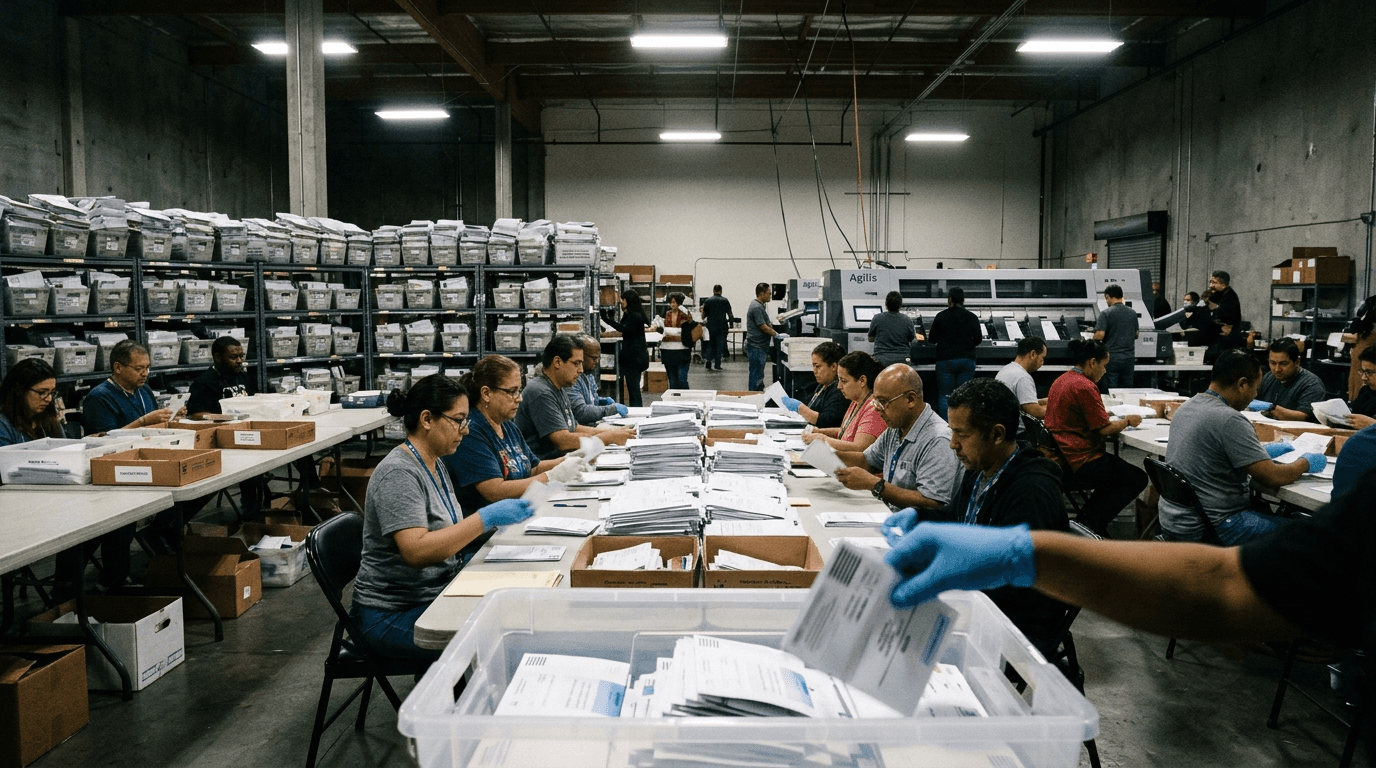
Los Angeles may be heading toward a change in mayor, but the count was not complete when the projection emerged. Decision Desk HQ projected Nithya Raman’s victory, while other major outlets had not called the race. The distinction matters: a projection is an assessment of the available returns, not the county’s final count or certification. The city’s next mayor will face consequential choices on homelessness, policing and city government, while the result remains subject to ballots still being counted.
In the latest count reported Wednesday, Raman was leading with 51.67%. The county registrar estimated that 842,000 ballots remained to be counted. That leaves room for the reported lead to change, and the available claims do not establish how the outstanding ballots will break or what the final margin will be. The market reflects traders’ current belief rather than a verified outcome: Kalshi’s contract naming Raman stood at 100% as of 9:01 a.m. ET on Nov. 5. The complementary contract naming Karen Bass stood at 0% at the same time. Those prices describe the market’s view, not an official result or an independent forecast.
The contract prices moved only slightly over the past day: Raman’s moved up 1 point in the last day, while Bass’s moved down 1 point in the last day. Kalshi reported 1,577,997 contracts traded over the last day on Raman’s contract and 11,561,612 contracts traded over the last day on Bass’s. The contracts are listed as open, but the market cannot settle the uncertainty of an incomplete count. Nor does the price tell readers why Raman is leading. The available reporting describes competing approaches to homelessness, policing and city government, but it does not establish whether the lead reflects dissatisfaction with Bass, generational differences or some combination. Treating any one of those explanations as the cause would go beyond the evidence here.
The race also put Bass’s record on major city problems under scrutiny. The candidates offered different approaches to homelessness, policing and city government, and Raman made a citywide homelessness pledge. Those disputes are a better guide to the stakes than the contracts themselves: the mayor’s office will have to turn campaign positions into decisions affecting city residents. The supplied reporting does not resolve which approach voters favored, or whether a shift in the count would alter the picture. The result remains a contest between an emerging projection and an unfinished count, not yet a complete account of what Angelenos chose.
The transition carries a wider deadline for the city: Raman’s term would overlap with the 2028 Summer Olympics. That makes the leadership question consequential beyond the immediate campaign, though the reporting here does not say what policies the city will adopt or how preparations will change. For now, the projection points toward a new mayor while the remaining ballots and the absence of calls from other major outlets counsel caution. The market’s near-certain price for Raman is evidence of what traders currently believe; it cannot replace the count. Los Angeles still needs the ballots counted and the result resolved before the city can know who will lead it.