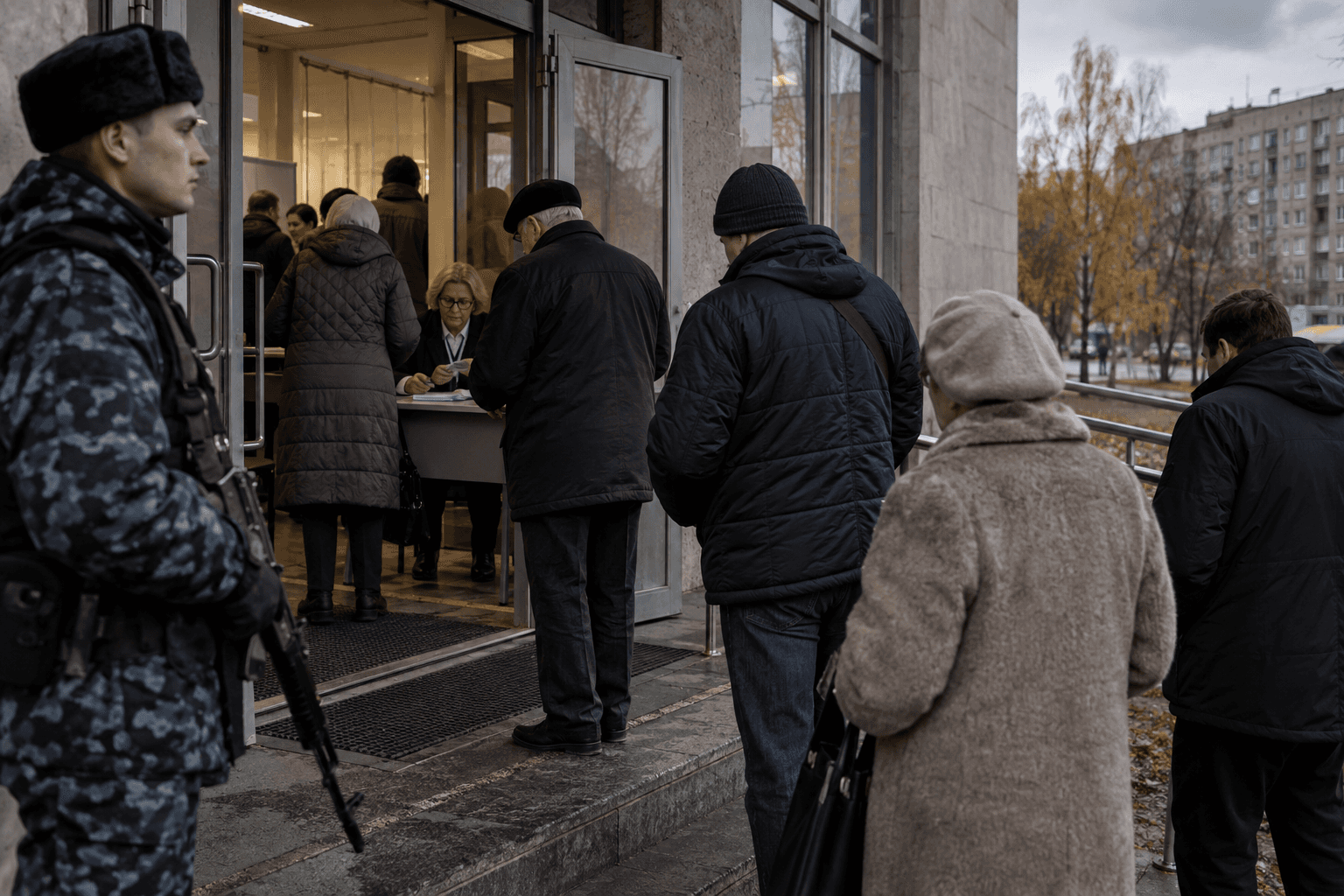
Russians are voting for a new State Duma in the country's first parliamentary election since the full-scale invasion of Ukraine. Polling began Friday and continues through Sunday, with voting also organized in Ukrainian territory held by Russian forces. President Vladimir Putin's United Russia party is widely expected to retain control of the lower house. That expectation does not make the ballot inconsequential: the government is seeking a show of support during a costly war, while critics are watching whether people can express dissatisfaction within an electoral system that offers few genuine alternatives.
The vote fills four hundred fifty Duma seats, split between party lists and individual district races. United Russia has dominated the chamber for more than two decades, and parties that remain on the national ballot generally support the Kremlin on the war's central questions. The liberal Yabloko party, which opposed the invasion, was removed from the party-list contest, although some of its candidates remain in individual districts. Al Jazeera reported that the election also coincides with local and regional voting across the country. The campaign has unfolded against economic strain and drone attacks far from the front line, giving the Kremlin a reason to emphasize political unity even as voters face competing pressures at home.
Independent scrutiny is another point of tension. The Guardian reported that authorities have kept the campaign subdued and that United Russia is expected to extend its hold on parliament. The vote also permits remote electronic ballots, according to Al Jazeera. The addition of a digital count gives independent observers another set of figures to compare with paper-ballot tallies, even as restrictions on the opposition make their work harder. Election officials will publish the formal results, but the credibility of the process will also depend on whether observers can document how those figures were assembled. The inclusion of occupied areas raises a separate legitimacy dispute: Ukraine rejects Russian-organized voting on its territory, regardless of the eventual parliamentary tally.
One prediction market focused on the contest among smaller parties, rather than on the expected governing-party victory. On Saturday, Polymarket traders put New People near seventy-three percent to take the third-most seats, compared with roughly twenty-two percent for the Liberal Democratic Party of Russia. The market group recorded about fifty-nine thousand dollars in the latest day of activity after a large move in the New People outcome. These are estimates by traders about a narrow ranking question, not a measure of support for the war or a forecast of whether the election is free and fair. New People has tried to appeal to younger and more technocratic voters, but it remains part of a field operating under the Kremlin's rules.
Polls are due to close on Sunday, after which the first national results and seat allocations will clarify how much room, if any, smaller parties gain in the chamber. Observers will also look for differences between in-person and online tallies and for credible accounts from the occupied territories. The larger political question extends beyond the published seat count: whether the new Duma gives Putin a stronger claim to public backing for wartime policy or exposes discontent that the formal party competition has struggled to capture.