Sweden's general election has tightened in its final week, turning what once looked like a comfortable opposition victory into a close contest over which bloc can assemble a government. Voters choose all 349 members of the Riksdag on September 13, alongside regional and municipal ballots. The latest Novus poll put the four center-left parties at 50.3% and the governing right-wing bloc at 47.9%, according to Reuters. That leaves former prime minister Magdalena Andersson favored to return, but no longer with the margin earlier surveys suggested. Novus surveyed 2,888 voters from September 1 through September 5, making it a late snapshot rather than a result.
The most important change is the Liberal Party's rise to 4.3%, just above Sweden's 4% threshold for parliamentary representation. Falling below that line could have erased the junior coalition party's seats and made Prime Minister Ulf Kristersson's route to a majority much harder. Instead, the poll keeps intact the basic shape of the government alliance: Kristersson's Moderates and their coalition partners, supported in parliament by the anti-immigration Sweden Democrats. The center-left, led by Andersson's Social Democrats, still holds the numerical advantage, but its own coalition arithmetic would also require parties with different priorities to cooperate after the vote. A few tenths of a point around the threshold can therefore change not only seat totals but the range of coalitions that are mathematically possible.
The campaign therefore is about more than which party finishes first. It is a test of whether Kristersson can preserve the governing arrangement built in 2022 and whether the Sweden Democrats gain a more direct role in power. Andersson, meanwhile, must convert a polling lead into a workable majority rather than simply a larger bloc. Prediction markets continue to give her the advantage: Polymarket prices imply about a 79% chance that Andersson becomes the next prime minister, compared with roughly 22% for Kristersson. Her contract has fallen about nine percentage points over the past week, consistent with a race that has become less settled, though those odds are not a forecast from election officials.
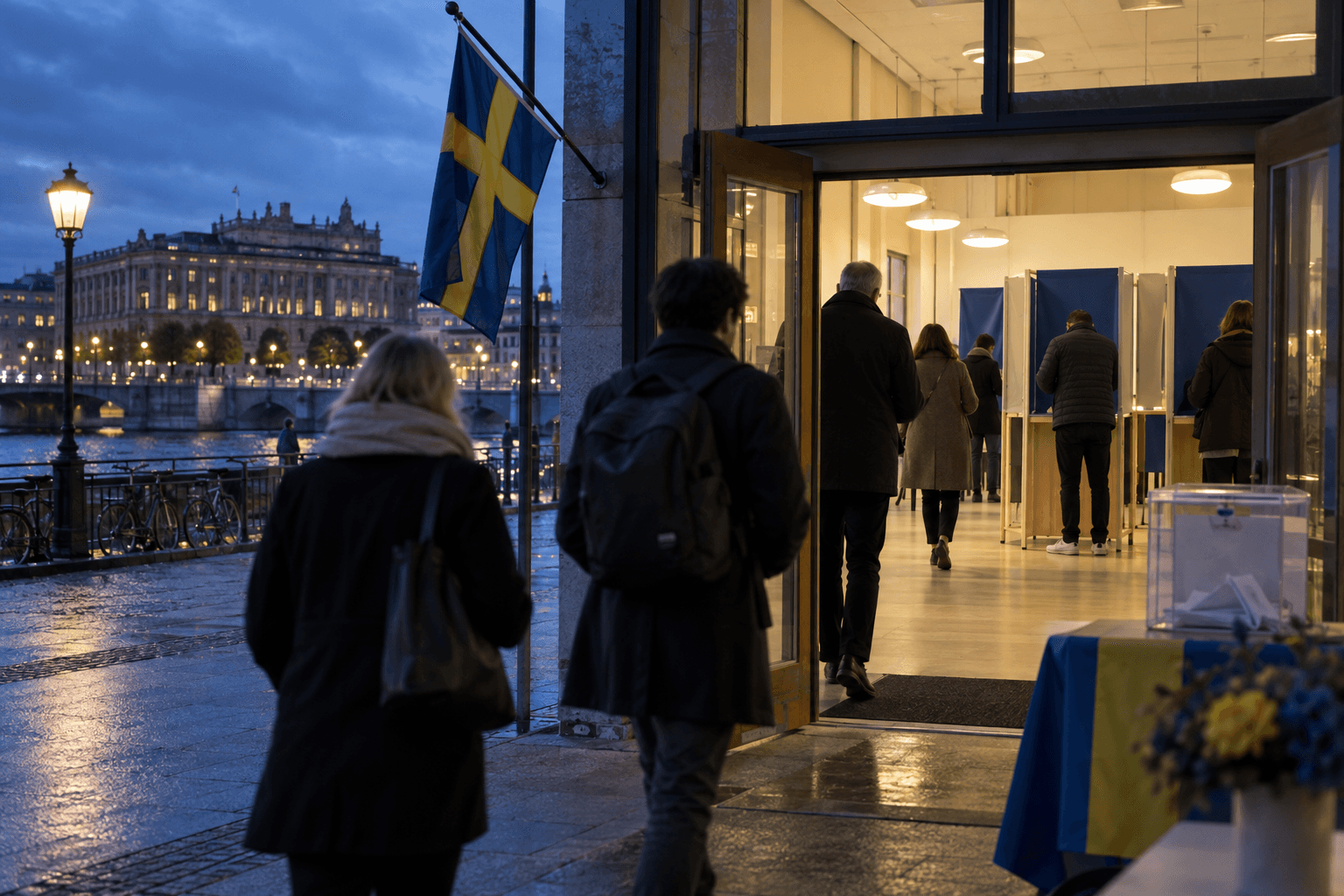
The official timetable means clarity will come in stages. Polling stations are open from 8 a.m. to 8 p.m. on Sunday, and Sweden's Election Authority says the first preliminary count should be published around 9 p.m. Final results are expected about a week later, after county authorities complete the count. Overseas, advance and late-counted ballots can matter when the blocs are separated by a narrow margin. Even then, the decisive phase may be coalition bargaining rather than election night itself. The newly elected parliament meets on September 28 and chooses its speaker, who plays a central role in testing which prospective prime minister can command enough support. Sweden's voters will set the balance on Sunday; the parties may need weeks to decide who can govern it.