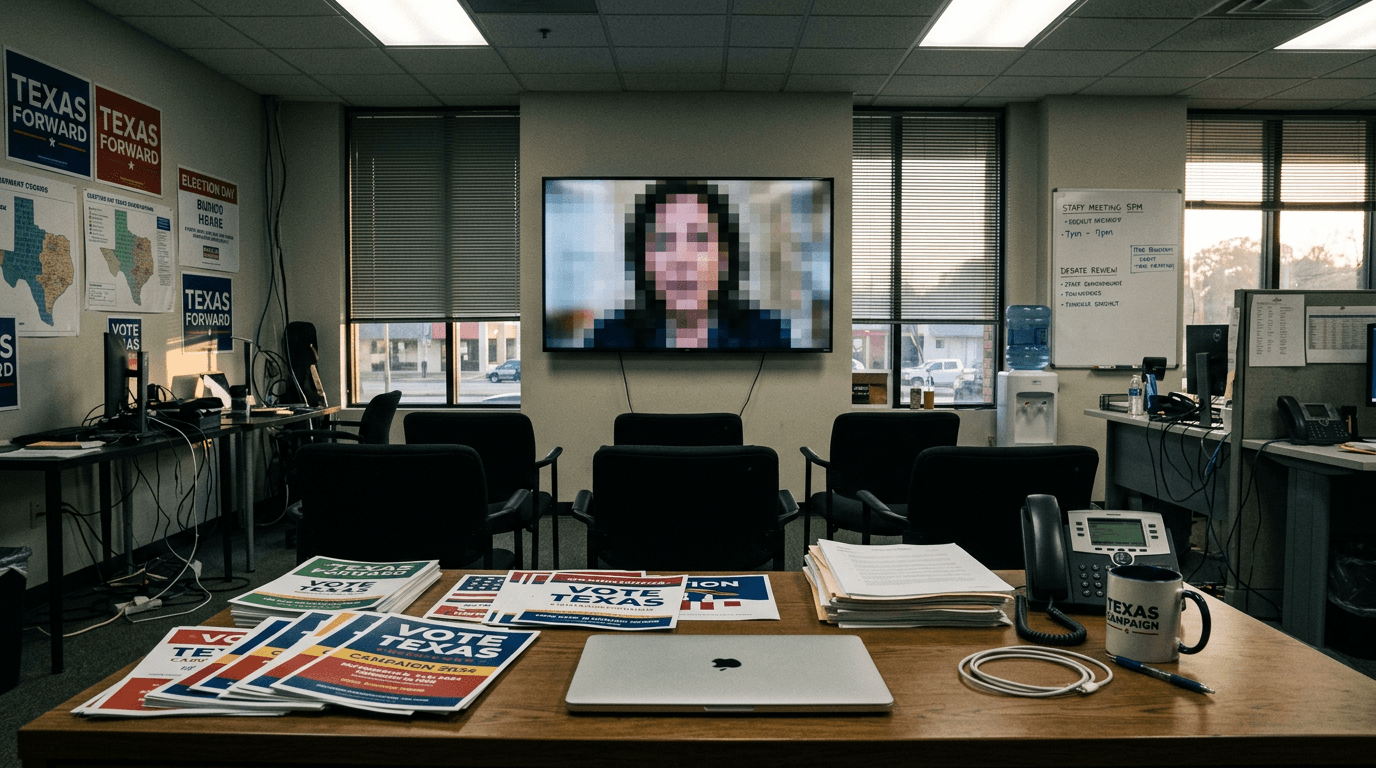
Texas voters choosing a lieutenant governor will also be weighing a dispute over artificial-intelligence campaign ads. Democrat Vikki Goodwin filed a police report accusing incumbent Dan Patrick of violating Texas law after his campaign released ads featuring AI-generated videos of her, according to the Texas Tribune. Goodwin’s complaint says the videos were not real footage of her. Patrick’s campaign described the ads as parody and disputed that they violated the law. The complaint and the campaign’s response present opposing accounts; the material available here does not establish that the ads broke the law.
The dispute puts the use of AI-generated material in political advertising at the center of this race. The sourced reporting establishes that the ads featured AI-generated videos and that Goodwin filed a complaint over them. It does not establish what authorities will do, whether the complaint will lead to legal action, or how voters will react. Patrick’s campaign’s characterization of the ads as parody is its position, not a ruling on their legality. The underlying legal question therefore remains unresolved in the evidence available for this draft.
The market offers a snapshot of trader belief, not an answer about the winner. On Kalshi, traders currently put the Republican outcome at 70% and the Democratic outcome at 29% as of 9:50 a.m. ET on Sept. 26. The seed lists the Republican outcome as Dan Patrick and the Democratic outcome as Vikki Goodwin. These prices are not a forecast, and the packet reports no cross-venue confirmation. Neither contract’s quoted price changed over the past day or the past week. The Republican-leaning reading is not evidence that Patrick will win, just as the Democratic contract’s price does not establish that Goodwin will prevail.
Trading figures provide additional context, but they are not a measure of what voters think. Kalshi reports 1 contracts traded over the last day for the Republican contract and 29 contracts traded over the last day for the Democratic contract; the contracts have 8,400 contracts open and 5,251 contracts open, respectively. The reported trading over the last day is limited, particularly for the Republican contract. These figures describe activity in the contracts, not voter support, and should not be read as independent confirmation of either candidate’s prospects. The market can show how traders are pricing the contest, but it cannot resolve the complaint or establish how the ads affect the race.
The general election is scheduled for Nov. 3, and in-person early voting is scheduled to run Oct. 19 to 30. The eventual winner remains uncertain, as do the outcome of Goodwin’s complaint and voters’ response to the ads. The sourced claims establish that Patrick is seeking another term, that Goodwin accused his campaign of violating state law, and that his campaign disputes the allegation. They do not show whether law enforcement or another authority will act, what evidence may emerge about the ads, or how the campaign dispute will shape voter perceptions. For now, the contest combines an unresolved argument over AI campaign material with a market price that reflects trader belief, not a verdict on the allegation or the election.