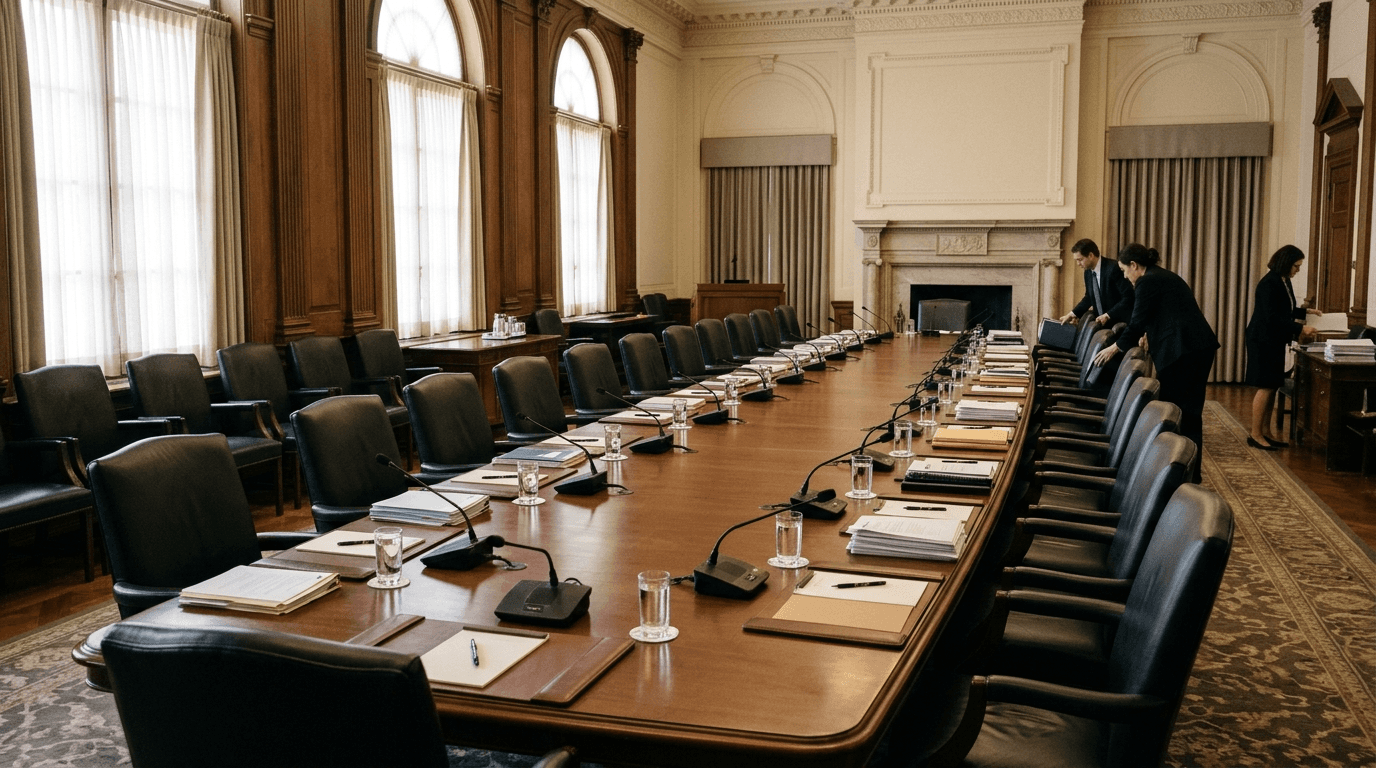
The Federal Reserve’s October meeting will bring a decision on interest rates, but the vote could also show how much disagreement exists over the path ahead. The committee’s dissent count is not a verdict on the economy, and it cannot by itself tell borrowers what rates will do next. But a split vote—or a united one—can offer a glimpse of how policymakers view the balance between holding steady and tightening further.
The meeting is scheduled for October 27-28, and the Fed sets monetary policy at regularly scheduled meetings, according to its calendar. On Kalshi, traders currently assign the largest share to two dissenting votes: 34% as of 11:51 a.m. ET on Oct. 27. Three dissents are also a substantial possibility at 26%, while one dissent stands at 13%. These are market prices reflecting what traders believe, not objective probabilities or a forecast of the committee’s decision. Kalshi’s two-dissent outcome has 1,889 contracts open, but recorded no trading over the last day, so the displayed price should be read with that limitation in mind.
Analysts’ expectations are not settled around one vote count. KPMG expects the Fed to hold rates at 3.75%–4.00% and describes a unanimous hold as its base case, while identifying one hawkish dissent as a risk. That account points to a plausible counterweight to the market’s leading outcome: policymakers could agree to pause even if some members favor tighter policy. KPMG also notes that three voting Fed presidents dissented from the July hold in favor of a quarter-point hike. That prior disagreement provides context, but it does not establish how anyone will vote at this meeting.
A different analyst view leaves room for a larger split. One strategist told Bond Buyer that three dissents favoring a rate increase would not be surprising. Another analyst said inflation pressures could lead a few voters to argue for an increase, even while expecting a pause. Those views describe possible dissent in a particular direction; the market’s count outcomes alone do not specify what any dissenters will favor. The distinction matters: a dissent against holding rates steady would carry a different message from a vote against raising them, and the available market contracts do not resolve that question.
The useful signal, then, may be less about guessing the exact count than about watching whether the decision exposes a clear disagreement over further tightening. A unanimous hold remains plausible, while several dissents would point to a more divided committee; neither outcome alone settles the future path of rates. The vote and the committee’s explanation will be needed to understand what the disagreement means. KPMG says meeting minutes expected in November could offer more detail about the debate. Until then, traders’ prices are one indicator of uncertainty—not a substitute for the Fed’s decision or the reasons its policymakers give.