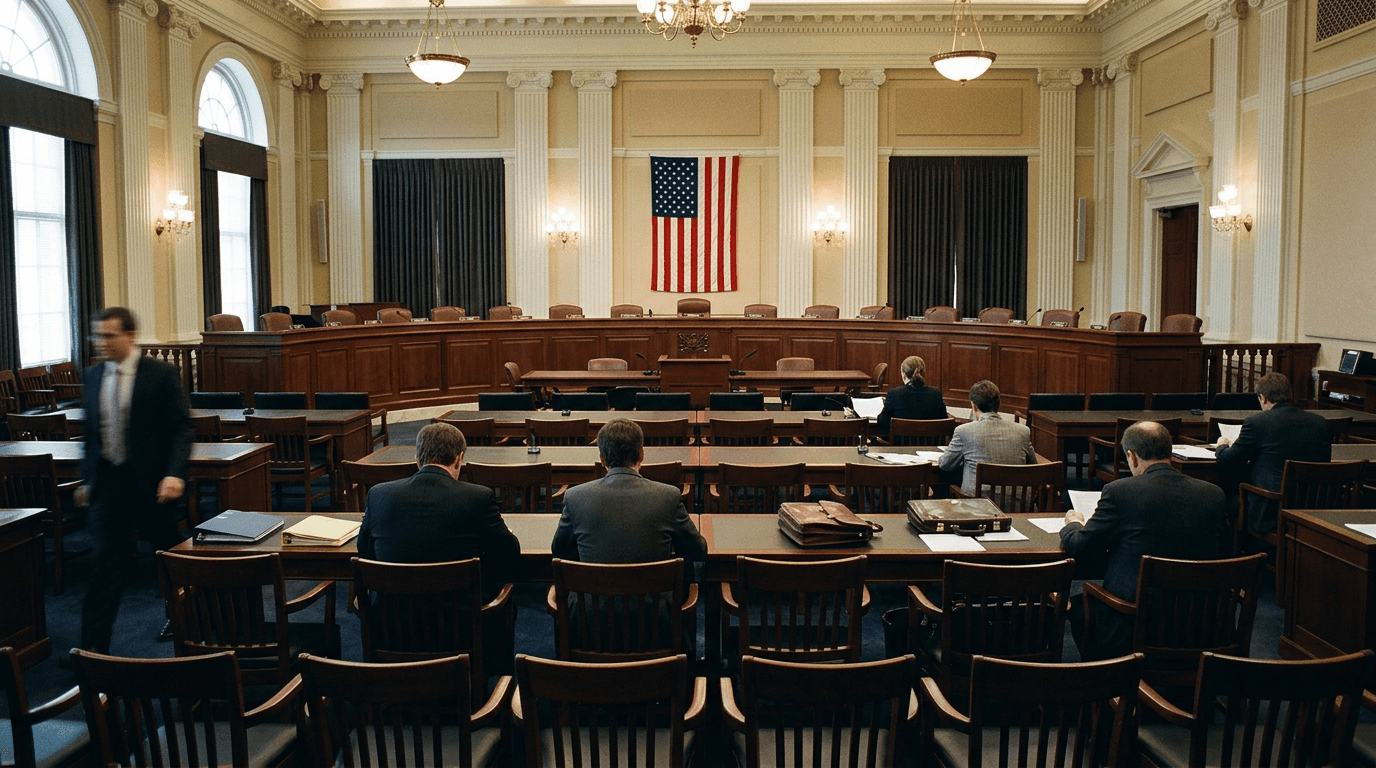
Who leads the Senate Judiciary Committee can shape how the committee handles judicial and prosecutorial nominations, including how it applies the blue-slip tradition. The next chair is not settled: Senate control after the midterms will determine which party leads the committee, and that party’s caucus must select its leader. The market’s leading candidates are Sheldon Whitehouse and Mike Lee, but neither path is automatic.
Kalshi’s market currently places Whitehouse at 43% and Lee at 37%; the board was observed as of 2:11 p.m. ET on Sept. 26. These figures represent traders’ current views, not forecasts. The supplied observations show no movement over the past day or week for either candidate. Recent trading was limited: Whitehouse’s contract recorded 0 contracts traded over the last day, while Lee’s recorded 254 contracts traded over the last day. Those activity figures provide context for the quoted prices but do not establish how broadly traders agree or why they hold these views.
Lee’s possible route to the chair depends first on which party controls the Senate. Bloomberg Law reports that he is positioned to become the top Republican on Judiciary next Congress. If Republicans keep control, Lee is positioned to take the gavel; if they lose control, he would be the ranking member instead. Whitehouse is expected to become the top Democrat on the committee as Dick Durbin prepares to retire at the end of his term. These are anticipated leadership paths, not completed selections: the relevant party caucuses have yet to choose their next leaders.
The chairmanship’s significance lies partly in the blue-slip tradition. The committee chair can decide how that practice is enforced for certain judicial and prosecutorial nominees. Republican colleagues may resist Lee changing it, arguing that senators need leverage over nominees from their home states. Lee has said it is premature to spell out his approach and has not committed to eliminating the practice. That leaves open whether he gets the chair and what he would do with its authority if he does. Colleagues who oppose a change could also resist his approach.
Lee also faces a choice about the job itself. He has said the chairmanship would be difficult to turn down, but taking it would require giving up his current committee chairmanship under Republican conference rules. The market’s readings therefore sit amid several unresolved steps: the midterm result, the party’s selection of its committee leader, and Lee’s decision about whether to accept the role. Whitehouse’s expected place atop the Democrats is also conditional on his party holding the committee’s majority. Whoever becomes chair could influence the handling of nominations and blue slips, but the supplied evidence does not establish how either party will choose its leader or what the eventual chair will do.