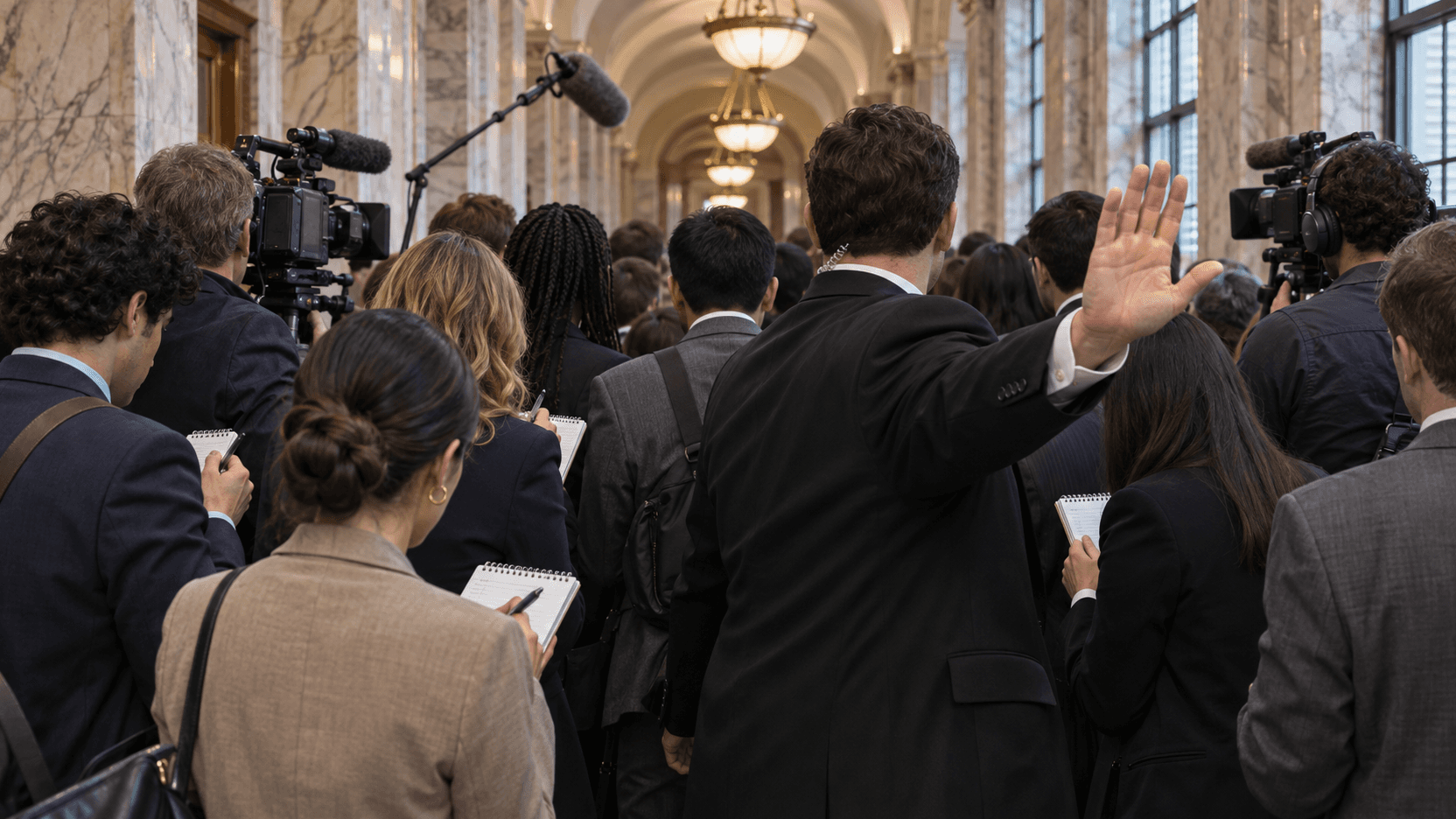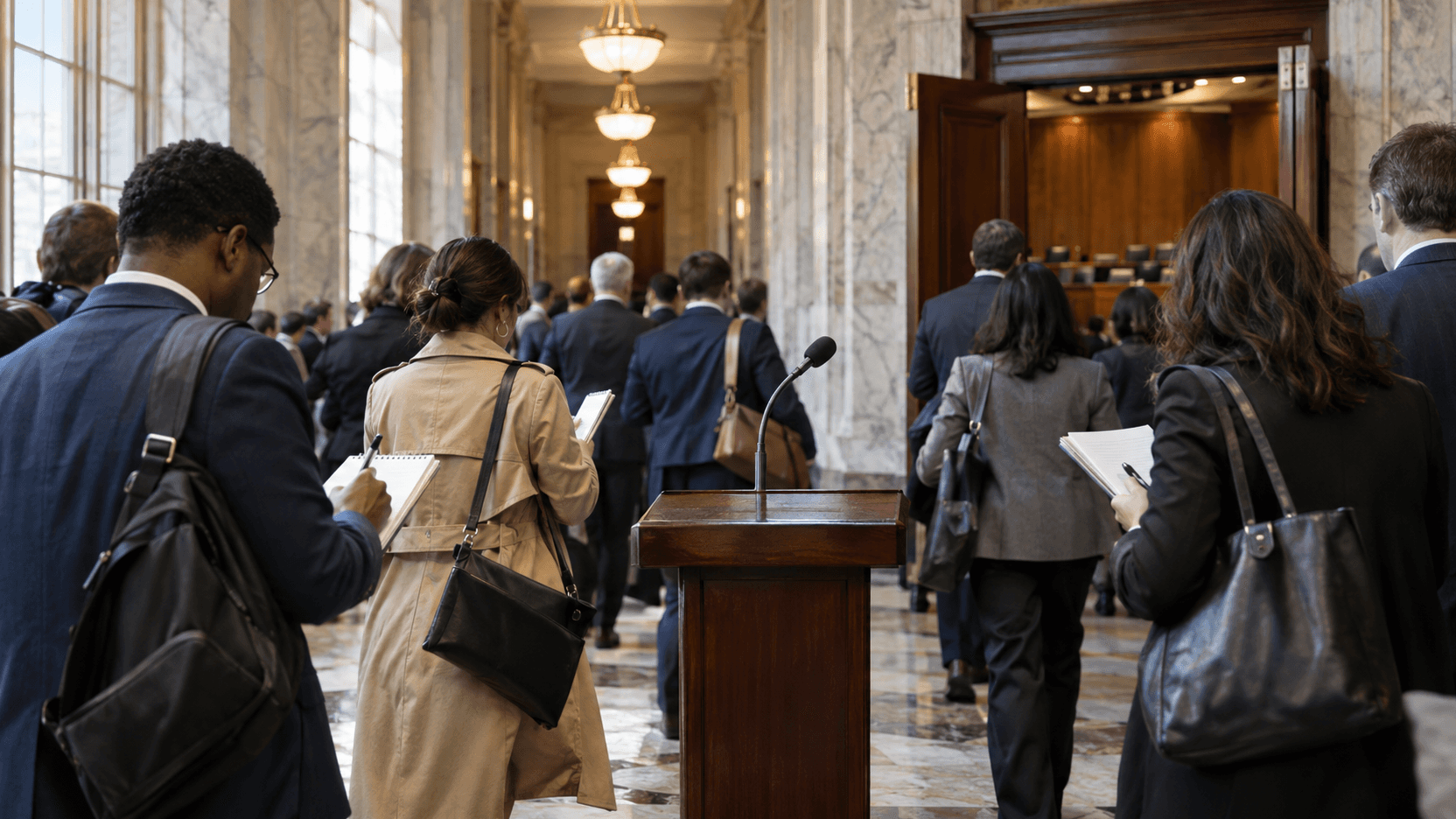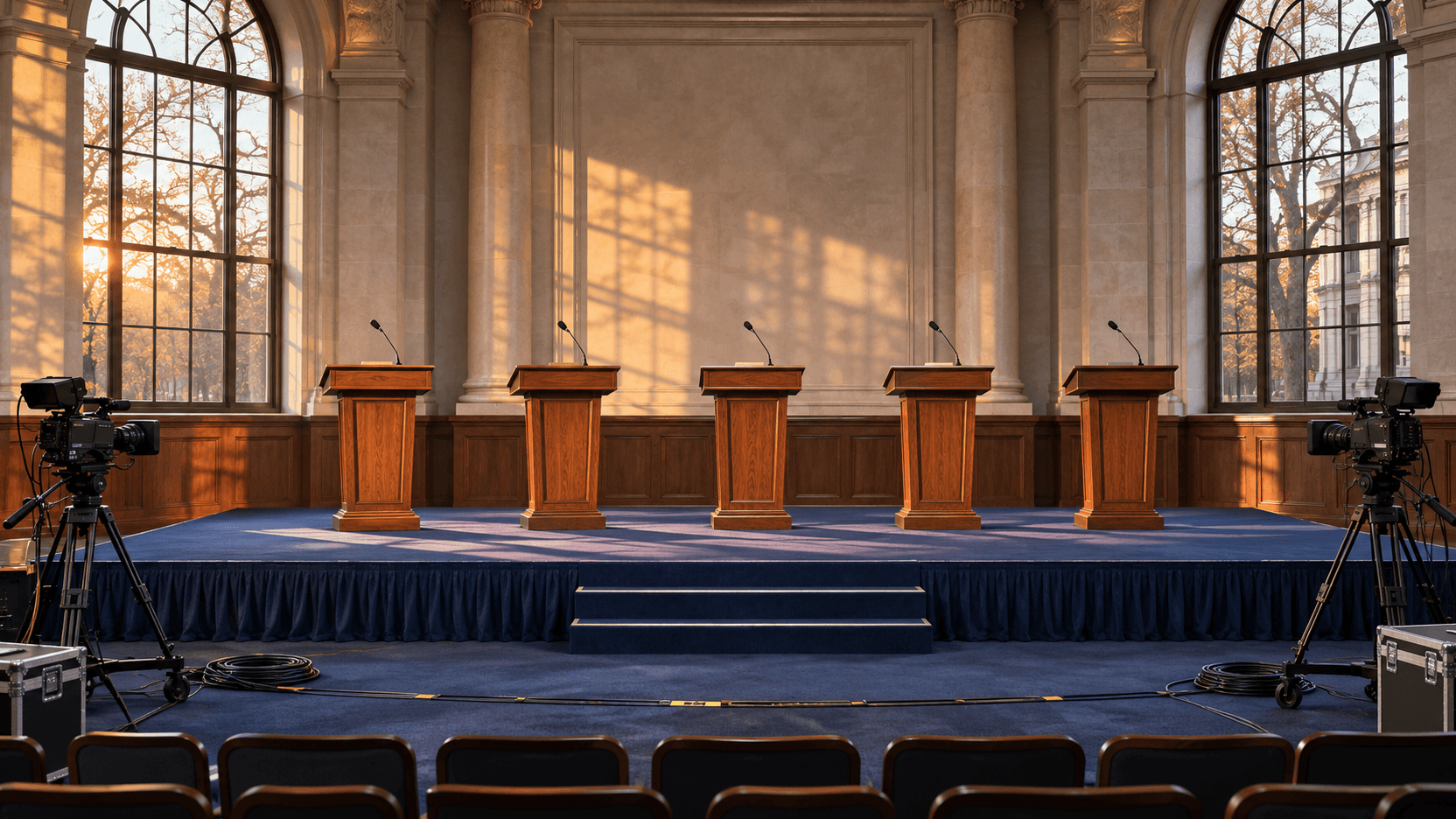
Primary debates are among the few moments before any votes are cast when a party's hopefuls share a national stage. Who is invited, and how many are, helps decide which candidates voters get to know and which ones attract attention and donor money afterward. For the Republican side of the next presidential race, that stage has not been built. The Republican National Committee has not announced dates, qualification rules or a formal debate framework for the presidential primary.
That makes a new set of Kalshi contracts unusual. They ask how many candidates will take part in the first RNC-sanctioned Republican primary debate before the end of February in the election year, and traders are leaning toward a crowd. Kalshi traders put the chance of six or more participants at 63% as of 1:26 p.m. ET on Nov. 23, up 15 points in the last day. The contract for five or more stands at 71%, up 14 points in the last day. Both figures come with only modest trading behind them: 1,500 contracts traded over the last day on the six-or-more contract and 1,500 contracts traded over the last day on the five-or-more contract, so a handful of orders could shift them.
Further up the ladder, the market is far less confident. Traders put eight or more participants at 33%, ten or more at 16%, and twelve or more at 7%. The lower rungs of the ladder, which ask whether at least a few candidates will appear, carry higher prices, but those contracts saw no trading over the last day. A price with nobody trading behind it says little about what traders believe. The overall picture is that traders see a sizable field as more likely than not, while a very large one remains a long shot.
A calendar on one side only
The contrast with the Democrats is sharp. The Democratic National Committee has announced a framework with 12 presidential primary debates planned for the cycle. The first two are set for June and July 2027, according to Election Central, with details to follow in January. The DNC is also requiring debate participants to sign a Fair Campaign Practices Pledge. Nothing comparable has come from the Republican side. Wikipedia's tracker of the contest says plainly: "No primary dates have been determined."
The Republican field is also still forming. Chris Christie said in September 2026 at the Granite State Summit in New Hampshire that he was considering a run. Senator Josh Hawley, who had ruled out a run in September, opened the door again in recent days, saying, "a lot of thinking to do." Ron DeSantis is scheduled to leave the Florida governorship in January 2027 and has not explicitly ruled out a run. Expressing interest is not the same as entering a race, and it is not yet clear how many of these names will become candidates.
What would change the picture
The case for a crowded stage rests on a large potential field. The case against rests on the fact that the count depends on decisions the RNC has not made. The party could set tough qualification thresholds, hold a smaller or differently structured event, or schedule its first debate later than traders assume. Whether the RNC will sanction early debates at all, and what a candidate would need to qualify, are open questions. Until the party answers them, the market is putting a number on a stage that has no published blueprint, and the 63% figure for six or more is best read as a snapshot of expectations about a field that has not yet formed.