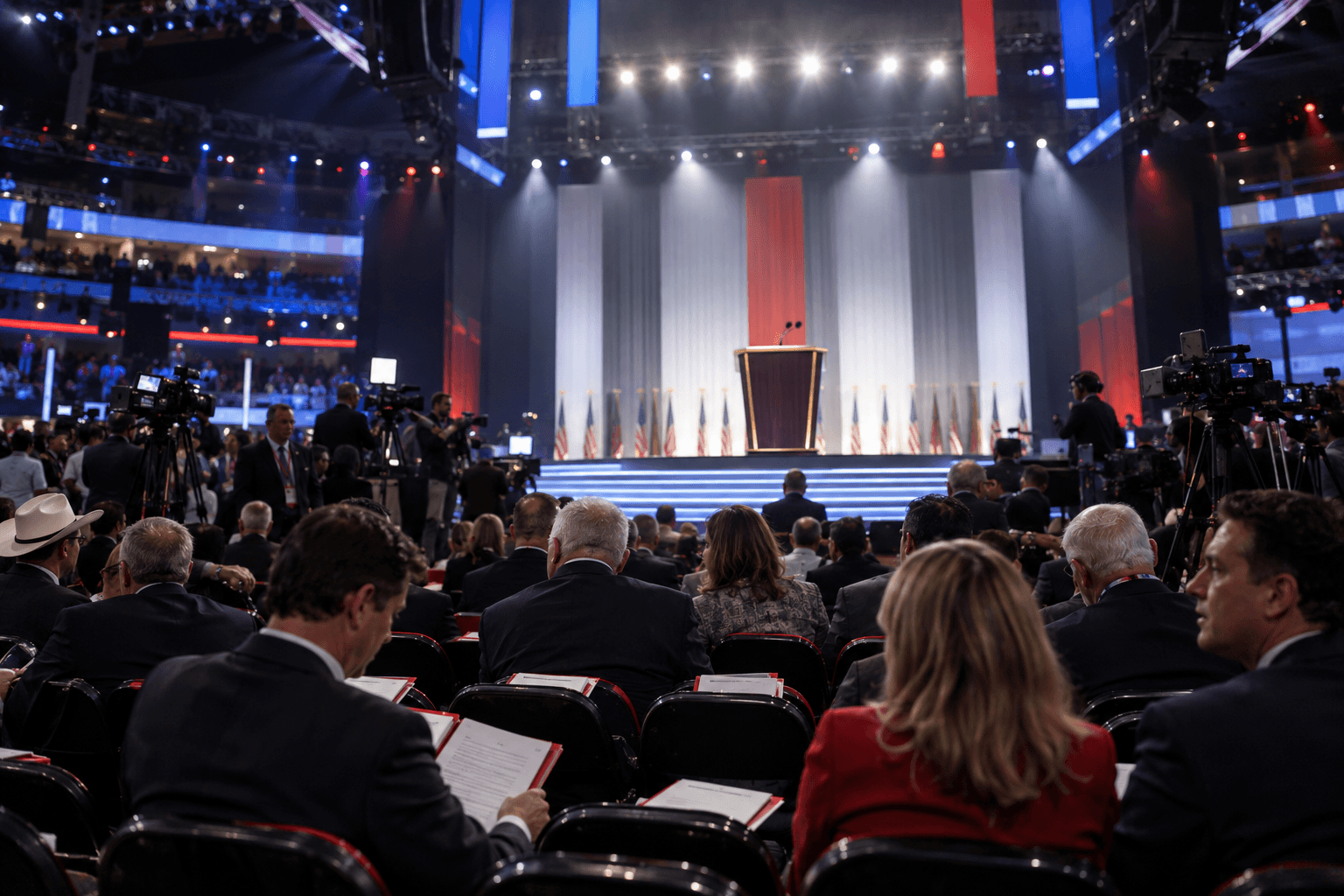
President Donald Trump used the opening night of the Republican midterm convention in Dallas to promise a five-thousand-dollar payment to every adult U.S. citizen if his party retains control of both the House and Senate. He presented the idea as a dividend from the country's economic performance and tariff revenue, but offered no legislation, eligibility rules, timetable or detailed financing plan. The pledge instantly became the convention's defining proposal because it tied a direct personal benefit to the outcome of the November election while asking voters to treat the midterms as a referendum on Trump's presidency.
CBS News estimated that payments to roughly 245 million adult citizens could cost more than one trillion dollars. Reuters similarly reported that the plan would likely require congressional approval and could exceed one trillion dollars, depending on eligibility. Trump said a bill would be prepared after the election and argued that tariff revenue could help fund the checks. Yet tariff collections remain far smaller than the gross cost described by outside estimates, and part of that revenue has been refunded following a Supreme Court ruling. The gap between the scale of the promise and the details provided ensures that budget, legal and inflation questions will follow Republicans beyond the convention floor. Any bill would force lawmakers to specify who qualifies, how payments interact with taxes and where the money comes from.
The convention itself is a strategic experiment. Republicans organized a two-night, presidential-style gathering less than two months before voting, seeking to nationalize dozens of House and Senate races around Trump's agenda. The official schedule put party candidates and policy themes on stage alongside the president and Vice President JD Vance. Reuters reported that some vulnerable Republicans stayed away, reflecting concern that Trump's weak approval ratings and the war with Iran could weigh on close contests. Vance's closing-night role also gives him a chance to demonstrate how he would carry a party still built around Trump into the next presidential cycle.
A Polymarket family tracking words and phrases in Trump's Night Two remarks had generated about $107,000 in total activity. Traders put the chance that he would say "MAGA" or "Make America Great Again" at roughly 77.5 percent, while "Radical Left" also drew a high estimate. Those contracts measure expectations about a speech, not public support for the cash proposal or the probability that Congress would enact it. The larger test comes after the lights in Dallas go down: whether candidates embrace the pledge, whether lawmakers produce a credible funding mechanism and whether voters see it as relief or as an opportunistic promise. The convention may sharpen the Republican message, but it also gives Democrats a concrete fiscal claim to challenge in every competitive district.