The possibility of martial law raises questions about civil liberties and the military’s role in civilian life. But public concern about extraordinary presidential powers is not the same as evidence that martial law has been imposed or is planned. One important distinction is between martial law and the Insurrection Act, a federal law that authorizes troops to police civilians in specified extreme emergencies, according to the American Civil Liberties Union. That distinction helps separate concern about the breadth of presidential authority from the narrower question posed by the contract.
The ACLU says the Insurrection Act has been invoked 30 times and describes it as distinct from martial law. It also says invoking the law would not suspend constitutional protections. Those limits matter: a threat to invoke the Act, or a military deployment under other authorities, does not by itself establish that martial law has been imposed. The legal and practical meaning of any future action would depend on what was done and how it fits the question posed by the contract. The existence of a legal authority, in other words, does not itself answer whether a particular use of power would qualify as martial law.
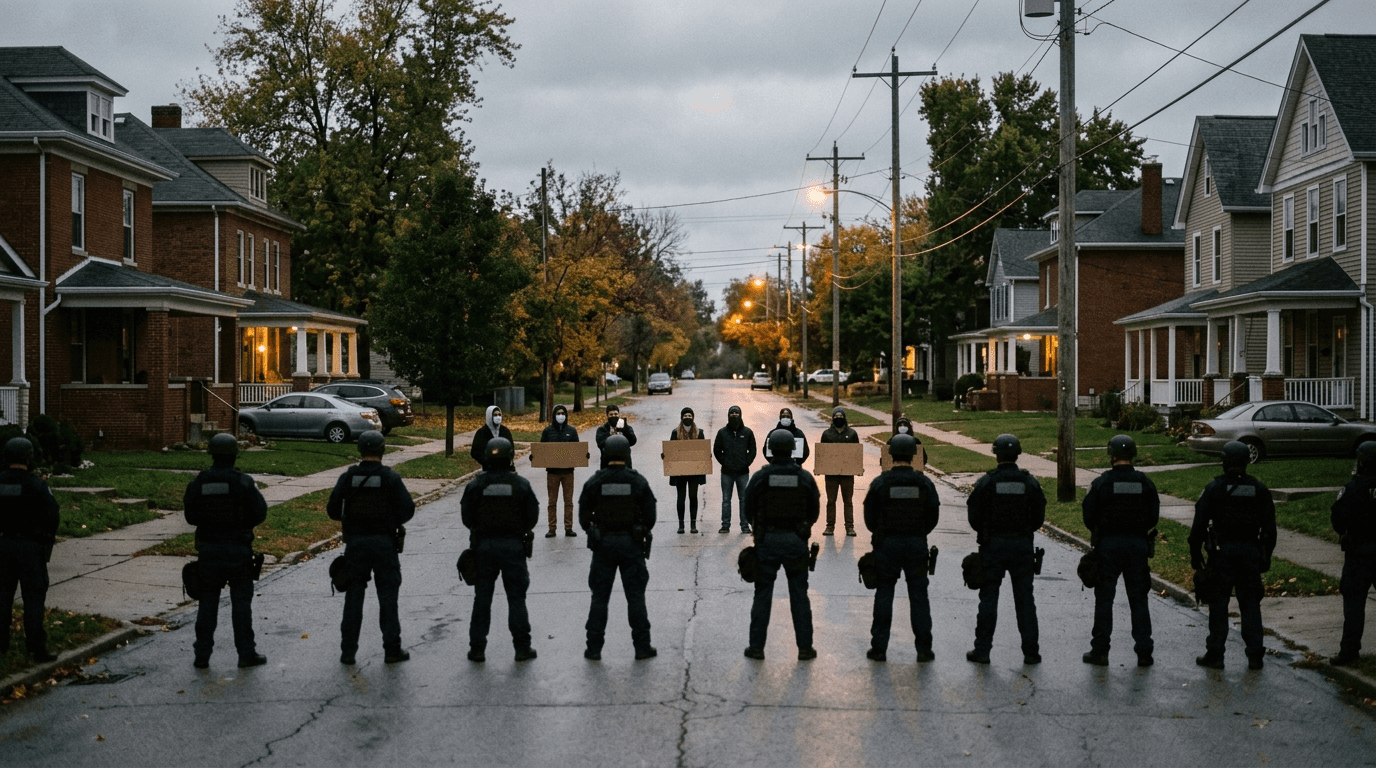
The ACLU says Trump threatened to invoke the Act in Minnesota if state officials did not quell protests. Courts have rejected some of the administration’s arguments in litigation over domestic troop deployments, the organization says. That record can inform concern about the use of executive power, but it does not answer whether a future action would meet the market’s definition of imposing martial law. Nor do the materials available here establish that a specific plan to do so is underway. A reader can take the threat seriously without treating it as proof that the contract’s outcome has happened or is inevitable.
On Kalshi, traders put the chance of Trump imposing martial law before his term ends at 31% as of 9:57 a.m. ET on Oct. 11. That is a snapshot of what traders believe, not an objective probability or a forecast. Trading was limited over the last day: 13 contracts traded over the last day, while 39,014 contracts open remained open. The quoted price showed no change over the past day or week. There is also a separate contract asking about action before an earlier deadline; its price is not interchangeable with the broader question. Neither contract resolves the crucial ambiguity: what official action would count as imposing martial law under the market’s resolution rules? Without that definition, a price cannot settle the boundary between a disputed exercise of emergency authority and the outcome the contract names.
The ACLU says the last invocation of the Insurrection Act without a state governor’s consent was 1965. That historical reference does not predict what a president will do, and the Act’s invocation would not, by itself, settle the martial-law question. The market’s price is best read as evidence of uncertainty among traders, not proof that an extraordinary action is imminent. For readers, the distinction is consequential: threats and deployments can raise real questions about constitutional limits, while still falling short of the specific outcome this contract asks about. Keeping those questions separate makes it possible to scrutinize the use of power without mistaking a warning, a legal authority, or a market price for proof of martial law.