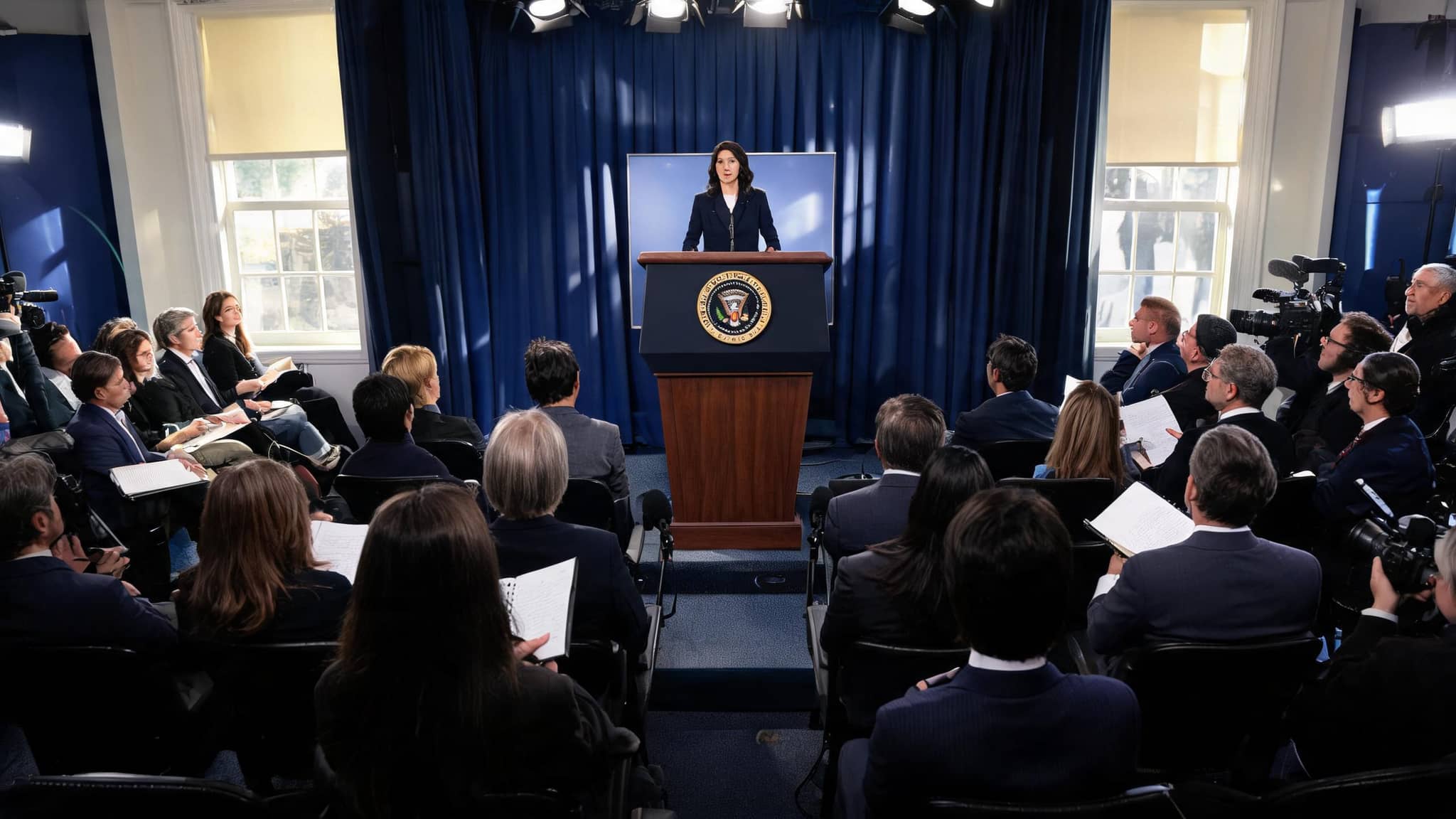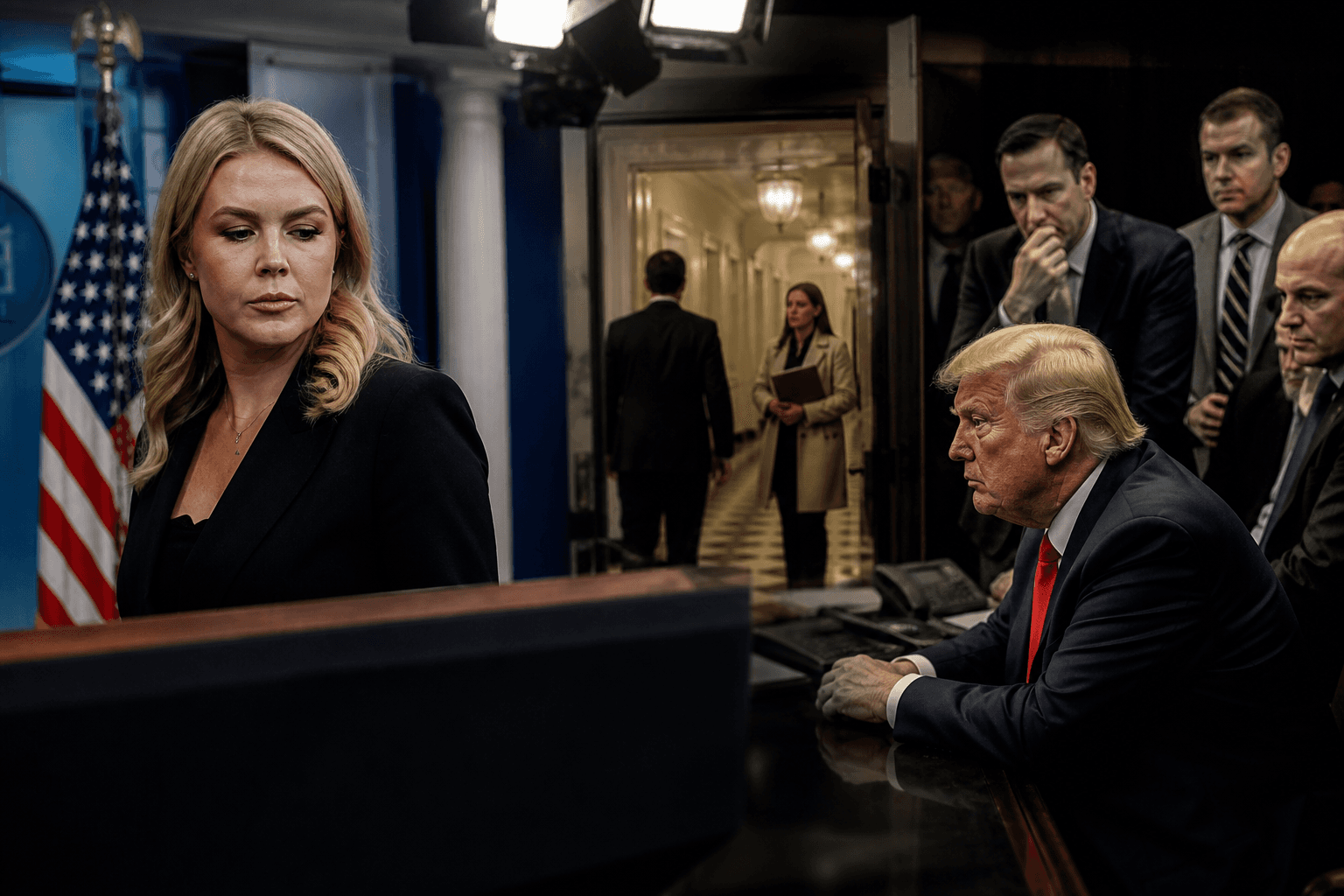
The next White House press secretary is suddenly a real political question rather than a background guessing game. Donald Trump's announcement on August 12 that Karoline Leavitt will leave the job at the end of August has created an opening at one of the administration's most visible and politically sensitive posts. Leavitt was not just another camera-facing spokesperson. She became a regular translator between Trump's instincts, the daily briefing room demands and the campaign style politics that still shape the White House. Her departure matters because the role now turns over just as the administration is looking toward fall messaging battles, the midterm stretch and another round of budget and foreign policy fights that will test how disciplined Trump's team wants to sound in public.
The field of possible successors says a great deal about the administration's choices. One path would favor continuity through people already embedded in the shop, especially aides like Anna Kelly, who could offer a smoother transition and preserve the operation's working habits. Another path would reward outside or hybrid loyalists who are more closely identified with Trump's political brand than with the traditional mechanics of press management. Scott Jennings has become the most conspicuous example of that outside lane, while other names around the president's orbit continue to circulate. The point is not that every rumor carries equal weight. It is that Trump's decision will signal whether he wants the next phase of the job to be handled by someone who looks like a professional in-house communicator, or by someone whose main value is ideological combat and personal alignment.
That choice has consequences beyond television clips. The press secretary is often treated as a symbol, but in practice the office helps determine how quickly a White House can answer crises, coordinate agencies and impose a usable message on events it did not choose. In Trump's case, the job also mediates between his direct social media style and the more formal machinery of government. A successor who lacks internal authority could end up amplifying noise rather than controlling it. A successor who is too insulated from Trump's political instincts could quickly lose relevance. Leavitt's own move to an outside advisory role adds another layer, because it suggests she may remain influential even after leaving the podium. That can help a transition, but it can also complicate it if multiple power centers begin shaping the same message from different rooms.
Prediction markets are capturing that uncertainty more clearly than they are predicting a settled outcome. Kalshi places Jennings in front, with Kelly still close enough to matter and several other contenders holding non-trivial shares of attention. The gap between those names is wide enough to show a leader, but narrow enough to show that no final choice is locked in. That is the right way to read the moment. The story is not that the next press secretary has already been chosen. It is that one of the administration's most important communications jobs has opened at a politically awkward time, and the actual appointment, whether permanent or acting, will reveal a great deal about how Trump wants the White House to sound in the months ahead.