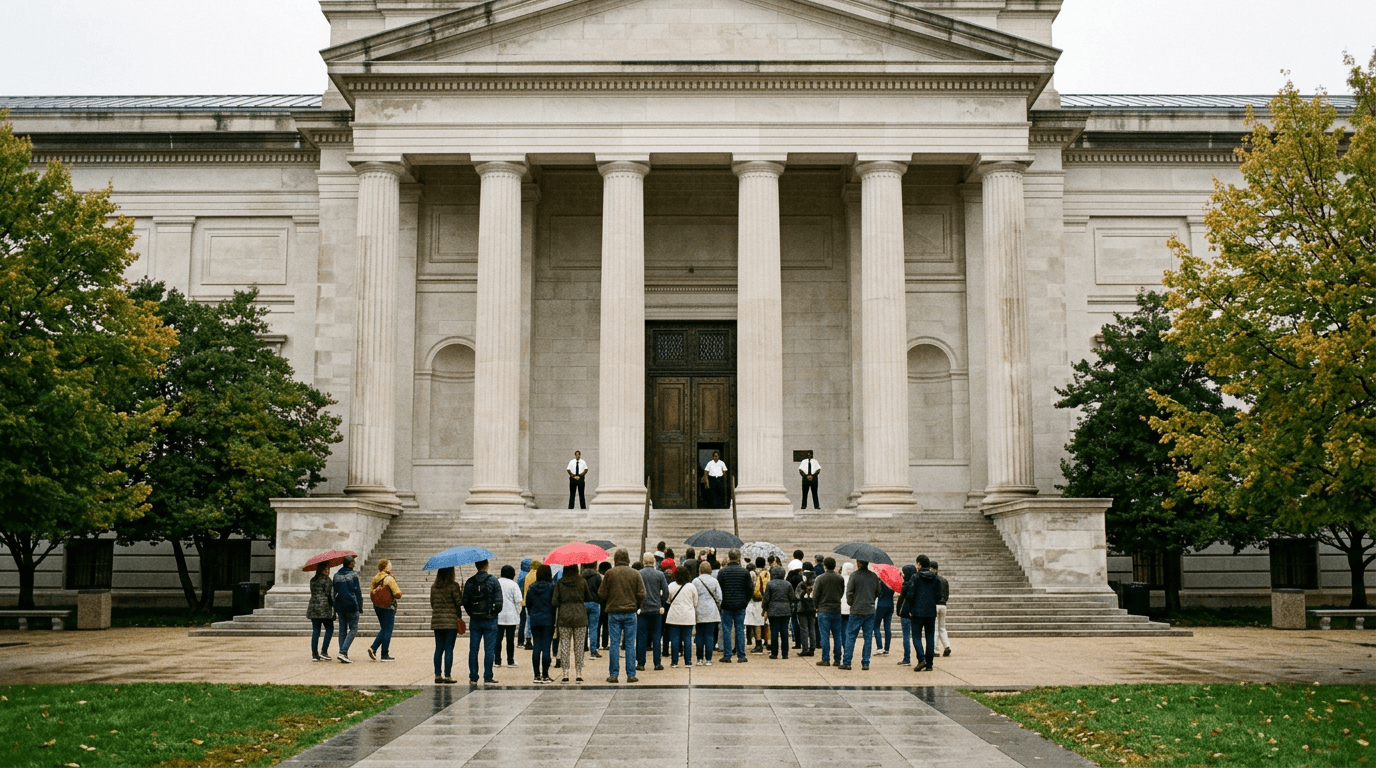
The dispute over the Smithsonian concerns federal influence over a major public cultural institution and the way it presents American history. The administration has instructed the Interior Department to put warning signs outside a Smithsonian museum, and Interior Secretary Doug Burgum has warned the institution’s board about federal support. Yet the sourced claims do not show that these steps have changed the museum’s exhibitions or language. Whether pressure becomes substantive federal action remains unsettled.
The Smithsonian is independently governed but depends significantly on federal funding, which accounts for 62%, according to the reporting. Those features pull in different directions. Reliance on federal funding creates a point of vulnerability, while the institution’s governance makes direct administration influence over its content difficult. The reporting describes that structure as an obstacle to direct control, not proof that federal pressure cannot have consequences. The distinction matters: pressure can be substantial even when it does not immediately alter what visitors encounter in an exhibition.
The warning-sign order provides a specific example of the administration’s pressure. ProPublica reported that the signs had not yet gone up when its article was published. Burgum also warned the Smithsonian’s board that other federal agencies could not continue supporting the institution under its current leadership. Smithsonian Secretary Lonnie Bunch announced on Sept. 8 that he would step down. The claims establish these actions and statements, but do not establish that the signs were installed, that agency support changed, or that Bunch’s departure resulted from the pressure campaign.
There is also evidence that the institution’s public presentation had not changed. The acting director of the National Museum of African American History and Culture said the museum had not changed its exhibitions or language. That statement offers a counterpoint to the administration’s warnings, without resolving what may happen next. The reporting also says the Smithsonian’s mixed funding and complex governance have made direct influence over its content difficult. The available claims therefore describe pressure alongside institutional constraints, rather than a documented change in the museum’s presentation.
Kalshi traders currently put the chance of substantive federal action arising from the Smithsonian pressure campaign before the contract’s cutoff at 26%. The reading was recorded as of 11:03 a.m. ET on Sept. 25 and reflects traders’ current belief, not an objective probability or a forecast. The market is up 1 point over the week. No contracts traded over the last day, and 1,333 contracts open contracts remain open. The market signal does not resolve the reported facts: the packet records an order and a warning, while the sourced claims do not report changed exhibitions or installed signs. The central uncertainty is whether federal pressure will produce substantive action, while the Smithsonian’s independent governance makes direct influence over its content difficult.