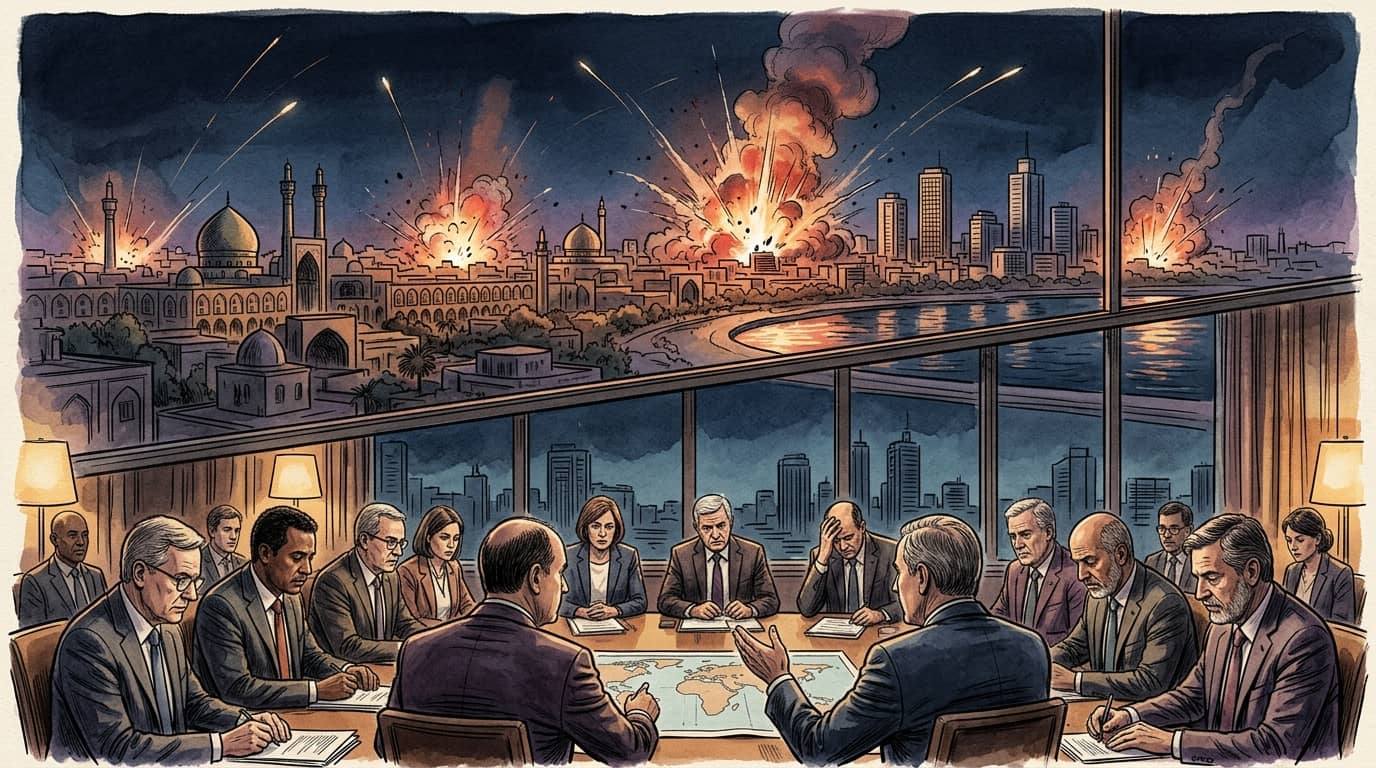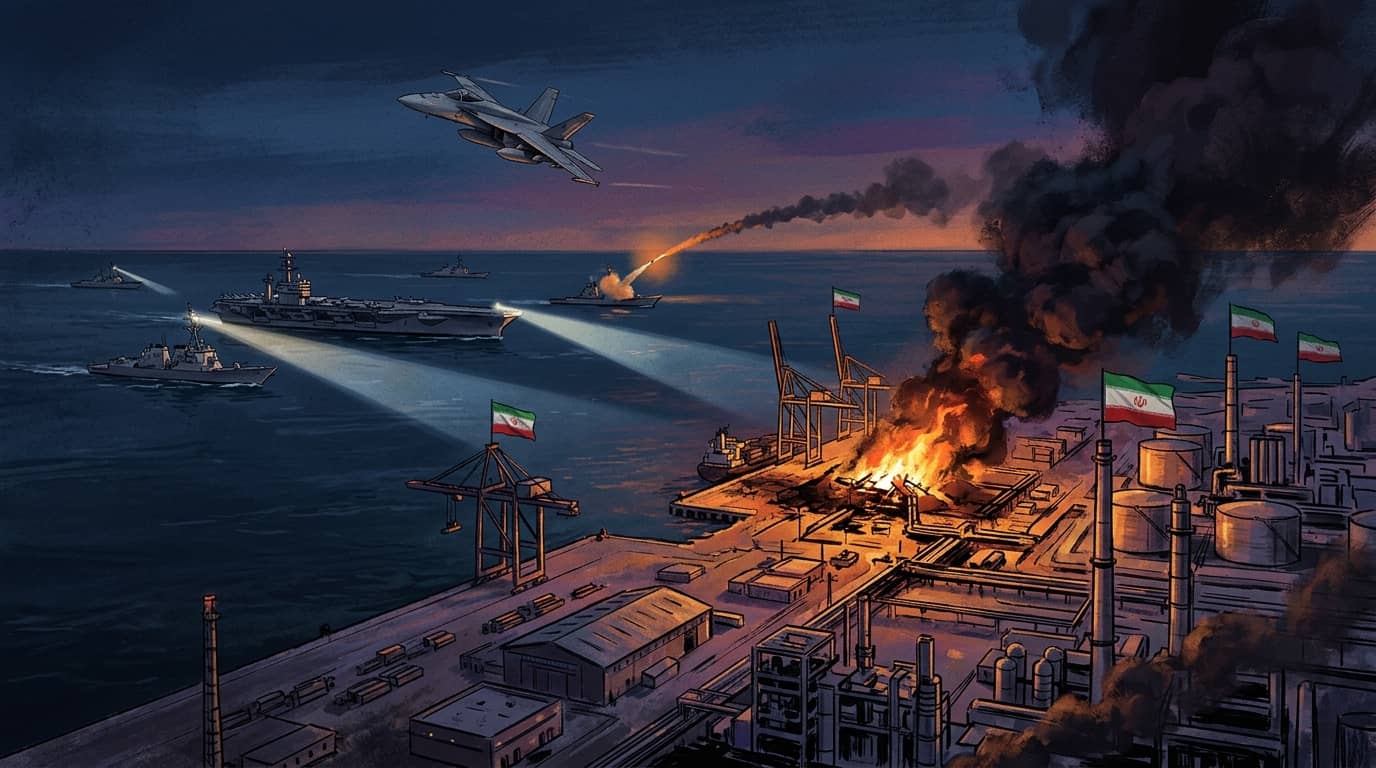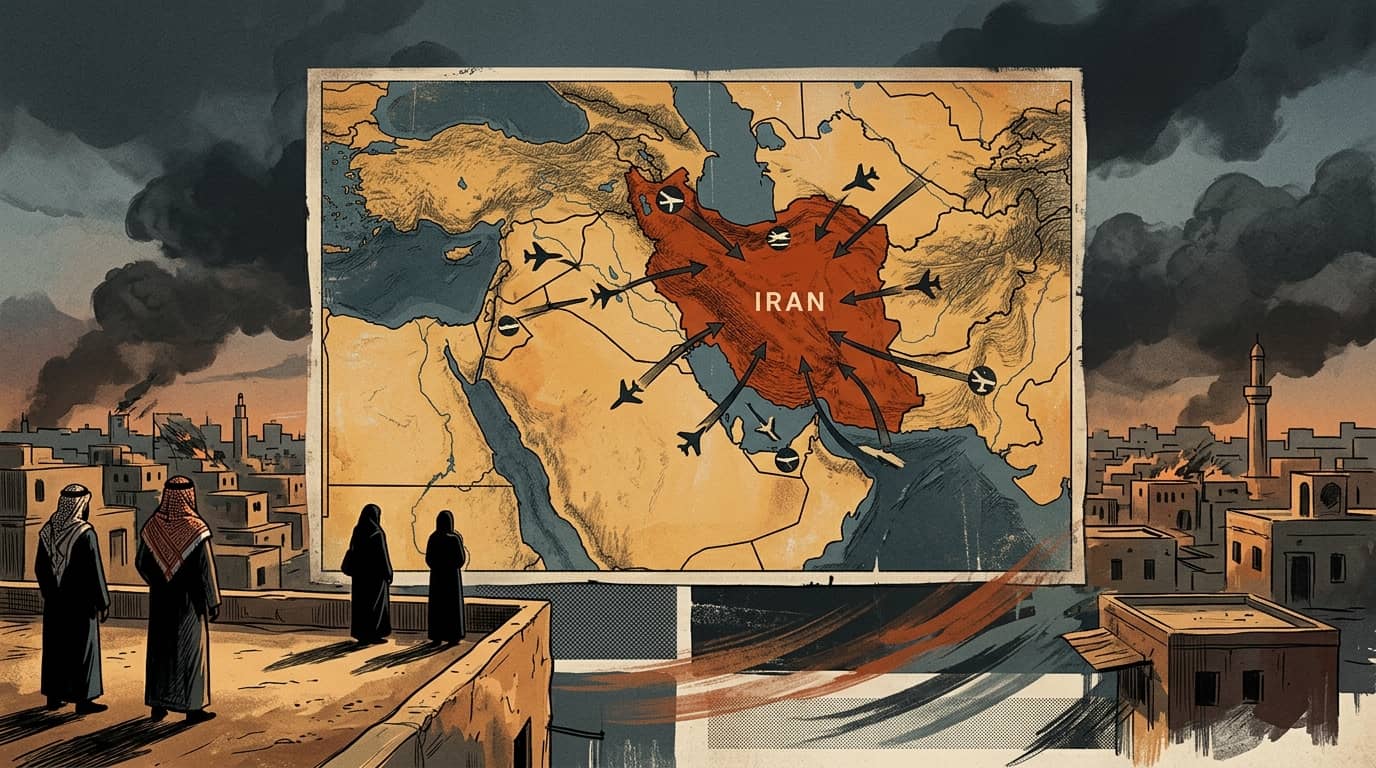
The United States conducted a ninth consecutive night of airstrikes against Iran on July 19–20, 2026, targeting military command centers, air defense sites, and missile launch capabilities across multiple provinces. The strikes expanded to Bushehr, home to Iran's only operational civilian nuclear power plant, and East Azerbaijan province, where local officials reported at least one fatality.
Iran responded by launching missile and drone attacks against U.S. military positions in Jordan, Syria, and Kuwait on July 19–20. Kuwait and Bahrain activated air defenses in response to incoming projectiles. At least 17 U.S. service members have been confirmed killed since the conflict with Iran began, with the latest death announced July 19 following Iranian attacks.
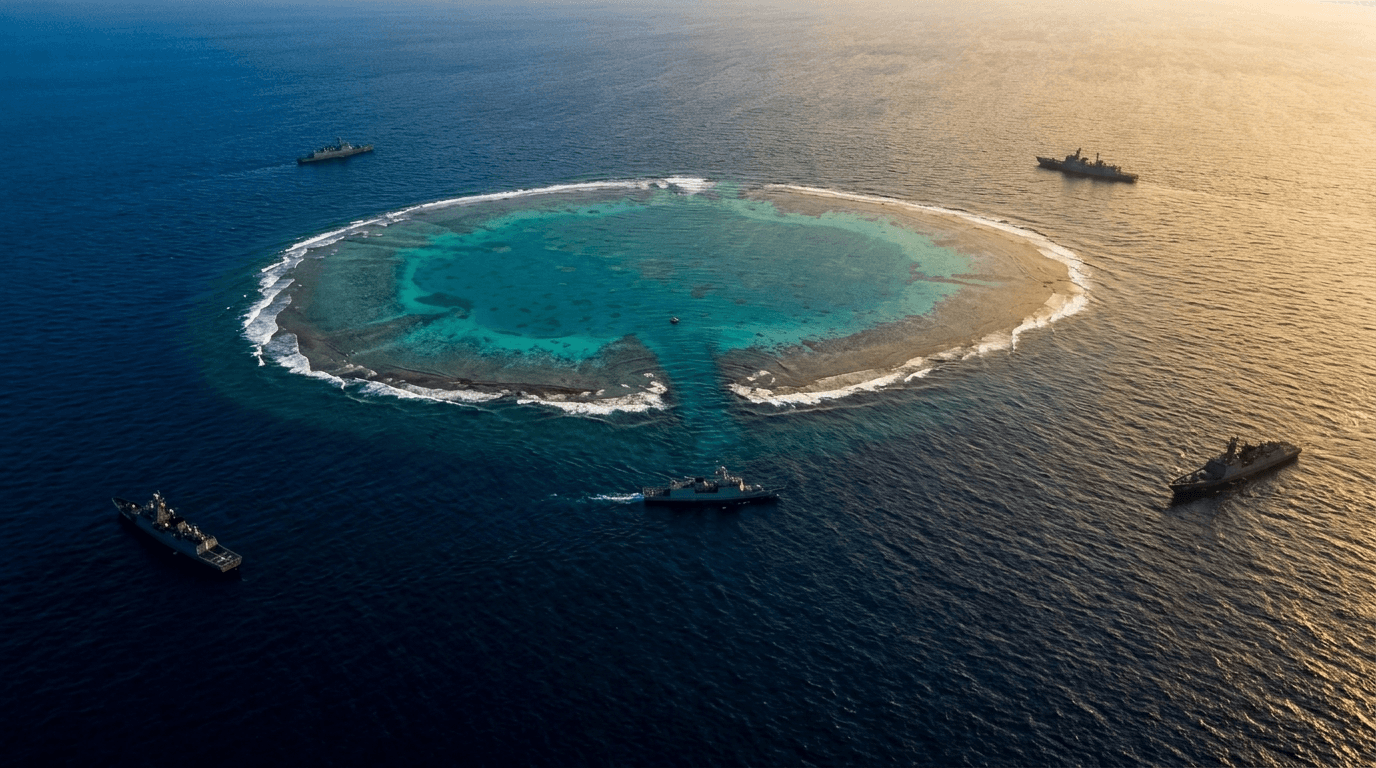
The escalation follows the collapse of the June Islamabad Memorandum truce in early July. Iran reimposed a blockade of the Strait of Hormuz, targeting commercial vessels with projectiles and causing at least one ship to be abandoned after a fire broke out.
Despite the widening U.S.-Iran confrontation, Israel has not directly re-engaged Iranian territory with air or missile strikes as of July 20. Israeli officials have warned of potential spillover from the conflict, and the country remains on high alert. Iran fired missiles toward Jordan, which borders Israel, raising concerns of a broader regional war.
The next milestone for the ceasefire status will be any direct military action between Israel and Iran. A single Israeli or Iranian air or missile strike against the other's territory would break the current posture of non-engagement.