Serbian President Aleksandar VuÄić says he will resign on September 27, four weeks before a snap parliamentary election that could give him a path back to power as prime minister. The announcement came as a student-backed movement formally entered the October 25 race with a list of parliamentary candidates. The two developments turn a long protest movement into an electoral test of VuÄić's governing Serbian Progressive Party. Resignation has been announced, not completed, and winning a campaign would not automatically install him in the next government. The vote will determine who can assemble a parliamentary majority, after which lawmakers must elect and swear in a prime minister.
N1 Belgrade reported that VuÄić gave the September 27 date in an appearance on television Monday, bringing forward an earlier suggestion that he could leave the presidency around election day. Serbia's government formally called the parliamentary election for October 25 after dissolving the National Assembly, a decision it published last week. The party he has led is campaigning under a United Serbia list, with VuÄić at its head. His proposed move from the presidency to the premiership would make the election a personal judgment on a politician who has dominated Serbia's national politics for more than a decade. It also means citizens must weigh the ruling coalition's record against the claims of new challengers rather than treating the presidential resignation as an end to his political career.
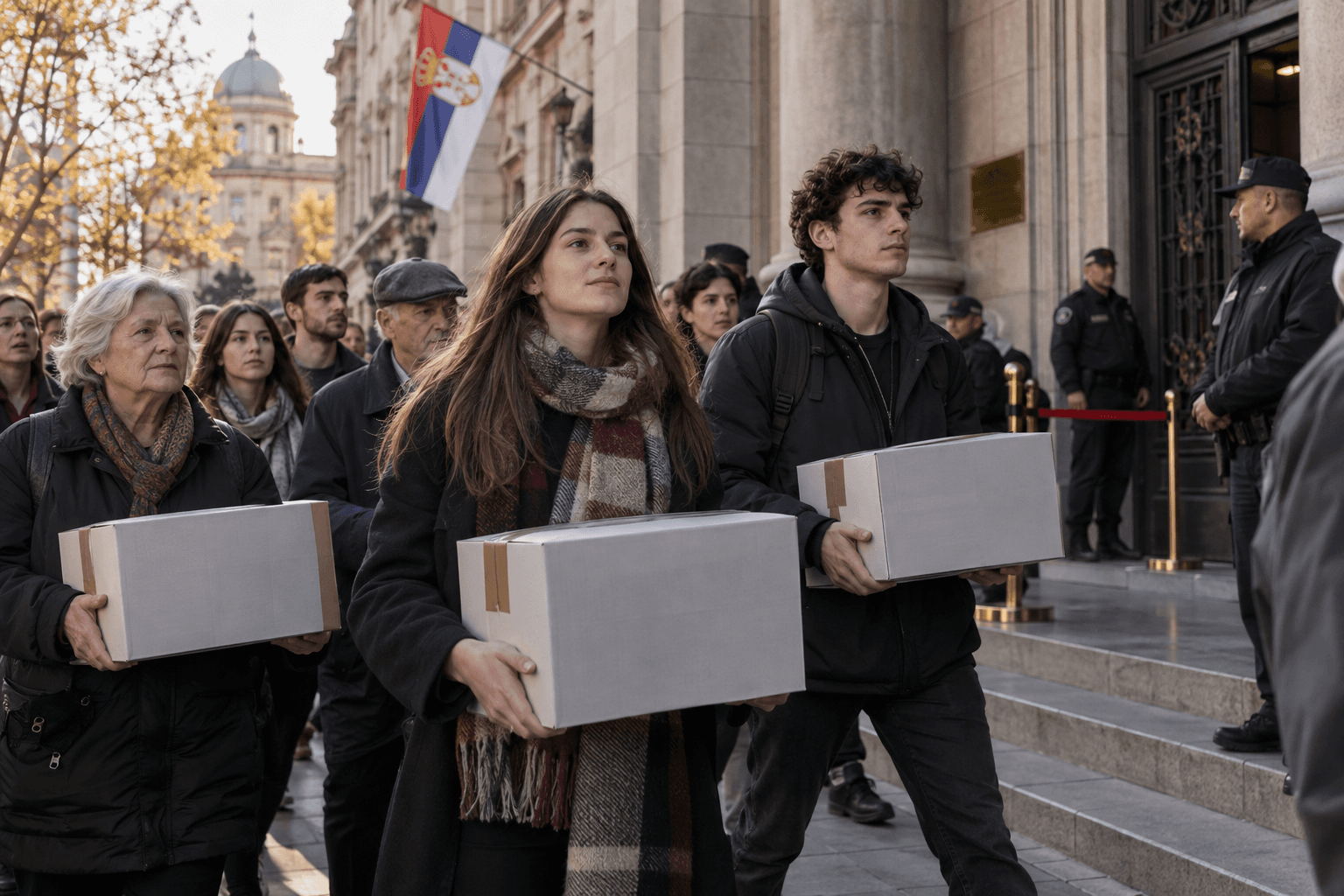
The student movement submitted a 250-person candidate list to the Republic Election Commission on Monday evening, as N1 Belgrade and BBC's Serbian service reported. Its coverage identified cardiologist and university professor Ilija Srdanović as the first name on the list and described a public march accompanying boxes of signatures to the commission. The list still faces the commission's document and signature checks, so submission is a step toward the ballot rather than final certification. The movement grew from protests after the deadly 2024 collapse of a railway station canopy in Novi Sad, which made accountability and state oversight central political demands. Turning that mobilization into seats will depend on organization, turnout and confidence in the electoral process across Serbia, not merely the size of demonstrations in Belgrade.
Polymarket's live next-prime-minister market put VuÄić near 45 percent in the latest snapshot, up roughly 17 points on its Breaking News list, while Srdanović was around 32 percent. Those are trader prices for an eventual officeholder, not election results or proof that either man will be nominated by a victorious bloc. The market's rules require a formal parliamentary vote and swearing-in by June 2028. The immediate next steps are the election commission's decision on the student list, VuÄić's promised resignation and the October campaign. Only after the ballot and coalition talks will Serbia know whether his bid to switch offices succeeds or whether the student-backed challenge changes the country's governing direction.