A White House visit can be a diplomatic encounter, a policy meeting or a ceremonial appearance. The market asking who will visit before the year ends cannot tell readers which kind of visit to expect—and the available reporting does not establish that any of the named people has one scheduled. That distinction matters: a market price is not an itinerary, and the prospect of an appearance alone does not show what it would involve.
Kalshi’s contract puts Canadian Prime Minister Mark Carney at 49%, as of 4:06 p.m. ET on Oct. 1, the highest figure among the listed names. Egyptian President Abdel Fattah al-Sisi is at 37%, while House Democratic Leader Hakeem Jeffries is at 35%. These are traders’ current beliefs, not forecasts or objective probabilities. The contract reports 0 contracts traded over the last day for each listed person, so there was no reported trading in that period. Open interest varies across the names, but it does not establish that a visit is planned or that the displayed prices reflect a broadly shared view.
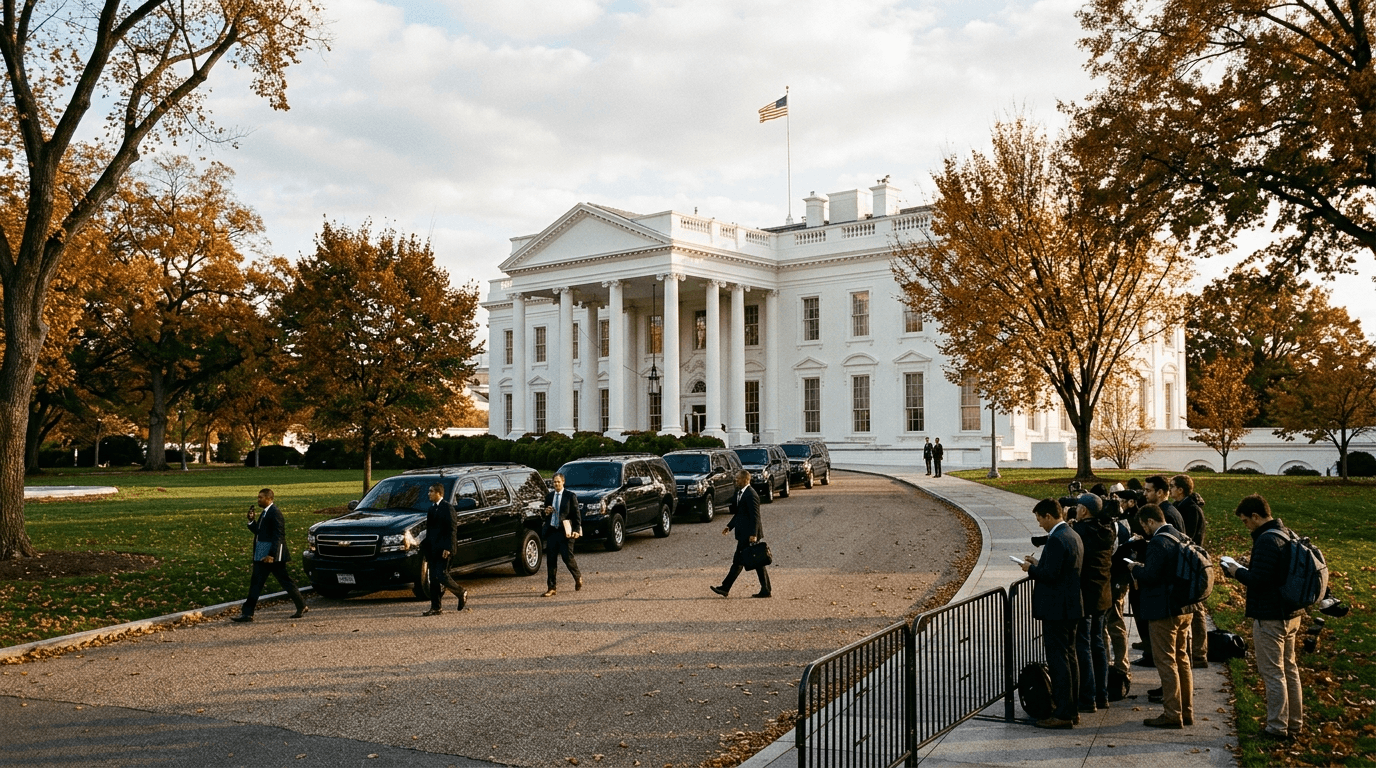
The strongest concrete example in the reporting is a recent gathering, not a preview of future visitors. President Trump and House Speaker Mike Johnson hosted an AI luncheon at the White House on September 29, 2026. Trump said the administration was considering a 10-person committee for the AI industry, while Johnson described the industry’s principles as voluntary. The event illustrates how a White House gathering can touch questions of public policy; it does not show that any person in the contracts will attend a similar meeting, or establish what future meetings might address.
The list itself spans political, business and entertainment figures, but a name on a contract is not evidence of an invitation or a visit. Apple executive John Ternus, for example, was not on the AI luncheon guest list. That absence does not establish whether he will visit later in the year. Nor does a market price explain the purpose of a possible appearance: a visit could be ceremonial or private, with no policy change to report. The available claims provide no comparable reporting that substantiates expectations for the other listed people.
The sensible conclusion is narrower than the market’s roster suggests: there is no reliable basis here to say who will visit or what any visit would mean. The White House also announced public fall garden tours, but those are not visits by the people named in the contracts. Those tours do not resolve the question posed by the contracts. Until a visit is announced or supported by reporting, the prices describe market sentiment—not a White House itinerary. Readers should treat the names and prices as an unresolved question, rather than as confirmation that meetings are scheduled or that a particular policy outcome is likely.