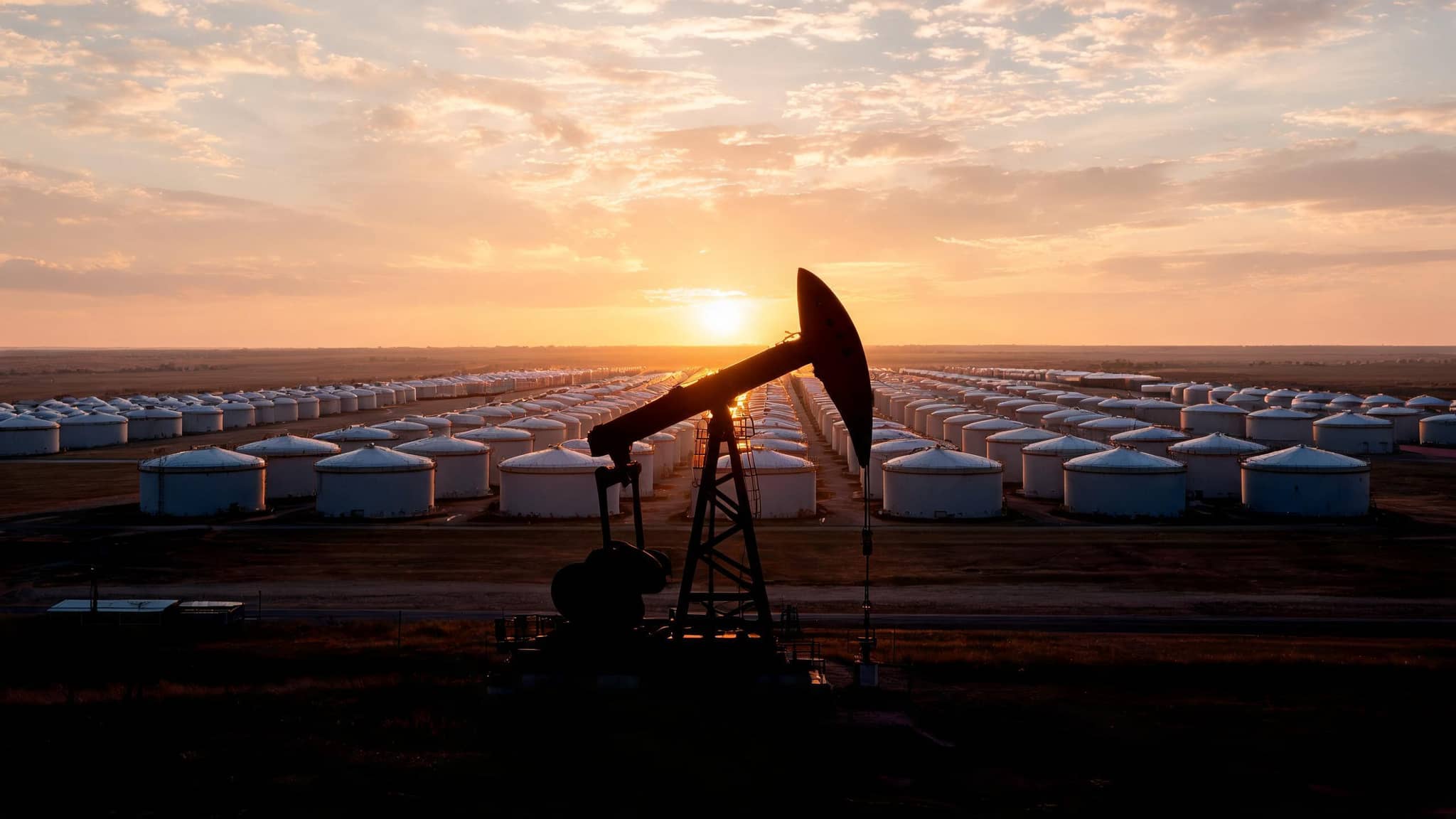
Prediction markets on Polymarket now assign a 45.5% probability that West Texas Intermediate crude oil will reach $90 per barrel in August, a level that has remained out of reach since early July. The contract, which settled at $82.40 on Aug. 14 after touching a one-week high earlier that week, has struggled to sustain upward momentum amid conflicting supply and demand signals.
OPEC+ approved a September quota increase of about 188,000 barrels per day on Aug. 2, completing the rollback of voluntary cuts that had supported prices. The group’s own data showed output rose by 1.17 million barrels per day month-over-month in July to 19.85 million bpd, led by Gulf producers. Meanwhile, OPEC cut its 2026 global oil demand growth forecast to 580,000 barrels per day on Aug. 12, and the EIA’s August Short-Term Energy Outlook projects WTI spot prices in the mid-$80s, below the $90 threshold.
Geopolitical risks have provided intermittent support. WTI closed at $83.20 on Aug. 11, the highest since July 31, after Iran warned the Strait of Hormuz would remain shut and tanker attacks in the region pushed prices higher. But those gains proved temporary: on Aug. 3, oil tumbled 7% to $80.34 as fears of a broader Iran conflict eased. The IEA’s August Oil Market Report noted that North Sea Dated crude was trading around $92 per barrel, suggesting the broader complex is already near the target in some benchmarks, yet WTI has lagged.
For a $90 August print, traders would likely need a fresh geopolitical shock or a sustained escalation in Middle East disruptions. The current price action, stalled in the low $80s, combined with OPEC+ adding supply and demand forecasts being revised lower, makes the 45.5% probability a reflection of upside tail risk rather than a base case. The market’s 24-hour volume of $60,376 and a 17-point jump in implied probability suggest active speculation, but the fundamentals remain stacked against a rapid breakout.