The Federal Reserve is widely expected to raise interest rates again when it meets on Dec. 8 and 9. On Wednesday, the Commerce Department reported that the personal consumption expenditures price index, the Fed's preferred measure of inflation, rose at an annual pace of 3.8 percent in October, an acceleration from the month before. The Fed's target is 2 percent. In September, under Chair Kevin Warsh, the central bank raised its benchmark rate for the first time in three years, then held it steady at its October meeting.
Warsh made clear in October that the pause was not a change of heart. Asked why the Fed did not simply raise rates then, he said that beating inflation was not about any single date or data point, and he described a strategy aimed squarely at the 2 percent goal. "If you think that we're tolerating some inflation target somewhere in the twos, let us disabuse you of it," he said. He acknowledged that the Fed had not yet achieved price stability. "You're right about that, but we're working on it."
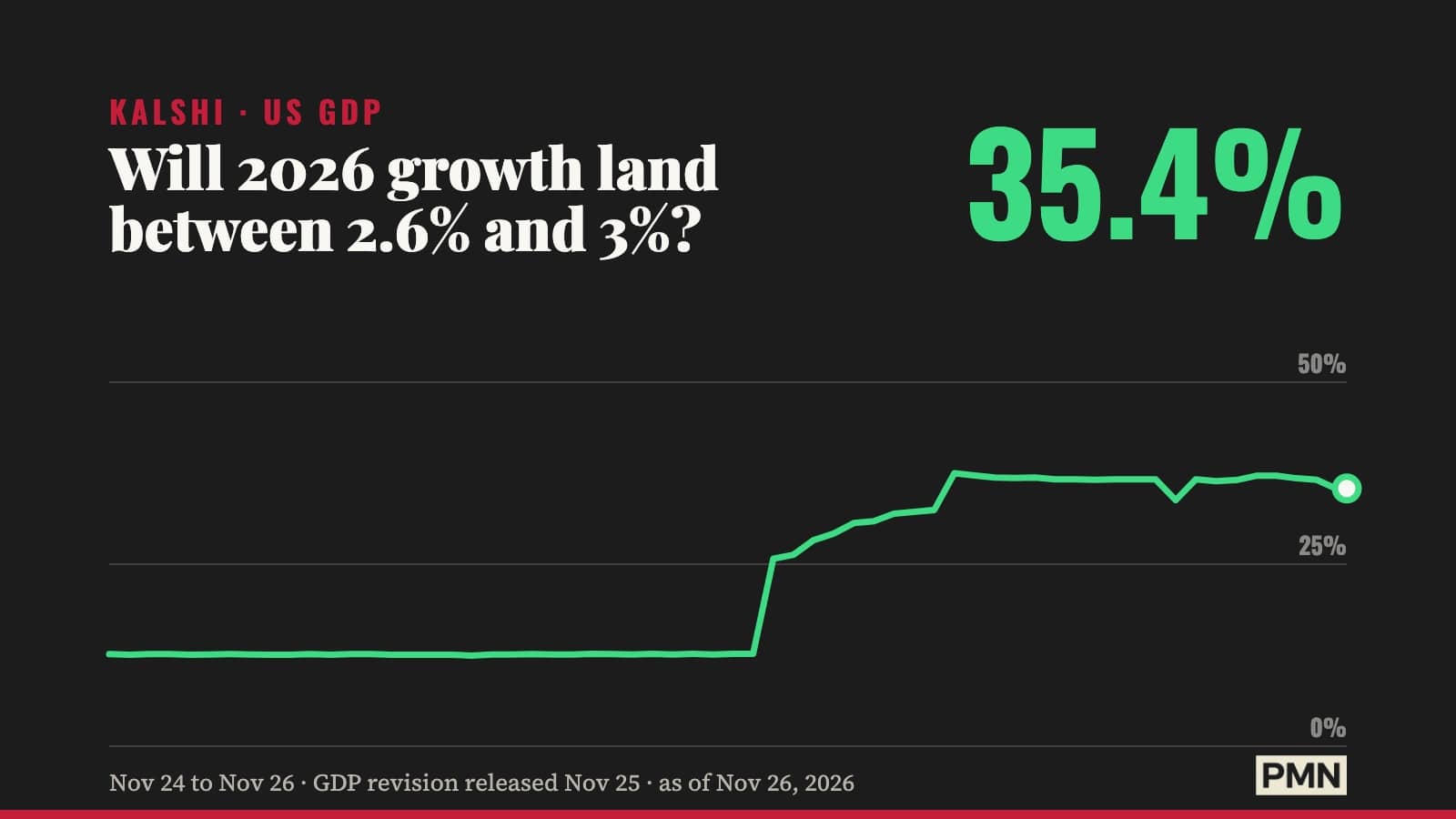
The data since then has pointed the same way. The consumer price index rose 0.4 percent in October, more than the 0.3 percent economists expected, and food prices rose 0.5 percent after months of little change. "You really did see an acceleration in food, not something that people want to see when they're going to the grocery stores," a CBS News correspondent said when the report came out on Nov. 10. Higher diesel costs, which take months to reach grocery shelves, were part of the reason. Strong economic growth has added to the pressure: the government raised its estimate of third-quarter growth to 4.3 percent on Wednesday.
Not everyone wants the Fed to move. A hike would raise borrowing costs on credit cards, car loans and mortgages at a moment when technology stocks are falling and some data center projects have been canceled. "I'm hoping that the Fed takes that in mind when they're thinking of raising rates because the economy is too hot, as they like to say at the Fed," a Fox Business host said this week. President Trump has repeatedly called for lower rates, not higher ones.
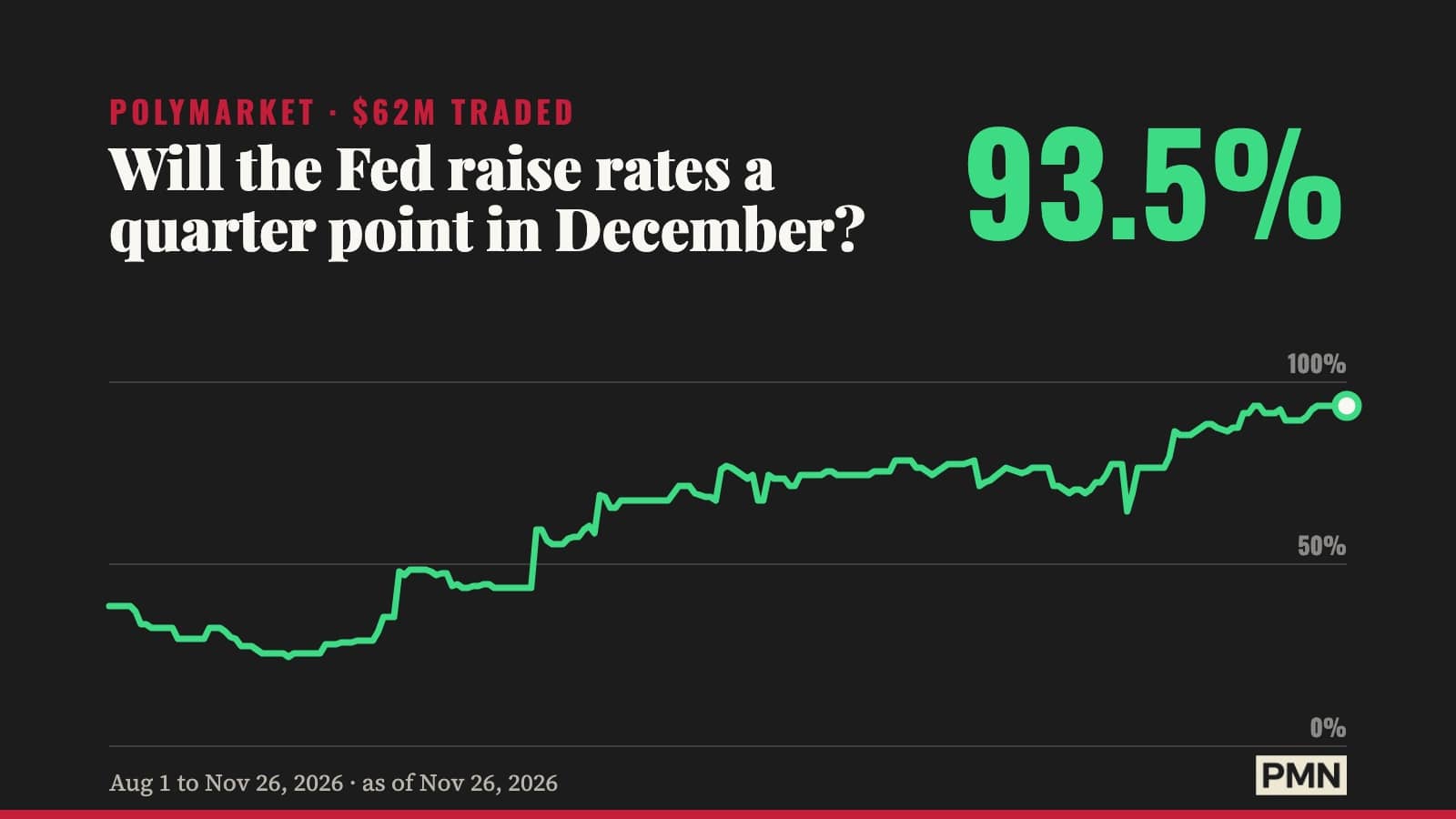
Traders have made up their minds. On Polymarket, more than $62 million has been traded on the December decision, about $1.5 million of it in the past day. The chance of a quarter-point increase stood at 25.5 percent on Aug. 17. It rose to 67.5 percent in the days after the September hike, jumped on a strong jobs report on Nov. 6 and again around the October inflation report, and has been above 90 percent for most of the past week. On Thursday it was at 93.5 percent, with no change at about 4.5 percent and a half-point increase at about 2 percent. The Fed announces its decision on the afternoon of Dec. 9, and Warsh is expected to take questions afterward, as he did in September and October.