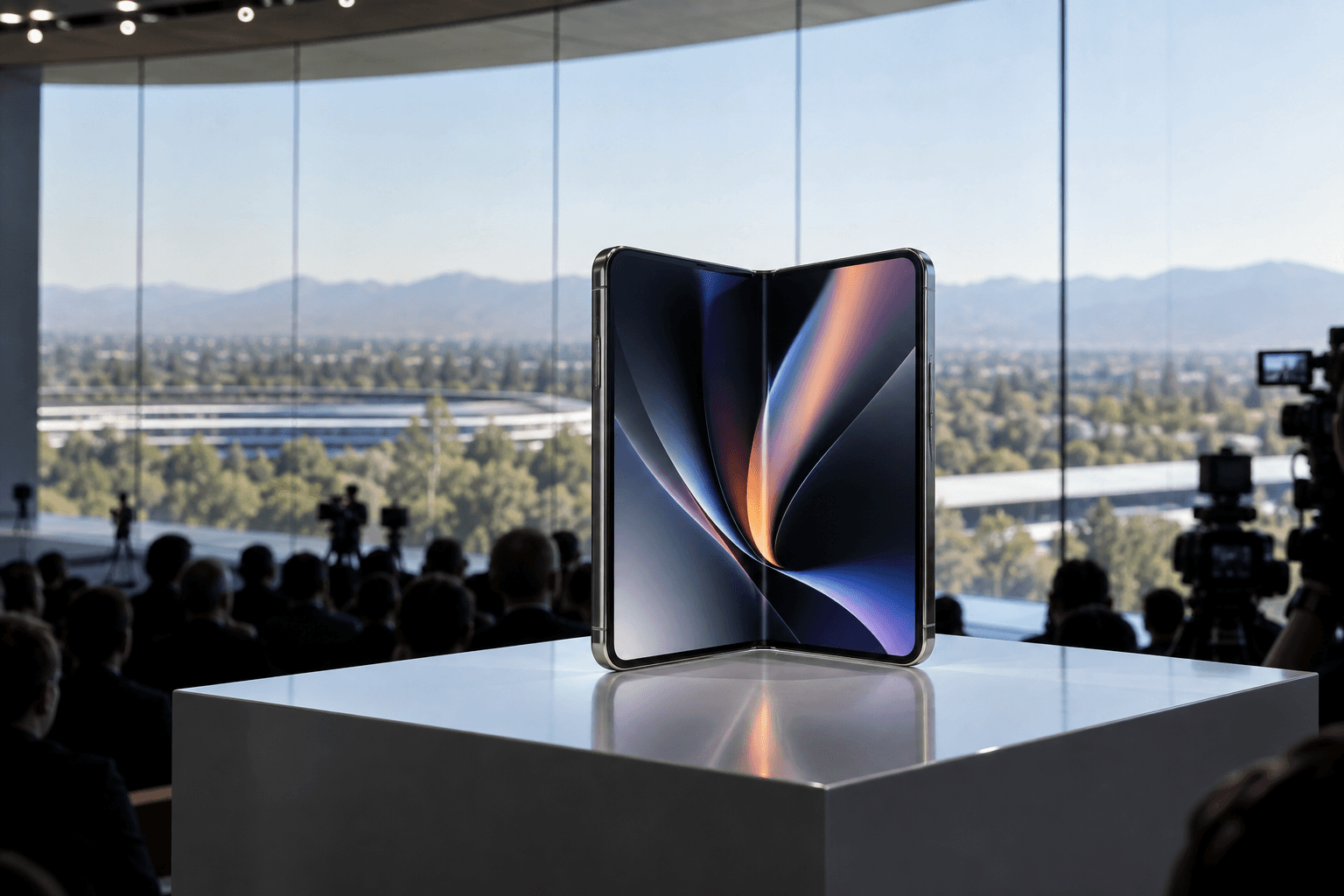
Apple has introduced the iPhone Duo, its first foldable phone and the most consequential expansion of the iPhone line in years. Chief executive John Ternus presented the device at the company's Cupertino campus on Wednesday, little more than a week after succeeding Tim Cook. Apple says the Duo opens to a 7.6-inch inner display, closes around a 5.4-inch outer screen and uses a precision hinge designed to make the transition between the two feel continuous. The launch turns a long-running industry rumor into a real product and gives Ternus an unusually visible first test of how aggressively Apple will pursue new hardware categories under his leadership.
The device is pitched as both a large-screen phone and a compact productivity tool. Apple says users can run two apps side by side, use an Apple Pencil and take advantage of a camera system adapted to the folding design. The Duo is powered by the A20 Pro processor and uses a dual-battery architecture with a vapor chamber for thermal management. The company also emphasized glare reduction on the inner display and a titanium body offered in two colors. Those engineering claims will face close scrutiny because foldable phones have historically forced compromises in thickness, durability, battery life and visible screen creases. Apple enters the category after rivals have had years to refine their designs, but with a customer base accustomed to tightly integrated hardware and software.
Pricing and timing clarified where Apple wants the model to sit. The Duo starts at $1,999, with preorders scheduled for October 16 and availability beginning October 23. Polymarket's contract on a foldable iPhone release by September 30 fell from 72.5 percent before the event to about 0.65 percent after Apple announced the later date, a decline of nearly 72 points. The broader release-date family recorded about $267,500 in activity over twenty-four hours. Those odds simply track the calendar question. The larger commercial uncertainty is whether buyers see enough value in the new display and form factor to accept a price far above Apple's standard phones.
The next phase will be less theatrical than the unveiling. Reviewers will test the hinge, inner screen, cameras, software multitasking and battery performance, while supply-chain checks will show whether Apple can produce the device at meaningful scale. The October launch also creates a gap in which rival manufacturers can compare specifications and adjust promotions. Apple has framed the Duo as a transformation rather than a niche experiment, raising the stakes for early demand. Strong preorders would validate a premium branch of the iPhone family; weak uptake would suggest that even Apple's ecosystem cannot easily overcome the cost and compromises of a foldable. Either way, the company has finally committed its brand to the category, replacing speculation with a device consumers can judge.