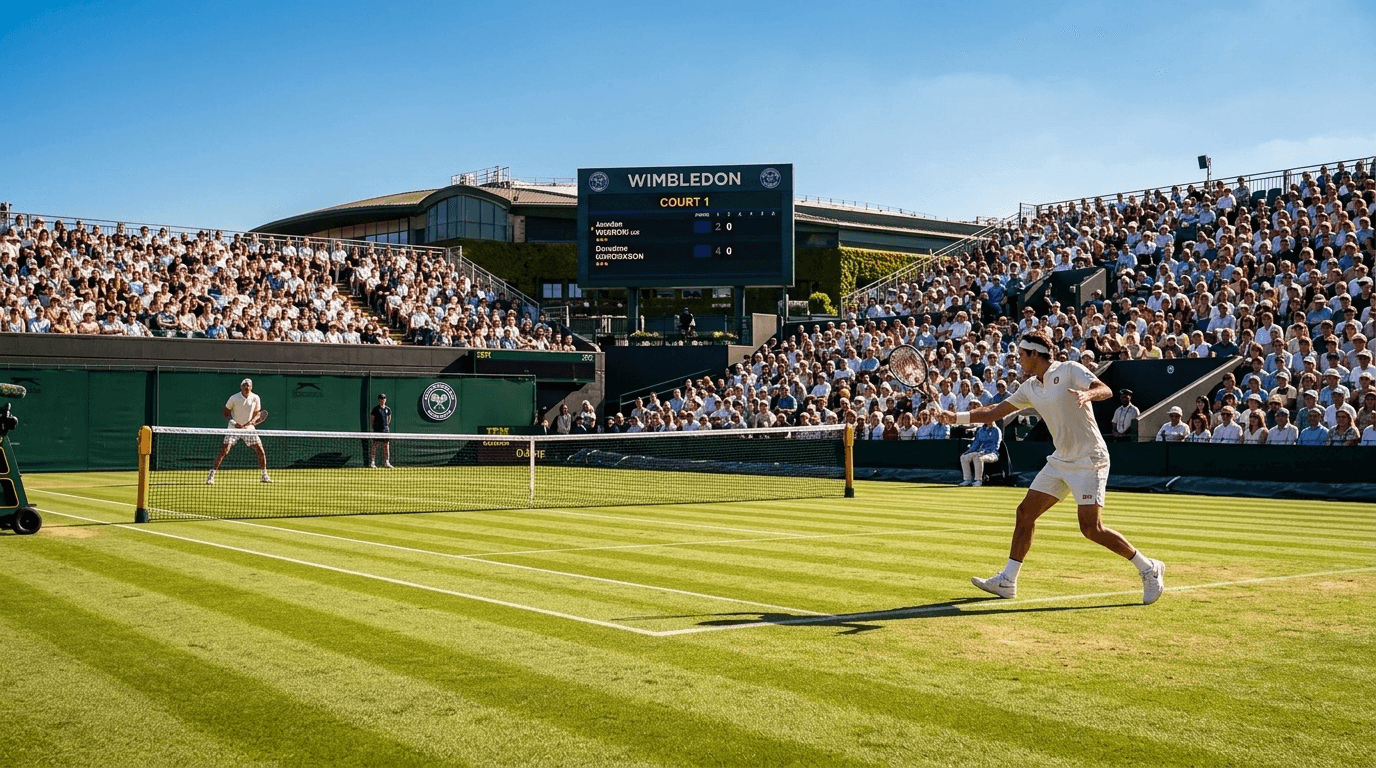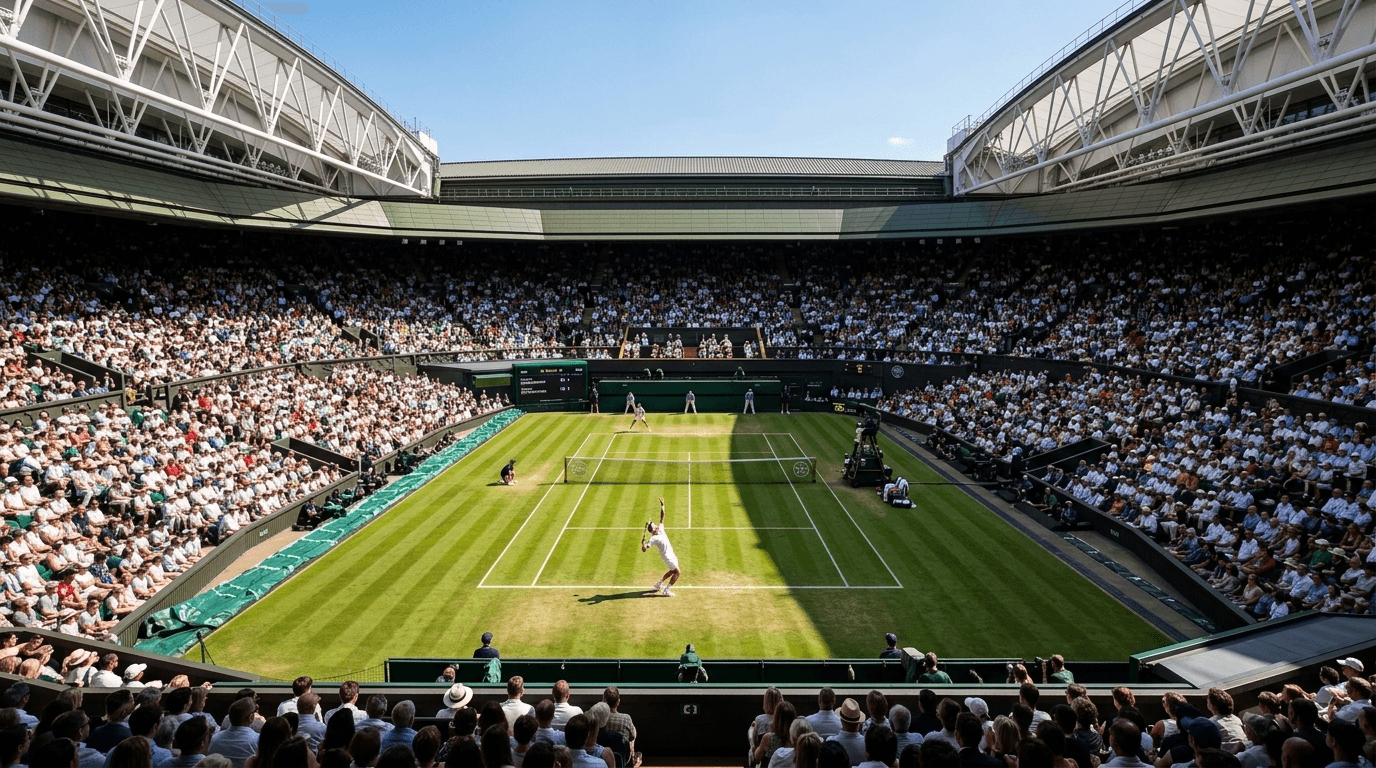
Prediction markets priced Félix Auger-Aliassime's chances of defeating Novak Djokovic in Tuesday's Wimbledon quarterfinal at 0 percent as the match unfolded on Centre Court, down 47 points from 38 percent just 24 hours earlier. The $8.5 million in trading volume over that period reflects one of the sharpest probability collapses in recent Grand Slam market history, driven by live scoring showing Djokovic claiming an early set lead and the weight of his historic dominance on grass.
The seventh-seeded Djokovic entered the quarterfinal with 106 career Wimbledon match wins, a tournament record that underscores his seven championship titles at the All England Club. Auger-Aliassime, by contrast, arrived visibly compromised after a grueling five-set fourth-round victory over Alejandro Davidovich Fokina that saw him "functioning on one leg at times" according to official Wimbledon coverage. The Canadian saved six match points and required seven of his own to close out the 6-7(4), 7-6(6), 6-3, 6-7(2), 6-1 marathon on No. 1 Court, raising immediate questions about his physical readiness for a best-of-five encounter against one of the sport's most relentless competitors.
Market participants distinguished sharply between pre-match expectations and in-running dynamics. The 38 percent probability assigned to Auger-Aliassime on Monday reflected optimism about his resilience and the inherent volatility of grass-court tennis, where momentum swings and service breaks can rapidly alter match trajectories. But as live data confirmed Djokovic's early control, traders repriced the Canadian's upset chances to effectively zero, a move consistent with the Serbian's historical ability to close out leads at Wimbledon and Auger-Aliassime's evident physical limitations.
The quarterfinal, scheduled for a 14:05 local start time, represents a critical juncture in the 2026 men's singles draw. Djokovic's path to an eighth Wimbledon title now appears unobstructed by the Canadian challenger, with market pricing suggesting traders view the outcome as a foregone conclusion barring an extraordinary reversal. The near-total probability collapse also highlights how quickly sentiment can shift in live tennis markets when pre-match injury concerns meet on-court confirmation of a favorite's dominance.