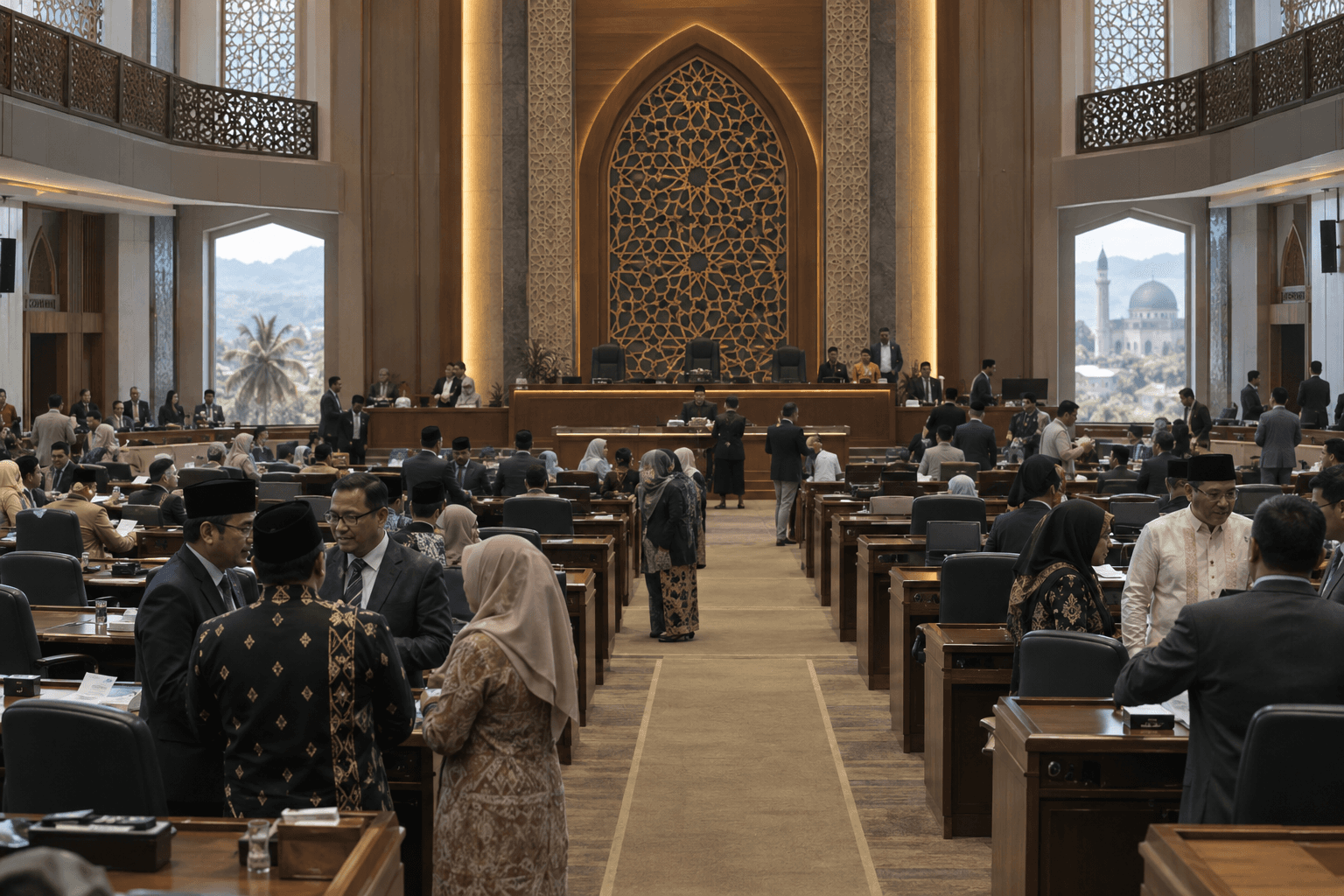
The Bangsamoro Autonomous Region in Muslim Mindanao has proclaimed its first elected parliament, ending seven years of interim rule and opening a new phase in a peace process built to move former rebel groups into democratic government. Official results released Wednesday gave the Bangsamoro Federalist Party the largest bloc after the September 14 vote, narrowly ahead of the United Bangsamoro Justice Party, which is associated with the Moro Islamic Liberation Front. The election replaced an appointed transitional authority with a regular 80-member chamber and gave voters across the predominantly Muslim southern Philippine region their first direct say over who will govern the autonomy created by the 2014 peace agreement.
The result produced a competitive chamber rather than a single-party mandate. In the 40 seats allocated through the regional party vote, the Federalists won 16, UBJP took 15, the BARMM Grand Coalition secured eight and the Raayat Democratic Party gained one, according to the regional government’s proclamation. District and sectoral contests brought the leading groups to roughly 31 and 30 seats respectively, still short of the 41 needed for a majority. That arithmetic gives smaller parties and independents leverage over the choice of chief minister, the legislative agenda and the distribution of committee authority. It also tests whether factions rooted in the same long conflict can negotiate without undermining the institutions created to keep that conflict from returning.
Prediction-market pricing moved to the official result. Polymarket closed the Bangsamoro Federalist Party outcome at 100% after a one-day increase of about 36 percentage points, while the previously favored UBJP leg fell to zero after losing roughly 17 points. The event attracted about $94,000 in total activity. Those final prices reflect the declared seat winner, not the coalition that will govern; traders correctly separated the largest party from the still-unresolved contest to assemble a majority and elect the region’s executive leadership.
The new parliament is scheduled to assume office on October 30, leaving several weeks for coalition talks and any remaining legal challenges. Its first decisions will shape budgets, policing, reconstruction and the integration of communities that have waited decades for durable self-government. The chamber will also have to demonstrate that ordinary legislation can replace the emergency compromises and presidential appointments that carried the region through its transition. A workable alliance could show that the autonomy framework can absorb rivalry while delivering public services. A prolonged deadlock would strengthen critics who say the transition merely moved old factional competition into a new institution. The most important next signals will be formal coalition agreements, the nomination of a chief minister and assurances that losing groups will accept the new balance of power. The election completed a historic transfer of authority; governing together will determine whether it becomes a lasting democratic settlement.