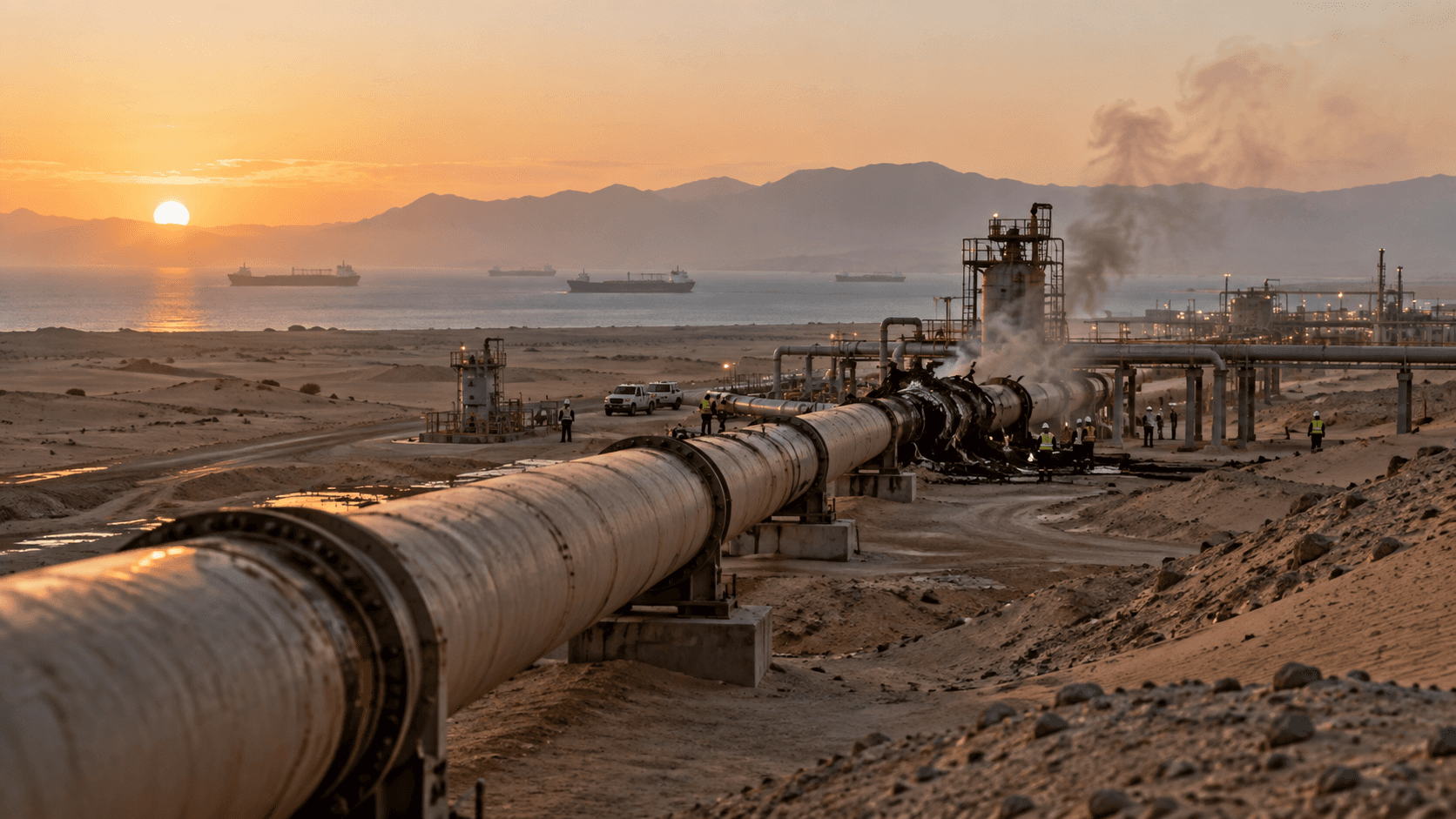
Saudi Arabia’s East-West oil pipeline remained shut after drone strikes hit sites along the strategic route, removing a crucial alternative to shipping crude through the Strait of Hormuz at a moment of acute regional tension. Saudi officials said several drones launched from Iraqi territory struck facilities in the Riyadh and Medina regions, causing injuries and material damage. The kingdom halted the line as a precaution and has not announced a restart timetable. Because the pipeline carries oil from eastern production areas to the Red Sea coast, its loss narrows Saudi Arabia’s options for reaching global customers without using the contested Gulf waterway. The line has become more important as disruptions around Hormuz have pushed Riyadh to depend more heavily on its westbound outlet.
Baghdad has moved to contain the diplomatic fallout. Iraq condemned the attack, dismissed the military commander responsible for operations in Maysan province and opened an investigation after authorities said the drones originated from the southern province near Iran. Iran-backed Iraqi armed groups denied responsibility, while Saudi Arabia said it would hold off on retaliation to give the Iraqi government time to act. Passenger traffic at key crossings with Iran resumed Sunday after a temporary closure, but trade was expected to return more slowly. Those steps show how an infrastructure strike has become a test of whether Iraq can prevent its territory from serving as a launch point for attacks on neighboring states.
The restart outlook deteriorated sharply in prediction markets. The Polymarket contract on the East-West pipeline resuming by September 15 fell 28.5 percentage points over twenty-four hours to 10.5%, while the September 30 contract dropped 23 points to 63.5%. The two-date family recorded about $25,100 in activity during the latest day. These prices measure traders’ expectations about repair, inspection and security work; they do not establish the pipeline’s condition or a Saudi operating schedule, neither of which has been fully disclosed.
The shutdown matters beyond the damaged pumping sites. Saudi Arabia had increasingly relied on the route to bypass Hormuz, while Houthi advances and attacks have also increased risk around Red Sea access. With pressure now affecting both the Gulf and western export corridors, any extended outage could complicate loading plans and add a security premium to oil transport. The immediate milestones are a Saudi assessment of the damage, evidence that repairs are under way and a public restart notice. Investigators will also need to determine how multiple drones crossed Iraqi airspace and whether the launch network can strike again. At the same time, Iraq’s inquiry will be watched for arrests, command changes or proof of who launched the drones. Until those operational and security questions are answered, the pipeline remains both an energy bottleneck and a flashpoint between Riyadh, Baghdad and armed groups operating near Iran.