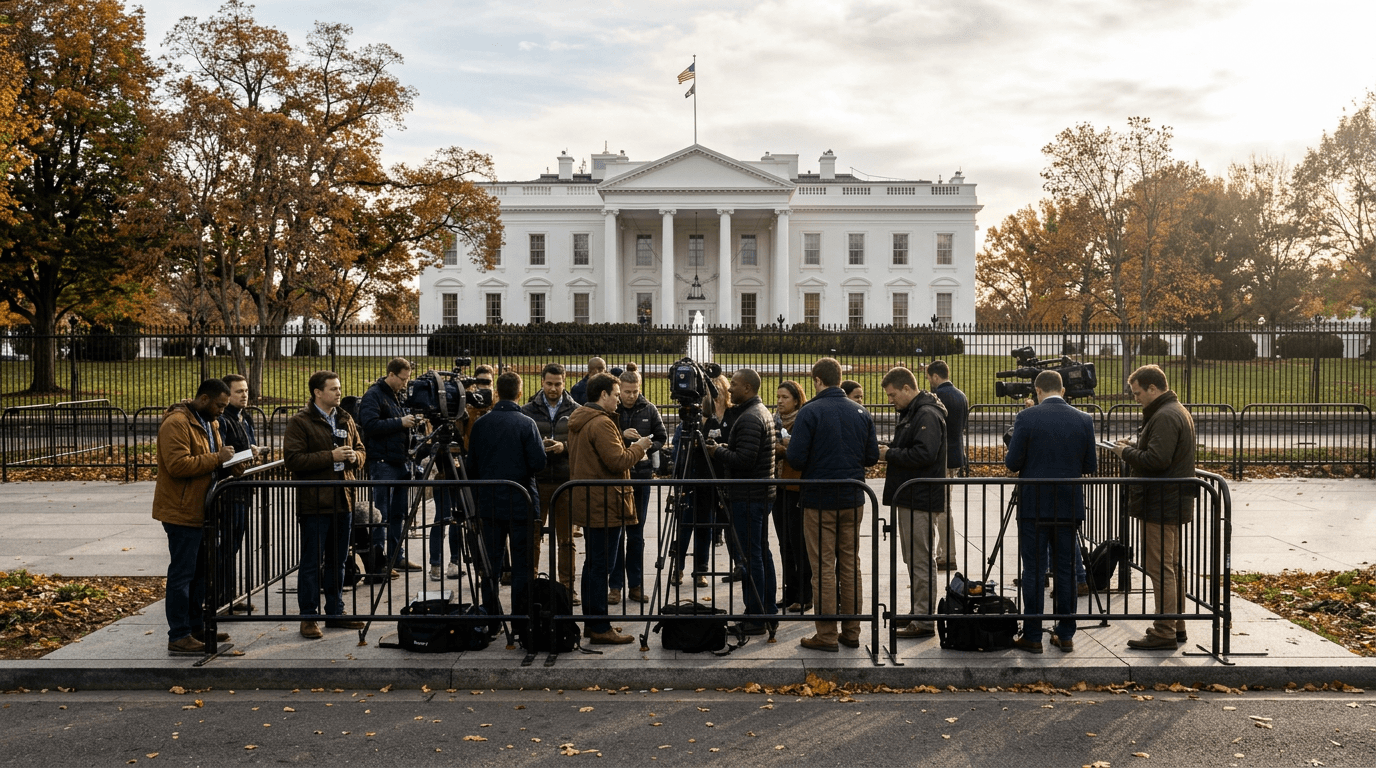
A federal judge has blocked the administration from enforcing its press ban against CNN, MS NOW and Politico while their lawsuit proceeds. That is not the same as the White House announcing an end to the ban—or a guarantee that the outlets will regain access to every presidential setting. The distinction matters because the dispute is about more than credentials: the White House press pool shares video and information about presidential events with participating outlets, and interruptions can leave the public with less independent coverage. The court’s order changes what the administration may enforce while the case continues; what access looks like in practice remains unsettled.
The injunction does not require the administration to provide access to the Oval Office or Air Force One. The administration has appealed the ruling, and the judge said the outlets were likely to succeed on their due-process and First Amendment claims. The administration has argued that national security concerns partly motivated the ban; the outlets say it was viewpoint discrimination. Those competing positions help explain why a court order against enforcement does not settle the broader fight over the terms of press access. Nor does it answer whether the White House will itself announce that the ban has ended.
The dispute also reaches beyond the three outlets’ access to particular rooms or aircraft. The press pool’s shared reporting can provide video and information about presidential events to participating outlets. During the dispute, pool coverage was withheld on six days, including during major presidential events. That makes the practical question consequential for readers: whether the outlets can again participate in coverage that is shared more broadly, and whether those arrangements will function consistently while the legal challenge continues. The packet does not establish that the injunction has restored every part of that access.
Kalshi traders place the chance of a White House announcement before November at 4% as of 1:51 p.m. ET on Oct. 17. That market had 1 contracts traded over the last day, so its displayed price should be read with caution; the reported open interest was 10,090 contracts open. For an announcement before January, traders put the chance at 14% on the same date, with 5 contracts traded over the last day. The longer-dated contracts show a different picture: before March, the price is 30%, while before April it is 52%. Neither later contract recorded trading over the last day, according to the packet. These prices reflect what traders currently believe, not an objective forecast, and the contracts do not form a clean partition of outcomes. They suggest that traders see an announcement as more plausible over a longer horizon, but they do not establish that one is coming.
The near-term contract’s low price is not a verdict on whether the outlets will regain access in practice. The injunction blocks enforcement while litigation proceeds, but it has been appealed and leaves access to some settings outside its requirements. The lawsuit could take months to resolve, according to the Guardian. In the meantime, the questions remain distinct: whether the administration will announce an end to the ban, whether the court order will survive appeal, and how much access the outlets will actually receive. A court ruling can change the immediate legal position without ending the dispute over who gets to cover the presidency.